

The highly anticipated “Guangzhou International Commercial Port” is gradually unveiling its mystery.
On August 25, the North Plot of the first opening area of Guangzhou International Commercial Port was officially listed publicly, marking that the project has officially entered the critical stage of implementation preparation.
Just recently, the Secretary of the Guangzhou Municipal Party Committee and the Mayor successively went to the site for investigation on the planning and construction of the project;
In the past month, a number of important meetings including the Guangzhou Municipal Party Committee Urban Work Conference, the Guangzhou Foreign-funded Enterprises Roundtable, and the 12th Plenary Session of the 12th Guangzhou Municipal Committee of the Communist Party of China have successively “named” the Guangzhou International Commercial Port, deploying to “step up preparation and construction” and “accelerate the advancement”.
Behind such high-standard and high-density official deployments, this “millennium-old commercial capital” has already stood at a critical crossroads of transformation and breakthrough.
01
New Fulcrum
Professional markets underpin the fundamental identity of Guangzhou as a “millennium-old commercial capital”.
Connecting manufacturing on one end and domestic and international markets on the other, they are key nodes for Guangzhou to link industries and smooth domestic and international circulation.
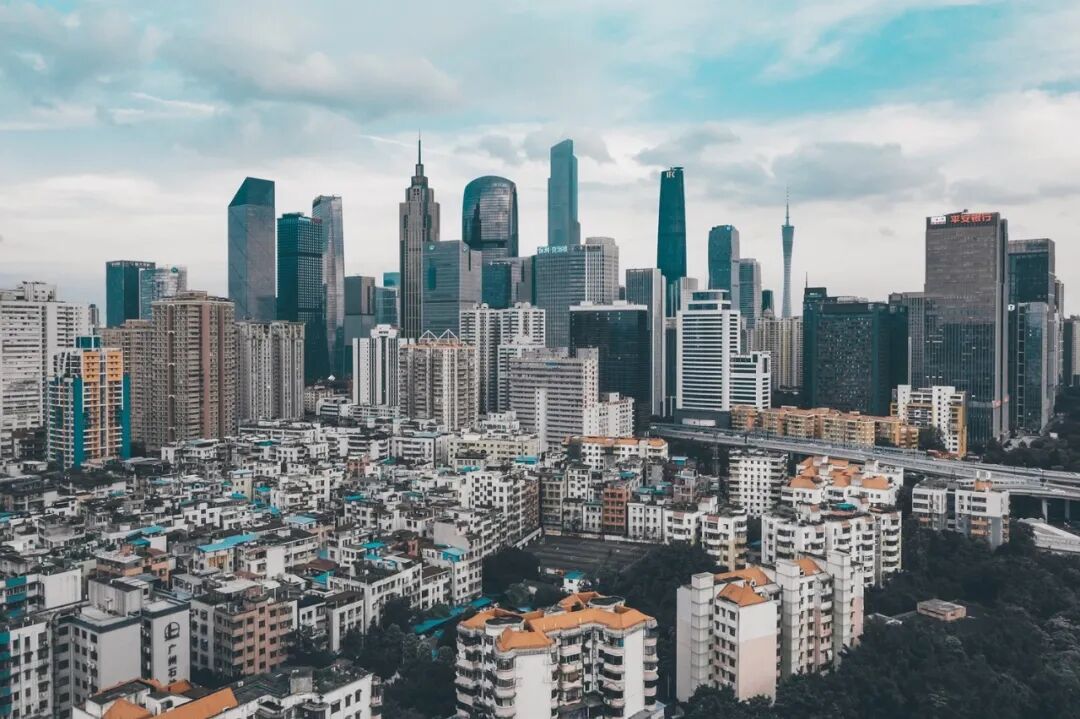
Image source: Shetuwang_501350447
At present, Guangzhou has a total of 508 professional markets, covering 28 categories of the national economy, forming globally leading industrial clusters such as textile and apparel, leather goods and luggage, with an annual total transaction volume exceeding 1.5 trillion yuan, directly and indirectly driving employment for 1.81 million people.
However, on the other side of the impressive data, challenges can no longer be ignored.
In the increasingly fierce market competition, the hidden worry that Guangzhou’s trade industry is “large but not strong” has gradually emerged — there are more OEM brands than self-owned brands, and many merchants still rely on the old path of low-price high-volume sales.
Especially under the impact of e-commerce and live-stream sales, a large number of small and medium-sized merchants have weak brand awareness and lack digital capabilities, making it difficult for them to enter higher-level competition tracks. The rise of cross-border trade has further amplified the shortcomings in service systems such as language, payment, customs clearance and logistics.
The Guangzhou Municipal Committee of the China Association for Promoting Democracy analyzed that most of Guangzhou’s professional markets were formed spontaneously over history, with highly scattered business entities. This situation of “fighting on their own” not only makes it difficult to gather the overall advantages of the market and is restricted in data collection, resource sharing and market prediction, but also leads to the difficulty in implementing overall strategies such as digital transformation.
As an important economic pillar of Guangzhou, data shows that in 2024, the added value of Guangzhou’s wholesale and retail industry accounted for more than 13% of GDP, ranking among the top major cities in China; the modern trade industry is also an important field for Guangzhou to absorb employment, with employees accounting for more than 10% of the city’s total, which fully demonstrates its great importance.
Previously, the outline of Guangzhou’s “15th Five-Year Plan” proposed that by 2035, the goal of “rebuilding a new Guangzhou” should be achieved, with the gross regional product doubling that of 2023 to reach 6 trillion yuan.
This means that Guangzhou needs greater economic momentum, and the transformation and upgrading of the trade industry is imperative.
In April this year, the “Action Plan for Accelerating the Transformation, Upgrading and High-Quality Development of Professional Markets in Guangzhou (2026-2028)” set key priorities — promoting the transformation of professional markets from traditional property management to industrial public service platforms, and striving to make the annual total transaction volume of Guangzhou’s professional markets reach 2 trillion yuan by 2028.
At the end of June thereafter, the leading officials of the Guangzhou Municipal Party Committee led a team to pay a special visit to Yiwu Global Digital Trade Center to learn the “Yiwu Experience” of trade transformation.
In the view of Zeng Gang, Dean of the Institute of Urban Development of East China Normal University, Yiwu’s biggest advantage is that it can always quickly convert new market information into production and trade.
The underlying reason is the synchronous resonance of Yiwu’s “effective market” and “promising government” — it has precipitated the globalization trade capabilities accumulated over decades, including information collection, transmission, analysis, transformation and application, into a complete set of production and marketing docking system, which is deeply embedded in the whole trade process.
The development history of Yiwu is superficially the evolution of “small commodity market” into “global digital trade center”, but internally it is a process of efficiently connecting the most scattered supply and the most extensive demand, and continuously expanding and strengthening this connection capability.
This is exactly the key point for Guangzhou to “learn from” Yiwu.
The Guangzhou International Commercial Port is not only the core carrier for Guangzhou to enhance its trade capacity, but also a “new fulcrum” that strongly supports strong industries and strong economy through commerce, so as to achieve the goal of “rebuilding a new Guangzhou”.
02
Building Platforms
Behind Guangzhou’s professional markets lies a solid industrial foundation. The Zhongda Cloth Market is connected to a complete textile and apparel industrial chain, and the Thirteen-Hang Commercial Circle is close to the huge garment processing clusters in the Pearl River Delta…
From the perspective of the outside world, if the shortcomings of trade services can be made up on the basis of manufacturing advantages, the imagination space for Guangzhou’s industrial development will be further expanded.
The Guangzhou International Commercial Port is regarded as “a major measure to enhance the energy level of Guangzhou as an international trade center and promote the millennium-old commercial capital to glow with new vitality of the era”, and it is also an important starting point to promote the digital, intelligent and platform-based development of Guangzhou’s trade industry.
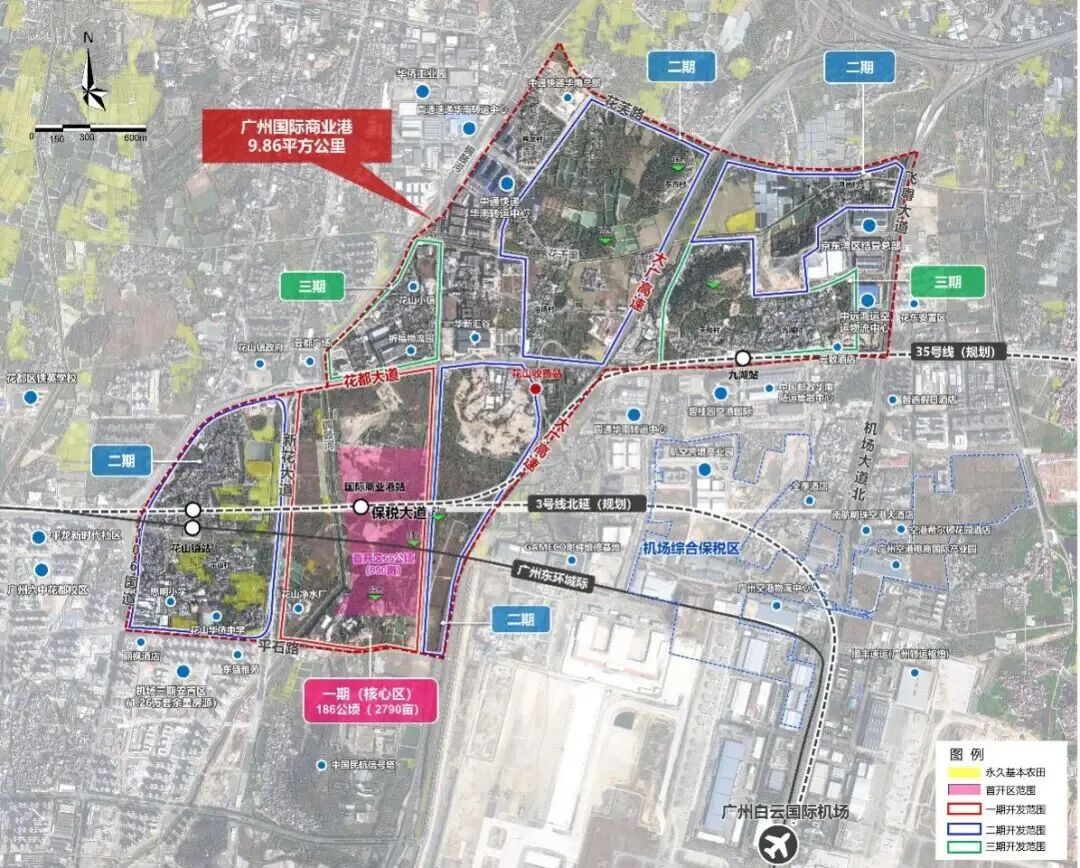
Image source: Huadu Release of Guangzhou
According to the official positioning, the goal of Guangzhou International Commercial Port is to “build a high-energy-level trade platform with both domestic and foreign trade, import and export functions”. This means that it is no longer a wholesale market in the traditional sense, but a high-energy-level trade carrier characterized by “platformization”.
Judging from the investment promotion and docking symposium of Guangzhou International Commercial Port held a few days ago, the project also undertakes the mission of benchmarking Yiwu’s trade development model and “exploring the way” for the transformation and upgrading of Guangzhou’s professional wholesale markets.
According to Guangzhou’s vision, in the next three years, the operating entities of professional markets need to complete an identity reshaping — from “landlords” who only collect rents, to “industrial partners” who can provide comprehensive services such as supply chain, finance, design and branding for merchants.
Regarding this “role transformation” that Guangzhou International Commercial Port needs to complete, Zeng Gang believes that the focus should be on building “one-stop” comprehensive service functions, and based on market demand, let professional institutions and leading enterprises fulfill their responsibilities and gain benefits respectively, so as to form a benign interactive relationship.
This point has been reflected in the project planning: different from the past, the construction of Guangzhou International Commercial Port is endowed with a brand-new operation mechanism: optimizing the cooperation mechanism of government leadership, state-owned enterprises building the stage, and in-depth participation of market entities, integrating professional forces such as design, customs clearance and settlement to participate in the operation.
At the end of July, Guangzhou International Commercial Port Group Co., Ltd. with a registered capital of 3 billion yuan was officially established. As a unified construction and operation entity, it guarantees the implementation of platform-based operation from the mechanism level.
“Hub-oriented” is another identity that the project intends to strengthen.
This positioning comes from its prominent air-rail location advantages. The project is located in Huadu District, Guangzhou, in the northwest area of Baiyun International Airport, which can develop in linkage with Baiyun International Airport, Guangzhou North Railway Station and other facilities, with location advantages for the development of large-scale circulation and large-scale trade.
At present, the construction of Guangzhou International Commercial Port is accelerating. According to the plan, the project will coordinate the layout of multiple business forms such as exhibition trade, digital trade, headquarters economy, cross-border trade, and integration of culture, business and tourism, so as to promote the full transformation of Guangzhou’s trade industry towards platformization and high-end orientation.
03
Internationalization
Further speaking, with the rapid development of the global economy, internationalization has become the core direction of the transformation and upgrading of Guangzhou’s professional markets in recent years, and it is also a required question for this millennium-old commercial capital to enhance its international trade status.
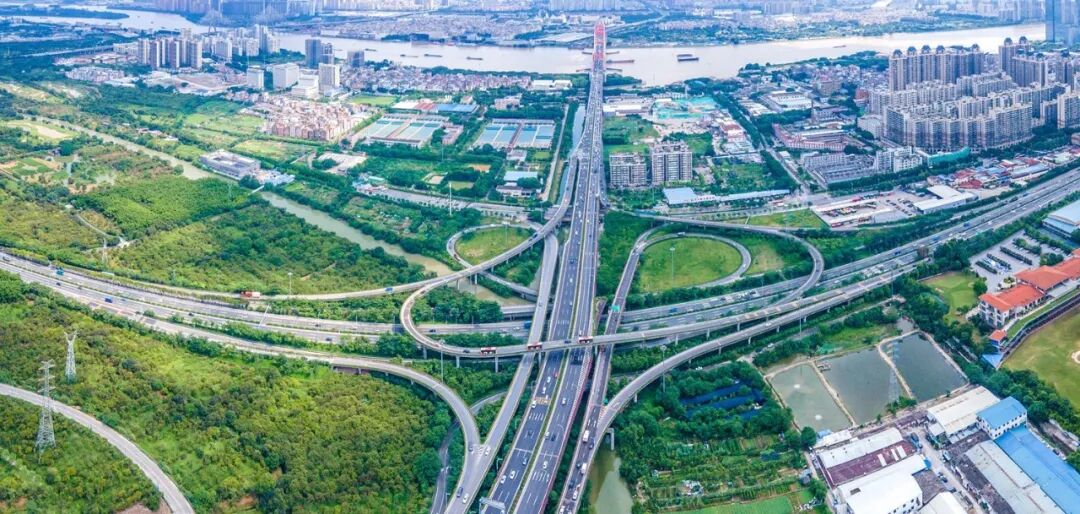
Image source: Shetuwang_501631961
One example is the global-oriented public brand “PRO MARKET” for Guangzhou’s professional markets released in December 2024, whose IP construction was promoted to the municipal strategic level this year, as a brand symbol representing the global competitiveness of Guangzhou’s professional markets.
In terms of overall scale, in 2025, Guangzhou’s professional markets received more than 20 million overseas purchasers, and the export volume of market procurement reached 109.5 billion yuan, a year-on-year increase of 39.5%, showing a strong momentum of international development.
However, under the huge volume, structural dilemmas are still prominent. At present, only nearly 1/3 of the professional markets in Guangzhou carry out foreign trade business, and the professional markets are still dominated by domestic sales. Local foreign trade practitioners believe that phenomena such as a large number of OEM products, insufficient self-owned brands, and digital transformation “having traffic but no retention” are still prominent problems faced by Guangzhou in its global expansion.
The more urgent pressure comes from the challenges of emerging strong foreign trade cities.
In 2025, the total import and export volume of Jinhua, where Yiwu is located, exceeded 1 trillion yuan for the first time, becoming the 8th “trillion-yuan foreign trade city” in China after Guangzhou.
From January to July this year, the total import and export volume of Jinhua was 709.28 billion yuan, a year-on-year increase of 18.6%. In the same period, the total import and export value of Guangzhou was 751.4 billion yuan, with a growth rate of 5.5%. Under the growth rate gap, Guangzhou’s foreign trade scale is being closely chased by Jinhua step by step.
Local experts pointed out that Guangzhou’s trade industry must get rid of path dependence, base on the trends of platformization, internationalization and integration of exhibition and trade, and make efforts on new business forms such as “small order quick response”, cross-border e-commerce, and integration of culture, business, tourism and exhibition, so as to stimulate the multiplier effect of growth.
Compared with scattered traditional markets, the Guangzhou International Commercial Port built with a brand-new mechanism has natural advantages in system innovation and resource integration. Promoting the integrated development of domestic and foreign trade is exactly one of its core missions.
According to Guangzhou’s deployment, the project will make good use of policy pilots such as the national service industry expansion and opening up, innovate a systematically integrated policy system, strengthen the construction of digital trade platforms, build a world-class business environment, and continuously enhance its attractiveness to global merchants.
At the same time, benchmarking against world-class standards, it will build a professional, intelligent, one-stop and hub-type large-scale physical trade platform, drive the innovation of trade formats, model innovation and energy level leap of the whole city, and increase investment promotion efforts towards the whole world.
Driving the transformation, upgrading and innovative development of the whole city’s trade industry with the strength of one “port”, this transformation breakthrough related to the future of the “millennium-old commercial capital” has pressed the acceleration key.
This article is from the WeChat official account “City Evolution Theory”, written by Liu Xuqiang, and released with authorization from 36Kr.