
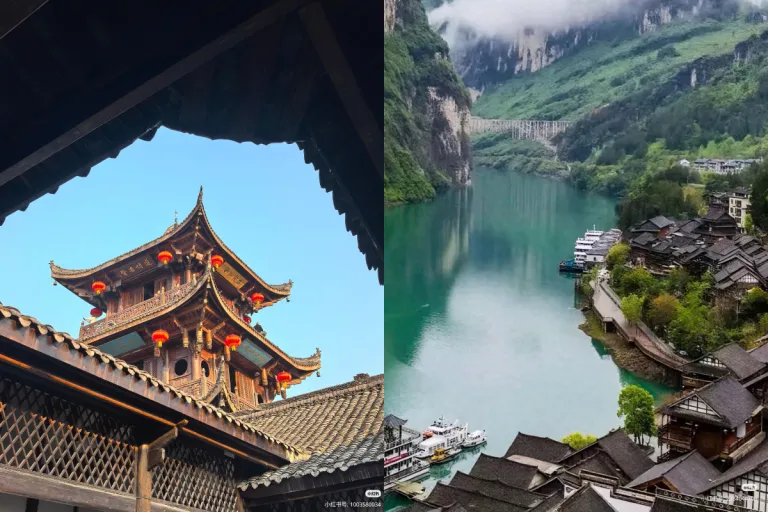
The best travel tip I got in Chongqing came not from a guidebook, a travel app, or a fellow tourist, but from my chartered driver somewhere on the expressway between Beibei and the city. As someone who visits tourist spots on the daily, his list of places that retained the ‘true spirit’ of old Chongqing had not even appeared in my research (even on Douyin and Rednote/Xiaohongshu). So here they are: five day trips from Chongqing, all under three hours, all completely off the Singaporean radar, and every one of them genuinely worth the journey.
Also read: Honest Review of Chongqing: Is it Worth It? [Singaporean POV]
1. Beibei (北碚) and the 1314 Self-Drive Loop (巴适·1314自驾环线)
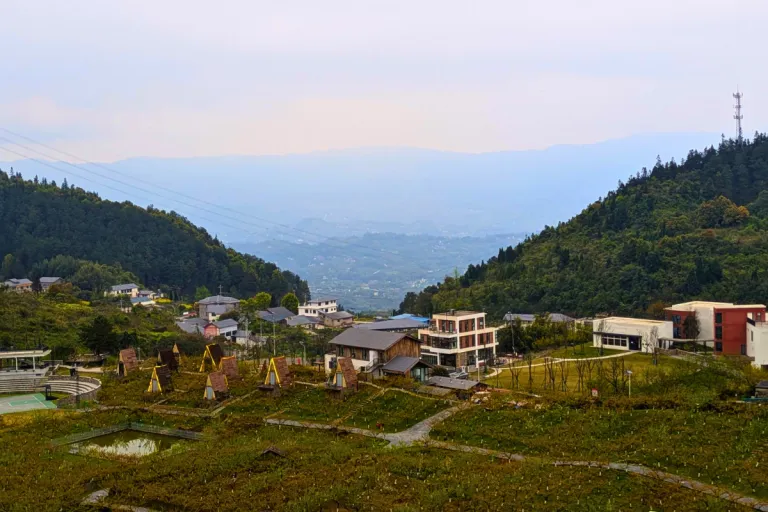 Image credit: Dex Quek
Beibei (北碚) is the most accessible destination on this list. You can reach Beibei Station by Chongqing Metro Line 6 in under an hour, with no car required. That said, chartering a driver is a good idea to explore several stops while you’re there, and you can explore the nationally renowned 1314 self-drive loop (巴适·1314自驾环线) to experience the Chinese countryside.
Getting there: Metro Line 6 to Beibei Station, then Bus 520 to Jinyun Mountain (45 minutes); or drive to Shengtian Lake Reservoir, about 1.5 hours from central Chongqing.
On foot: Beibei’s heritage trail
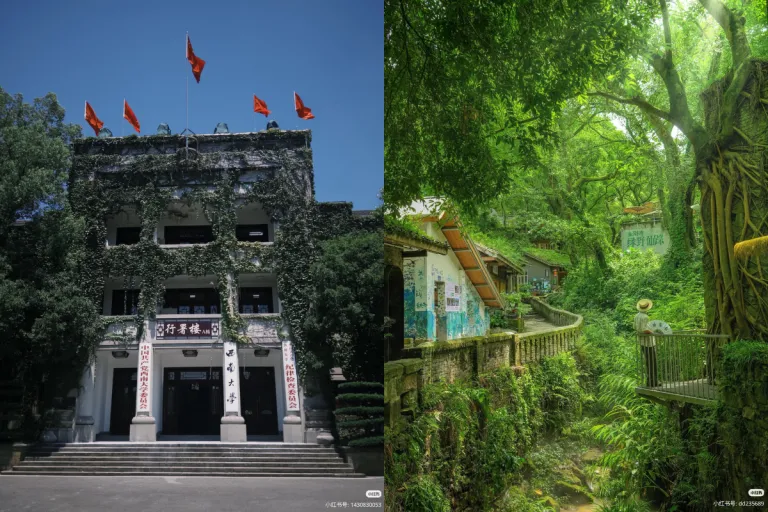 Image credit: Xiaohongshu
Start at Jinyun Mountain Nature Reserve (缙云山), a UNESCO-listed biosphere reserve with a cable car over the Jialing River gorge and Tang dynasty Taoist rock inscriptions threading through the hiking trails. From there, head down to Jingangbei Ancient Village (金刚碑). A 300-year-old riverside settlement where cobblestone alleys and 1930s Chongqing-Western hybrid architecture give the place the feel of a living period film set. Finish with a stroll through Southwest University Campus (西南大学), one of China’s most photogenic campuses and completely free to enter, before catching the sunset from Chengjiang Old Street over a bowl of local noodles.
Behind The wheel: The 1314 Loop
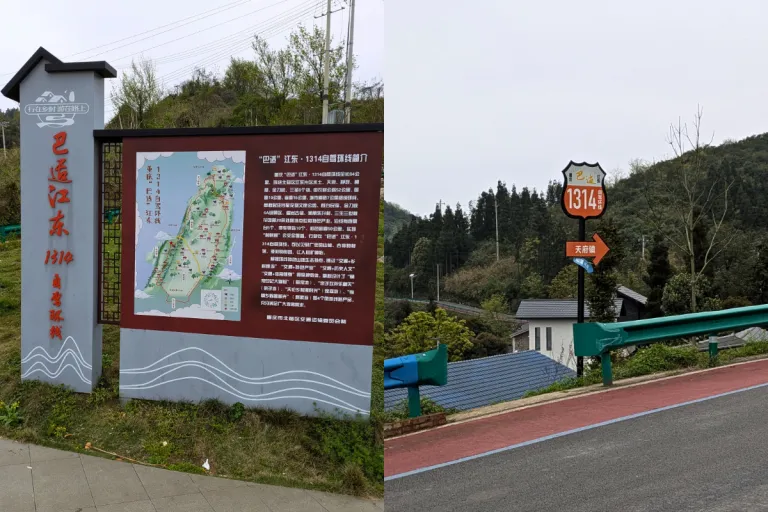 Image credit: Dex Quek
The name alone is worth the trip. The 1314 loop traces the mid-slopes of Huaying Mountain (华蓥山) through five towns and 16 villages, and was officially selected as one of China’s Most Beautiful Self-Driving Routes — the only route from Southwest China to make the national top-20 shortlist. Its name carries three meanings at once: the peak scenic point, Jindao Gorge (金刀峡), sits at exactly 1,314 metres above sea level; ’84’ — the loop’s total distance — sounds like baashi (巴适) in local Sichuan-Chongqing dialect, meaning ‘comfortable, pleasant, just right’; and ‘1314’ in Chinese internet culture is shorthand for yīshēng yīshì (一生一世), or ‘forever.’ Stop at Shengtian Lake (胜天湖) — nicknamed Beibei’s hidden Jiuzhaigou — for the 3-km lake trail, then pass through Pianyan Ancient Town (偏岩古镇), a Qing-dynasty riverside market with original stone streets and teahouses that have been open since the 18th century.
Budget: Under 300 RMB per person, including Jindao Gorge entrance and a riverside lunch.
2. Anju Ancient City (安居古城)
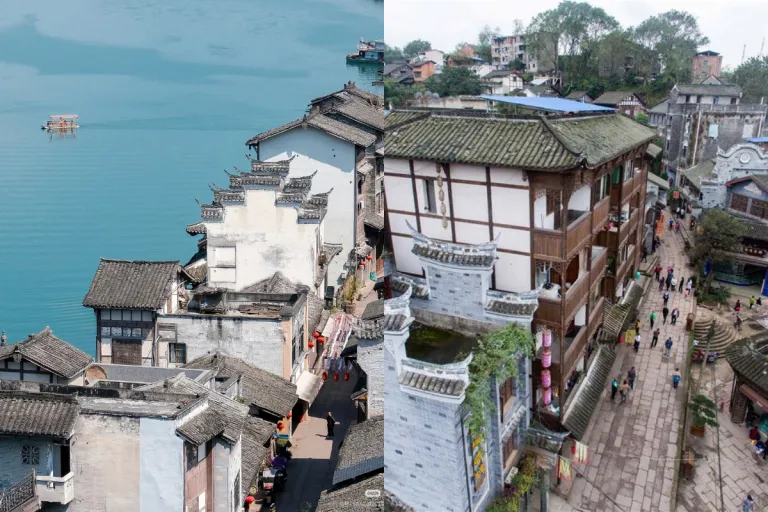 Image credit: Rednote (left), en.people.cn (right)
Anju Ancient City (安居古城) may be the most underrated stop in the entire municipality. Positioned at the meeting of the Fujiang (涪江) and Qiongjiang (琼江) rivers, it has a visual drama that sets it apart from other ancient towns. Mainland Chinese tourists make up the bulk of visitors here, showing that it is still not well known to foreigners.
Getting there: 1.5 hours, express bus or car from central Chongqing. Entrance to the town is free; small fees apply for individual temples and ancestral halls.
Nine palaces, 18 temples, and a fire dragon
Jiugong Shibamiao (九宫十八庙) or ‘Nine Palaces, Eighteen Temples’ is the centrepiece of the city. Nine palace complexes and 18 temples spanning Taoist, Buddhist, and folk religion traditions are compressed into a football field core where incense still burns daily. The Town God Temple (城隍庙), built during the Tang dynasty by a descendant of Lu Ban, China’s patron saint of craftsmen, is among the most visited. History enthusiasts will also want to seek out the Whampoa Military Academy Old Site (黄埔军校旧址), a satellite campus that operated here during the Second Sino-Japanese War.
On weekend evenings and during festival periods, however, Anju transforms entirely. The UNESCO-listed Tongliang Dragon and Fire Dance (铜梁龙舞) performance sees fire-breathing dragon lanterns paraded through these same ancient temple streets after dark. If you can time your visit for a Saturday night, you might be able to catch these.
Budget: Entrance free; budget 150–200 RMB for temple fees, tea, and a riverside dinner.
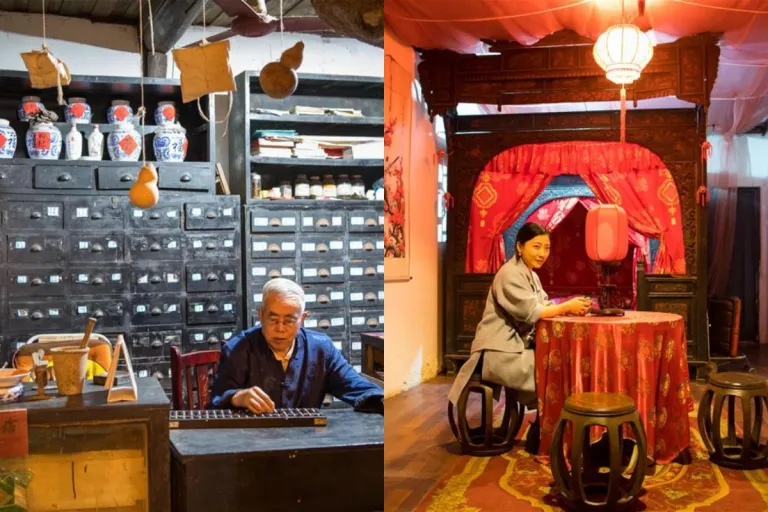 Image credit: en.people.cn
3. Wanzhou (万州)
Technically still part of Chongqing, Wanzhou (万州) is the upper gateway to the Three Gorges reservoir. I hadn’t even heard of it before the trip and haven’t seen it mentioned anywhere after.
Getting there: 2.5h high-speed rail from Chongqing North Station.
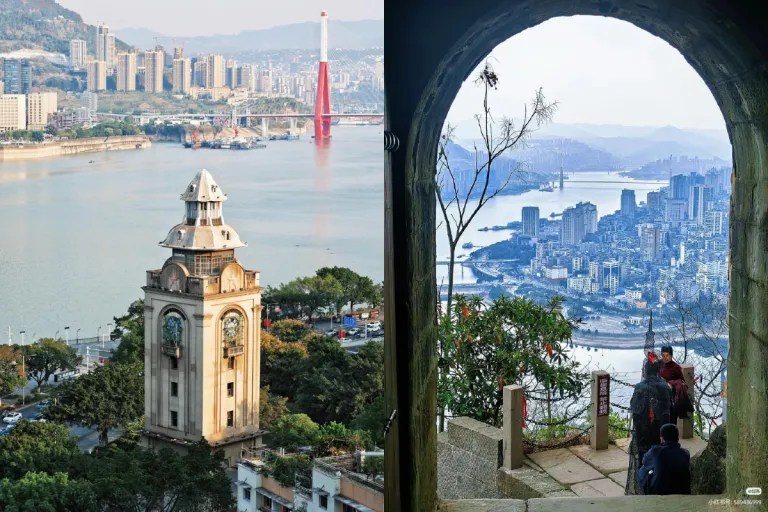 Image credit: Rednote
A cliff tower, a river cruise, and a rice cake you have never heard of
Start your morning at Xishan Bell Tower (西山钟楼), a Baroque-Chinese hybrid clock tower built in 1924 and perched on a cliff above the Yangtze River. It is a striking visual record of China’s encounter with the West during the treaty port era.
From there, wander into Pigeon Gully Old Street (鸽子沟老街) for breakfast, specifically geng gege (羹格格), a steamed rice cake that is entirely unknown outside Chongqing and precisely the kind of hyperlocal discovery that makes a day trip worthwhile.
In the afternoon, board the Wanzhou Pinghu Cruise (万州平湖游), a one- to three-hour river journey on the Three Gorges reservoir flatwater departing from the Wanzhou Tourist Wharf. The gorge landscape at this stretch of the river is quietly breathtaking.
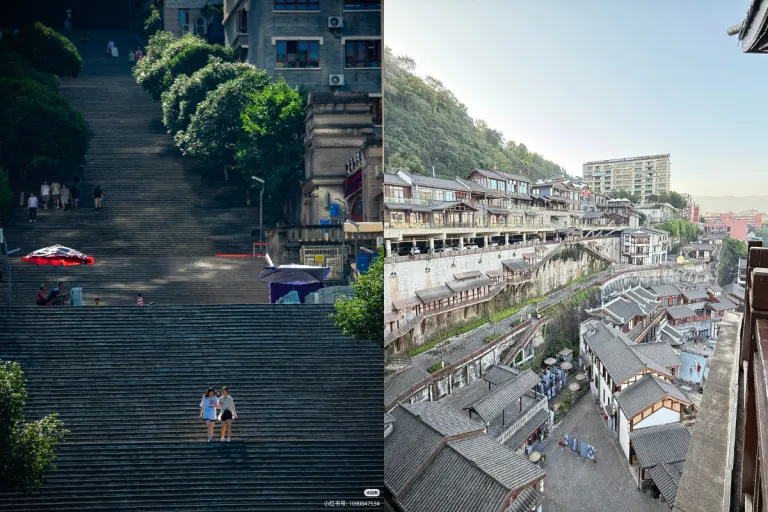 Image credit: Rednote
Budget: Under 300 RMB, including the rail fare, cruise ticket, and meals.
4. Wujiang Painted Gallery (乌江画廊)
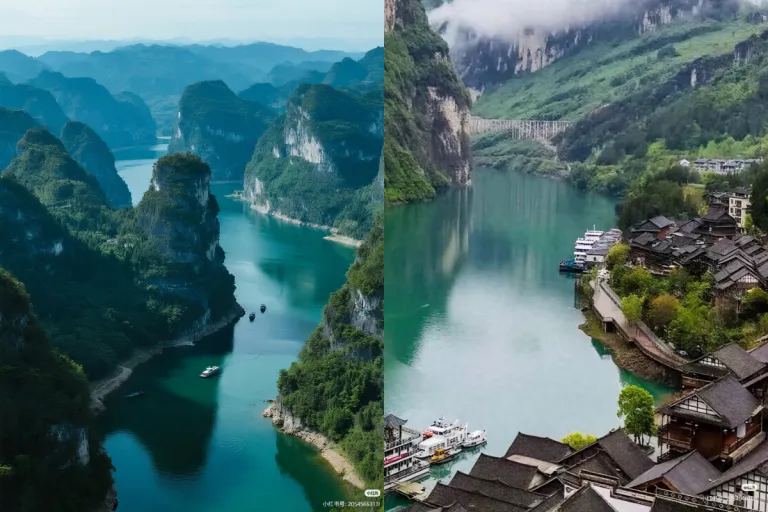 Image credit: Rednote
The Wujiang Painted Gallery (乌江画廊) is the ethnic minority heartland of the municipality. Usually combined with Wulong Karst and Fairy Mountain in tour packages, it’s an underrated location that transports you right into an oriental painting.
Getting there: 2.5h high-speed rail to Pengshui, then local bus or taxi to the scenic area.
Gorges, ancient calligraphy, and Miao culture
The national scenic area runs along a river corridor of emerald water, towering limestone cliffs, and hanging mist.
Board one of the antique-style painted boats for a cruise through the Nine-Gate Passage (九门寨), a route that Qing dynasty poet Weng Ruomei described as ‘the finest landscape in all of Sichuan.’ The most dramatic section is Mafeng Gorge (麻风峡), an 8-km canyon shaped like a dumbbell between two calm lakes, where the river has carved the rock over millennia. I was 100% sold when my driver shared this part with me.
Afterwards, visit Jiuli Palace (九黎城), the Miao (苗族) ethnic cultural complex dedicated to the mythological ancestor Chi You (蚩尤). Traditional costume performances and embroidery workshops are open to visitors. Their elaborate silver headpieces are a great alternative to the traditional costume photoshoots on your feed.
Budget: 150-250 RMB, including the cruise ticket, Jiuli Palace entrance, and lunch.
5. Langzhong Ancient City (阆中古城)
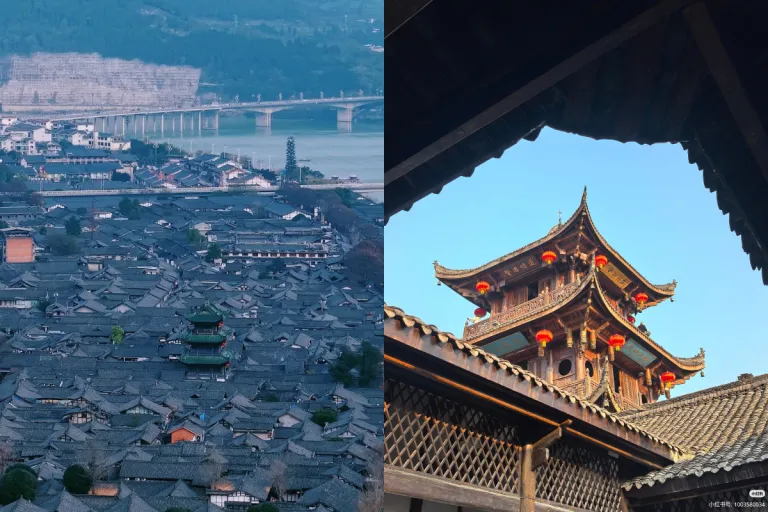 Image credit: Rednote
The furthest of these day trips from Chongqing, Langzhong Ancient City (阆中古城) sits just across the Sichuan border in Nanchong Prefecture — roughly two and a half to three hours by high-speed rail. It is also one of China’s four great ancient cities, alongside Pingyao, Lijiang, and Huizhou, and it has hardly any features on Singapore media. That combination rarely lasts for long.
Getting there: 2.5-3 hours by high-speed rail. Full scenic area pass: 120 RMB.
The feng shui city where Chinese New Year began
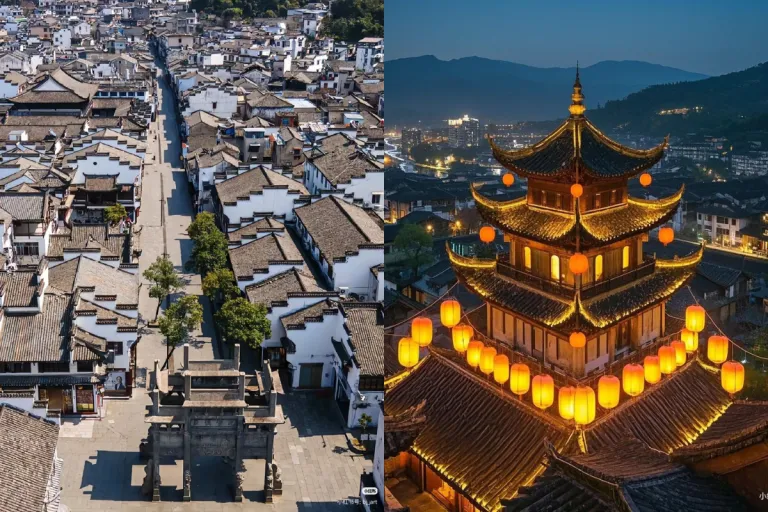 Image credit: Rednote
Langzhong’s ancient core was laid out according to feng shui (风水) principles, encircled on three sides by the Jialing River and backed by mountains, making it the most intact feng shui city in China. Thousands of residential courtyard homes built in the Xieshan roof style survive here with original carved doors and latticed windows, and simply walking the street grid feels unlike any other ancient town in the country.
Stop at Zhang Fei Temple (张飞庙), dedicated to the Three Kingdoms general who governed Langzhong for seven years; his tomb reportedly lies beneath the main hall (a familiar detail for anyone who grew up reading Romance of the Three Kingdoms). Before you leave, make time for the Baoning Vinegar Culture Museum (保宁醋文化博物馆), where factory tours and tastings reveal a vinegar tradition stretching all the way back to the Tang dynasty.
Legend has that it’s the origin city of the Chinese New Year custom. Han dynasty astronomer Luo Xiahong set the Spring Festival calendar here, and every January, millions of visitors arrive for the Spring Festival Cultural Tourism Festival. If CNY is your favourite festive holiday, there is something quietly meaningful about standing in the city where it all began.
Budget: 200-300 RMB, including the rail fare, temple entrance, museum visit, and meals.
Also read: What Went Wrong With My Alipay In China: How Singaporeans Can Avoid This Mistake
How To Uncover Hidden Gems On Your Own (For Real)
Even in 2026, not every travel destination has been spotlighted online. Speaking to locals you encounter or fellow tourists usually unearth surprising finds. At the least, you’ll get a review of places you’re planning to go. Talking to new people is a highlight of my travels for this exact reason.
Let us know if you took any of the day trips above and share your review on our socials! Your comments help more than you think 🙂