
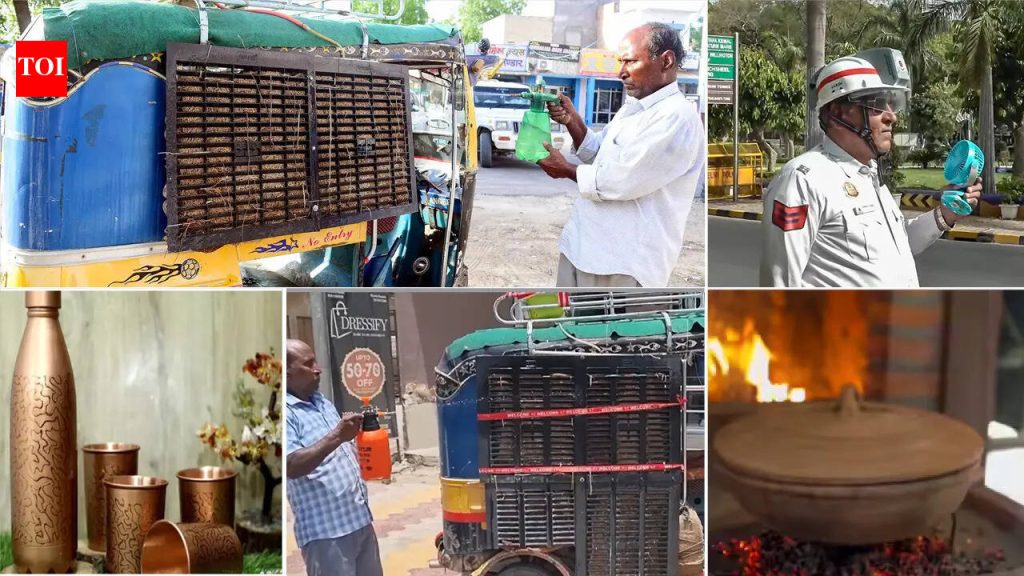
NEW DELHI: India is learning to live with a hotter future. From Delhi to Mumbai, temperatures are regularly crossing 45 degrees Celsius, heatwaves are lasting longer and cities are becoming giant heat traps due to rapid urbanisation and the growing urban heat island effect.But if there is one thing Indians are famous for, it is finding a jugaad for every problem. Whether it is a broken machine, a TV remote held together with tape or now beating the scorching summer, someone somewhere is always coming up with a clever fix.As heatwaves tighten their grip across the country, India is responding with a mix of traditional wisdom, grassroots innovation and cutting-edge technology.From water-powered crates that keep vegetables fresh without electricity to cooling vests for delivery riders, a wave of homegrown solutions is emerging.What may look like simple DIYs are increasingly becoming important tools in the fight against extreme summers.In a country where necessity has always been the mother of invention, the battle against extreme heat is producing some of the most creative desi jugaads yet.
The human cost of rising temperatures
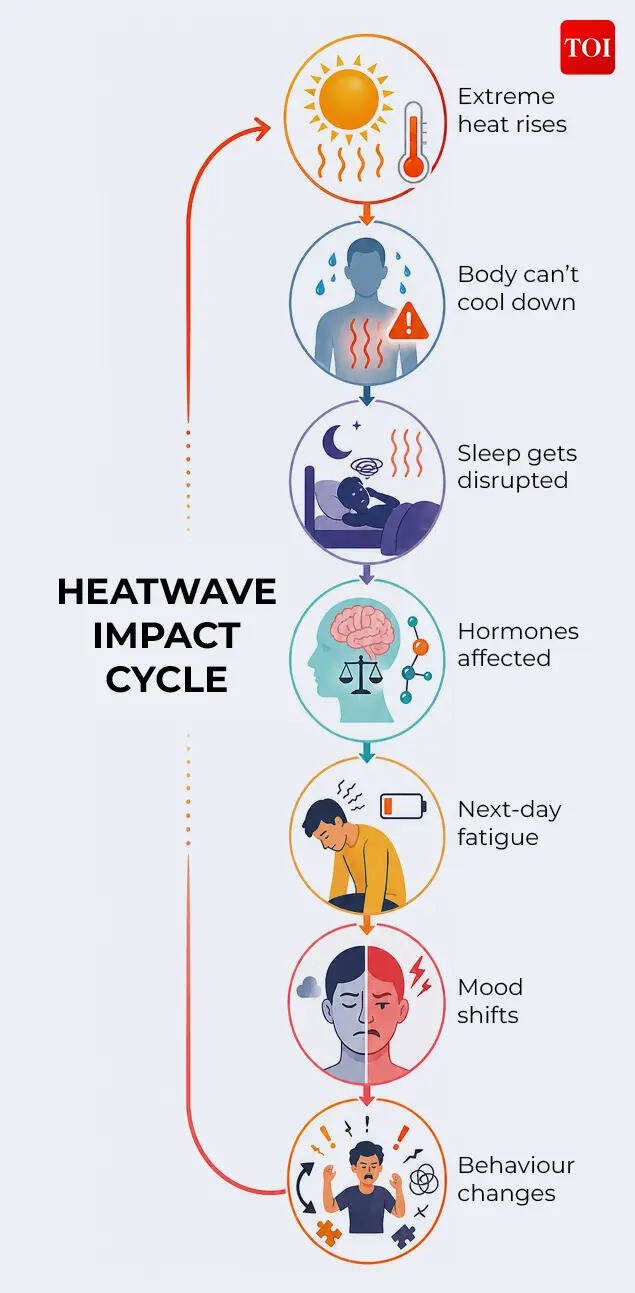
If India’s heatwave story is about rising temperatures, it is also about shrinking comfort, patience and productivity. Extreme heat is no longer just an environmental problem; it is increasingly becoming a health, economic and social crisis that affects nearly every aspect of daily life.For millions of outdoor workers from delivery riders and construction labourers to street vendors and traffic police personnel, stepping out in the afternoon can feel like walking into an oven.While many of us escape the heat inside air-conditioned offices, homes and malls, millions of Indians have no such luxury.Delivery riders, traffic police personnel, street vendors and construction workers spend six to eight hours outdoors every day, navigating roads where surface temperatures can soar beyond 45 degrees Celsius.
.
The risks go far beyond discomfort. Dehydration, heat exhaustion and potentially fatal heatstroke have become growing concerns, forcing authorities to issue repeated warnings and activate heat action plans.A hot day can leave people feeling drained, but weeks of relentless heat can quietly chip away at productivity, decision-making and overall well-being.The economic consequences are equally alarming. Workers often need to slow down, take longer breaks or avoid peak afternoon hours altogether.

.
Businesses face productivity losses, while sectors dependent on outdoor labour, including construction, agriculture and logistics, bear the brunt of extreme weather.Heat is also taking a toll on food supply chains, with millions of tonnes of fruits and vegetables lost every year due to spoilage.
Back to the roots: India’s old cooling wisdom finds new fans
Long before air-conditioners, smart thermostats and energy-efficient buildings entered our lives, Indians had their own ways of staying cool. Many of those solutions were born not in laboratories but in villages, farms and homes where people learned to work with nature rather than against it.As temperatures continue to climb and cooling systems become increasingly expensive, several of these age-old ideas are quietly making a comeback.In many ways, the heatwave is triggering a return to roots. Copper water bottles that once sat in grandparents’ kitchens are now sold as premium wellness and sustainable products.

.
Earthen pots, clay utensils and traditional storage containers, long dismissed as relics of another era are increasingly finding space in modern urban homes.What was once seen as old-fashioned is being rediscovered as sustainable, practical and surprisingly effective.

.
The same thinking is also inspiring new-age adaptations. One example is the so-called ‘desi fridge’, a portable cooling crate that uses the simple science of evaporative cooling to keep fruits and vegetables fresh without electricity.By using water instead of compressors, such innovations offer farmers, street vendors and small traders a low-cost way to reduce spoilage during the hottest months of the year.The principle itself is hardly new. For generations, Indians have relied on clay-based coolers, earthen storage systems and porous terracotta vessels that naturally lower temperatures as water evaporates.Experts experimenting with eco-friendly construction materials are now revisiting these traditional techniques. Cow-dung-based plasters, natural bricks and other bio-based materials are being studied as low-cost alternatives that could reduce heat absorption while lowering the environmental footprint of buildings.Long before sustainability became a buzzword, Indian homes were designed to stay comfortable in extreme weather with minimal energy consumption.The growing interest in these practices reflects a broader shift in how India is approaching a warming future.Sometimes the answer lies in cutting-edge technology. Sometimes it lies in a clay pot, a shaded courtyard or a centuries-old building technique. In the race to stay cool, India is discovering that some of its oldest ideas may still be among its smartest.
The future of cooling is wearable
If one set of solutions is looking to the past, another is looking straight into the future. As temperatures climb and outdoor workers spend longer hours under the sun, a growing number of innovators are trying to solve a simple problem: what if people could carry their own cooling system with them?The idea is gaining traction across India, particularly among those who cannot escape the heat. Delivery riders, construction workers, traffic police personnel and street vendors often spend entire shifts outdoors, making them some of the most vulnerable victims of extreme temperatures.One of the most visible examples is the rise of cooling vests. Food delivery platforms have begun trial of special jackets designed to lower body temperatures without electricity or batteries.One delivery platform recently announced that more than 2,500 delivery partners across 14 cities will test specially designed cooling vests this summer.The vests work on evaporative cooling technology, the same principle that cools the body when sweat evaporates. After being soaked in water, they can reduce body temperature by several degrees for hours, offering much-needed relief during punishing summer afternoons.The technology may sound simple, but its impact can be significant. For riders navigating traffic in temperatures above 40 degrees Celsius, even a few degrees of cooling can make long shifts more manageable and reduce the risk of heat stress.Researchers are also exploring ways to protect one of the body’s most heat-sensitive organsm, the eyes. Scientists at IIT Indore have developed cooling goggles designed to reduce heat exposure around the eyes and forehead, potentially helping people who work outdoors for prolonged periods.Such innovations are still evolving, but they signal a major shift.Then there is the futuristic idea that has captured public imagination: the AC helmet. While most cooling helmets currently available in India rely on built-in fans rather than actual air-conditioning systems, they are increasingly being tested by traffic personnel and riders who spend hours on scorching roads.
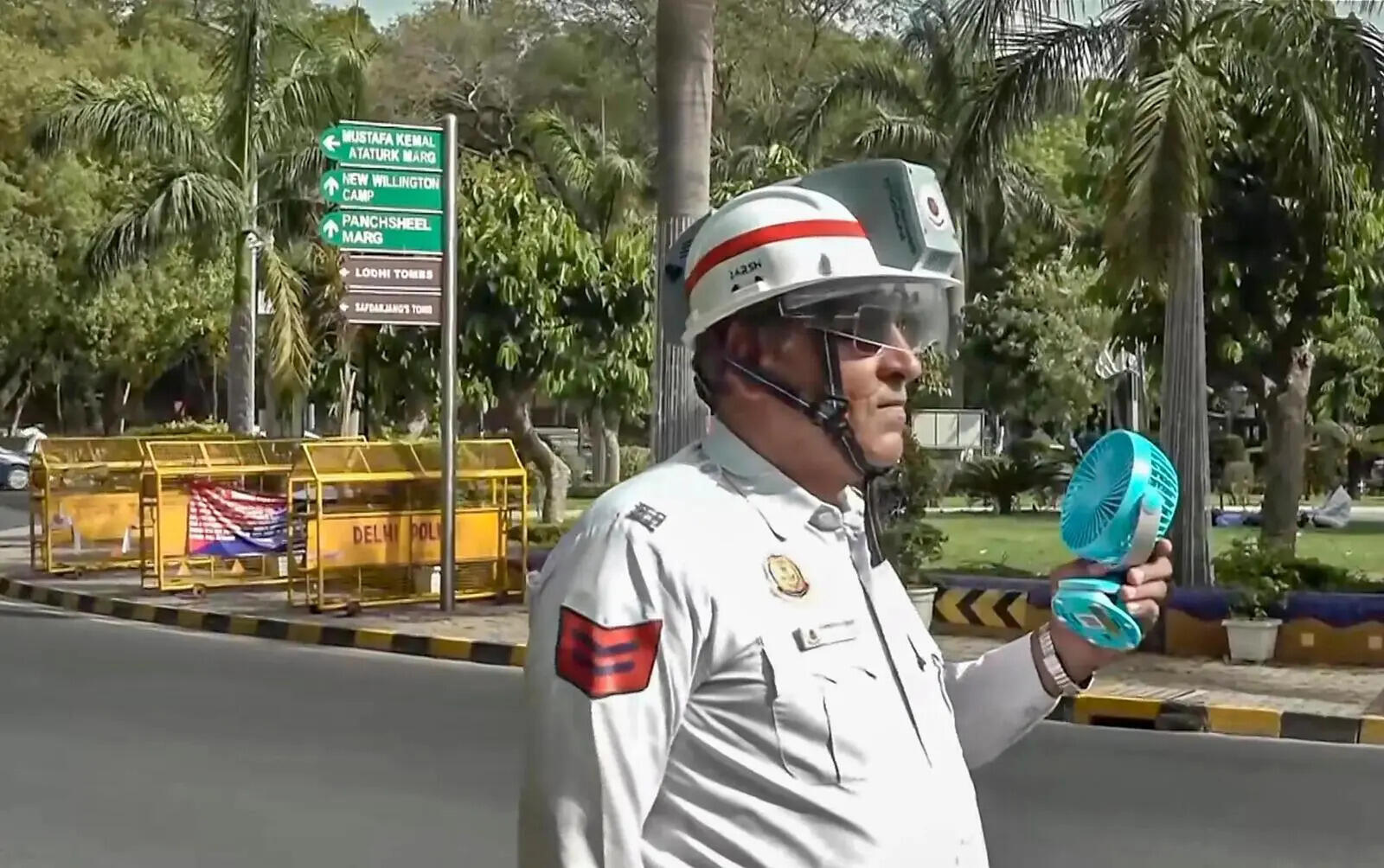
Premium imported models claim to lower temperatures inside the helmet, though high costs remain a barrier to widespread adoption.Recognising the growing threat posed by heatwaves, some police departments have also started experimenting with cooling gear.In Tamil Nadu, traffic personnel have been provided AC helmets alongside hydration support, ORS packets and mobile relief units to help them cope with extreme summer conditions.Whether through a cooling vest, a smarter helmet or the next generation of personal cooling devices, the goal remains the same: helping people stay safe, productive and comfortable in a world that is getting hotter by the year.
Are AC helmets really the answer?
The idea sounds futuristic: a helmet that can cool your head while riding through a 45°C afternoon. But on the ground, the reality is more complicated.A traffic cop in Chennai says the toughest moments are often not while riding, but while standing at traffic junctions.“During peak afternoons, road-surface temperatures on stretches such as OMR, GST Road and around Koyambedu can climb beyond 45°C, turning even a 90- to 120-second signal wait into an uncomfortable experience,” a traffic cop from Chennai told TOI.While AC helmets are slowly making their way into the market, they are not yet a practical solution for everyone.Affordable models mostly rely on built-in fans for ventilation, while advanced cooling helmets remain expensive and are often weighed down by battery and maintenance requirements.“Most AC helmets sold in India are fan-cooled models costing Rs 300–Rs 5,000. Imported thermoelectric cooling helmets sold in Chennai superbike stores cost Rs 40,000–Rs 80,000 and they claim to reduce inside temperature by nearly 10°C,” he added.As a result, many riders, delivery workers and traffic personnel continue to rely on simpler solutions such as ventilated helmets, cooling liners, hydration packs and frequent water breaks.Avadi city police in Chennai has also started distributing AC helmets alongside buttermilk, ORS packets and drinking water to personnel stationed on roads during extreme heat.
‘Jugaads’ against 45°C
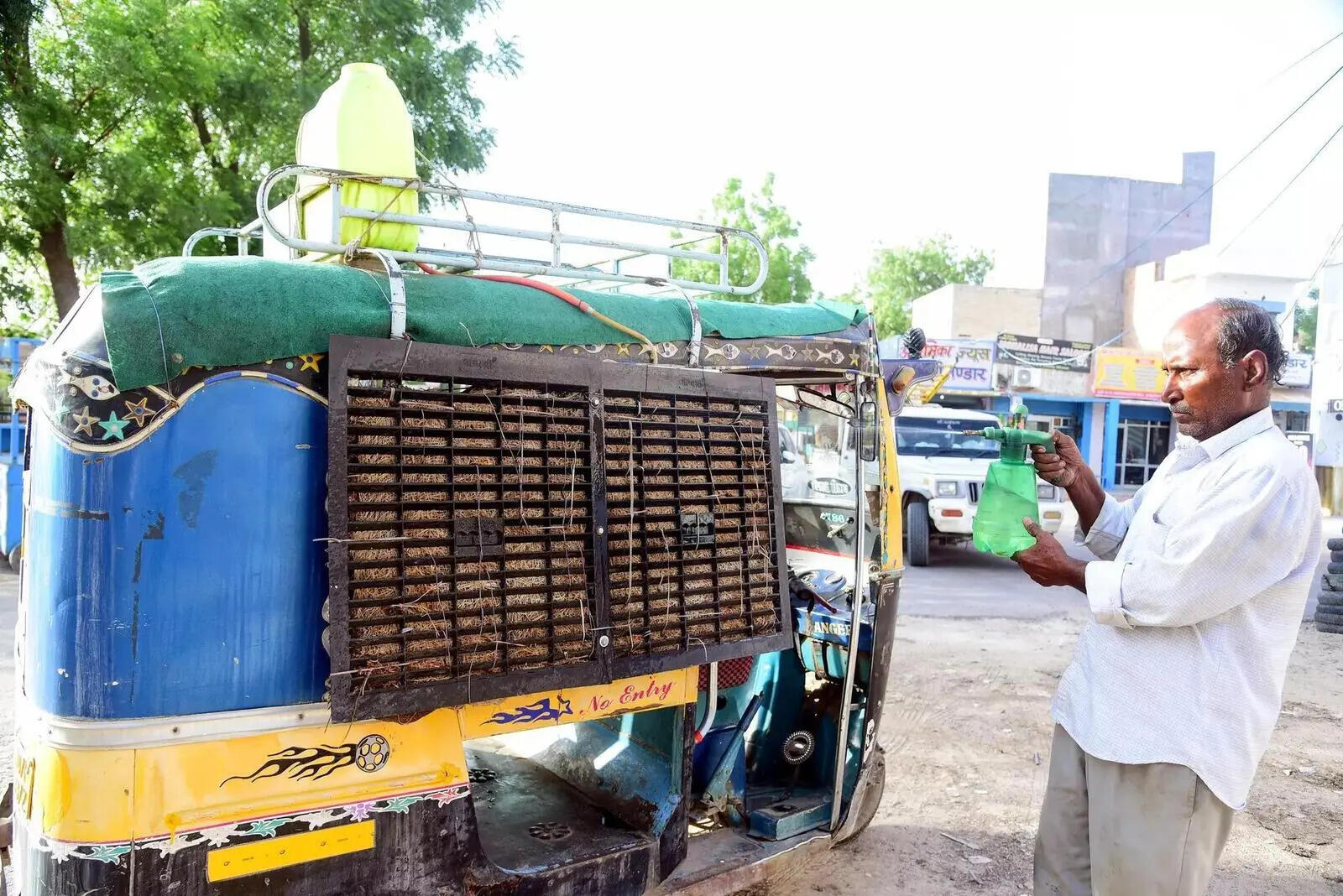
When temperatures cross 45°C, survival itself becomes an innovation challenge. And if there is one thing India excels at, it is finding low-cost fixes long before formal solutions arrive.Across cities and villages, people are turning everyday materials into makeshift cooling systems.In parts of Delhi, Lucknow and Jaipur, auto-rickshaw drivers have been spotted lining the roofs of their vehicles with grass mats, straw layers and coconut-thatch coverings to keep the metal body from turning into an oven.
.
Some have even installed water-soaked khus curtains that create a natural cooling effect as air passes through them.The same ingenuity can be seen among taxi drivers. In Delhi, Chennai and Mumbai, many keep wet towels on dashboards, use reflective windshield covers during parking breaks, place ice packs near air vents or hang damp cloth screens near windows to improve airflow.Then there was Gurugram’s viral ‘AC Auto’. Equipped with a working air-conditioner inside an electric rickshaw, the vehicle became an internet sensation as users joked that Gurgaon was ‘living in 2050’.In homes, markets and roadside shops, the hacks continue. In heat-hit towns across Rajasthan, Uttar Pradesh and Maharashtra, water sprinklers are used on tin roofs to lower surface temperatures.Shopkeepers cover roofs with wet gunny sacks, while residents install temporary bamboo screens and straw panels on terraces to reduce heat absorption. Earthen pots filled with water are often placed near entrances to cool incoming air naturally.What makes these solutions remarkable is not technological sophistication but accessibility. Most require little money, no electricity and materials that are readily available.Sometimes the battle against a heatwave begins not in a laboratory or boardroom, but with a bucket of water, a bundle of straw and a bit of classic Indian jugaad.
Reimagining buildings and public spaces
For decades, India’s response to heat has largely remained focused on drinking more water, staying indoors and avoiding the afternoon sun.But as temperatures continue to rise, experts say the bigger challenge lies outside our homes: redesigning the spaces where people live, work and commute.Cities are increasingly realising that concrete, glass and asphalt do not just absorb heat, they trap it. This phenomenon, known as the urban heat island effect, can make densely built neighbourhoods several degrees hotter than surrounding areas.In Mumbai, some hotspots identified under the city’s climate action plan have recorded temperatures up to 8°C higher than greener localities.To counter this, authorities are beginning to rethink the very surfaces that cover India’s cities. One of the most ambitious examples comes from Mumbai, where the civic body has launched a cool-roof programme that will coat hundreds of municipal school buildings with heat-reflective paint.The specialised coating reflects a significant portion of incoming solar radiation, helping reduce roof temperatures and making classrooms more comfortable for students without relying on energy-intensive air-conditioning.Scientists are also pushing the boundaries of what a coat of paint can achieve. Researchers in Australia recently unveiled a nano-engineered ‘smart paint’ capable of reflecting up to 97% of sunlight.The experimental coating not only keeps surfaces dramatically cooler but can also harvest water from the atmosphere through condensation. While still under development, it offers a glimpse into how future buildings may actively fight heat rather than simply endure it.At the same time, cities are revisiting age-old urban planning principles. Increasing tree cover, creating shaded pedestrian corridors, using heat-reflective construction materials, preserving open spaces and improving airflow between buildings are all becoming part of the climate-resilience conversation. The goal is not merely to cool individual buildings but entire neighbourhoods.
‘Desi jugaads’ that went viral
A viral video shows a man beating India’s brutal 44°C heat by turning his rooftop into a barefoot-friendly surface using just Rs 800 worth of materials — a simple mix of chuna (lime), binder and waterproofing compound. The result is striking: roof temperatures reportedly drop from heat-trap levels to around 28–30°C.At several Indian railway stations, where heat and pollution push conditions to extreme levels, authorities are now spraying water from rooftop systems to bring down temperatures and offer commuters a brief moment of relief on scorching platforms.A viral desi innovation shows a man transforming his motorcycle into a fully covered mini-canopy ride with built-in shade and even a fire safety system turning extreme heat and rain into a comfortable journey. This proves once again that in India, jugaad engineering often beats expensive upgrades in pure creativity and practicality.These innovations show that Indians don’t just face problems, they instinctively build solutions for almost every challenge life throws at them.
Beyond gadgets: What governments need to do
Experts increasingly argue that adapting to extreme heat cannot be left to individual workers alone.Several cities have already begun experimenting with heat-action measures. Delhi has deployed mobile heat-relief vans carrying drinking water, ORS packets, first-aid supplies and protective gear in heat-prone locations.E-commerce and food delivery platforms have started setting up shaded rest centres, hydration points and air-cooled break zones for delivery partners.
Would you prefer to use traditional cooling methods or modern technologies to cope with heat?
Some companies have introduced cooling jackets, ventilated gear and job rotation systems to reduce prolonged exposure during peak heat hours. These measures are increasingly seen not as perks, but as basic operational necessity.However, public health experts say a broader response is needed as heatwaves become more frequent and intense. This includes:
- Expanding shaded shelters and cooling centres in markets, transport hubs and labour zones.
- Mandating rest breaks and revised work timings for outdoor workers during peak afternoon hours.
- Installing public drinking-water stations in high-footfall areas.
- Increasing urban tree cover and heat-resilient infrastructure.
- Promoting cool roofs and heat-reflective building materials.
- Strengthening heatwave warning systems and public awareness campaigns.
In other words, while cooling helmets, jackets and vests may help individuals beat the heat, the larger battle will be won through city-wide planning.As temperatures continue to rise, the challenge is no longer simply staying comfortable, it is making sure people can work, travel and live safely in a much hotter India.