
Close Menu
Simply Invest Asia
  • Home
  • About us
  • Explore industries/sectors
    • Automobile
    • Aviation
    • Banking
    • Biotechnology
    • Chemical & Fertilizer
    • Entertainment and Media
    • Food Processing
    • Healthcare
    • Iron and Steel
    • Leather
    • Mining
    • Oil and Gas
    • Pharmaceutical
  • Explore by countries
    • China
    • Dubai / UAE
    • Hong Kong
    • India
    • Indonesia
    • Japan
    • Malaysia
  • Explore cities
    • Bangkok
    • Beijing
    • Chongqing
    • Delhi
    • Dubai
    • Guangzhou
    • Jakarta
    • Kuala Lumpur
  • Why Asia
Facebook X (Twitter) Instagram Threads
Trending:
  • Bollywood drops Beijing as a villain – is a Russia-China-India axis next?
  • Hong Kong landlord and tenant arrested after rental dispute turns violent
  • France India – Journal-News.com
  • Why Is Magna International Stock Trending Right Now – Kalkine Media
  • Today’s Top 3 News: Why TNI Troops Were Sent to Jakarta Student Rally, 2026 World Cup: Germany vs Curacao Prediction
  • Anantara Downtown Dubai Hotel Announces Appointment of Manish Jha as General Manager | News
  • ‘Will speak when time is right’: Saayoni Ghosh reaches Delhi amid TMC turmoil | India News
  • Air Pollution in Dhaka vs Beijing | Air pollution: What Beijing got right that Dhaka still hasn’t
  • How Pang Ho-cheung’s early black comedies disrupted Hong Kong cinema
  • Non-Associated Gas Licence for Loran gas field
  • Japan Imperial Couple’s European Trip Significant: Expert
  • Air India crash disaster first anniversary marked at poignant Leicester ceremony – Trending Now Infrastructure
  • 53 film deals worth 2.8B yuan signed at Chongqing animation week
  • Eni and Petronas Establish Searah Joint Venture for Oil and Gas Assets in Indonesia and Malaysia – News and Statistics
  • Rohingya refugees exploiting private vehicles for illegal commercial gains in Terengganu | Malaysia
  • Japanese drug firms reportedly expand in China; Tokyo urged to heed business community’s calls to stabilize ties: expert
  • Ex-IGP Benazir Ahmed arrested in Dubai
  • Initiative tackles insurance barriers for autistic children in Hong Kong
Sunday, June 14
Facebook X (Twitter) Instagram
Simply Invest Asia
  • Home
  • About us
  • Explore industries/sectors
    • Automobile
    • Aviation
    • Banking
    • Biotechnology
    • Chemical & Fertilizer
    • Entertainment and Media
    • Food Processing
    • Healthcare
    • Iron and Steel
    • Leather
    • Mining
    • Oil and Gas
    • Pharmaceutical
  • Explore by countries
    • China
    • Dubai / UAE
    • Hong Kong
    • India
    • Indonesia
    • Japan
    • Malaysia
  • Explore cities
    • Bangkok
    • Beijing
    • Chongqing
    • Delhi
    • Dubai
    • Guangzhou
    • Jakarta
    • Kuala Lumpur
  • Why Asia
Simply Invest Asia
Home»Explore cities»Beijing»Air Pollution in Dhaka vs Beijing | Air pollution: What Beijing got right that Dhaka still hasn’t
Beijing

Air Pollution in Dhaka vs Beijing | Air pollution: What Beijing got right that Dhaka still hasn’t

By IslaJune 14, 20265 Mins Read
Share
Facebook Twitter Pinterest Threads Bluesky Copy Link


Around five years ago, headlines worldwide noted Beijing’s skyline darkened by pollution. On the other hand, IQAir’s World Air Quality Report recognised Bangladesh as the most polluted country on earth in 2019. It also found Dhaka among the top five most polluted capital cities globally. Two cities had this common ground for a while, but it did not last long.

Astonishingly, after implementing policy-oriented reforms, Beijing recorded 290 days of good or moderate air quality in 2024—the highest since monitoring began. Furthermore, the heavy pollution days decreased by 96.6 percent compared to 2013. Meanwhile, Dhaka still ranks among the most polluted capital cities in the world.

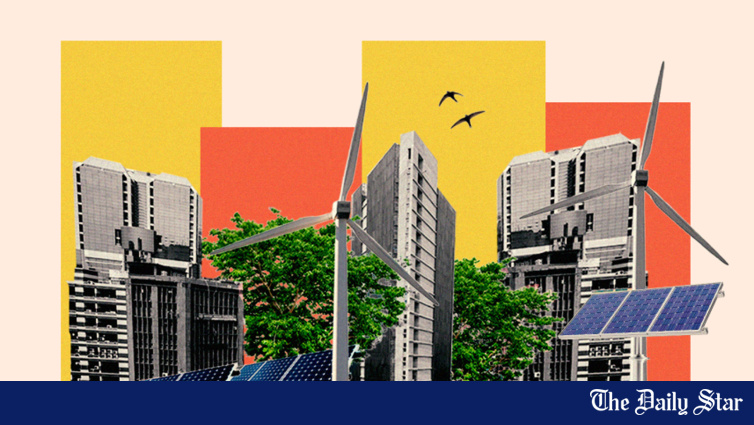
The contrast between Beijing and Dhaka is more than an environmental failure; it is a direct consequence of how we choose to power our nation. Much of the smog darkening our capital stems from reliance on fossil fuels, a dependency that drains both our public health and our economy.

According to the Institute for Energy Economics and Financial Analysis (IEEFA), Bangladesh’s peak power demand stood at 17,000 MW in FY2024-25. With an installed capacity exceeding 27,000 MW, we are sitting on a massive, unproductive reserve margin of 61.3 percent. Consequently, we are bleeding money on capacity charges for electricity we never even use. Then there is renewable energy. Following decades of policy recommendations and formulations, this source still accounts for less than five percent of our installed capacity. And every time a global crisis hits, our fossil fuel import bill takes another punishing hit, most recently threatened with a $4.8 billion spike from 2025 levels due to tensions in the Middle East. This is the cost of dependency.

The Centre for Policy Dialogue (CPD) put it plainly: Bangladesh needs to seriously consider alternatives. But considering is no longer enough. Beijing did not clean its air by issuing statements. Their robust policy enforcement, strategic industrial restructuring, and targeted investment made it happen. Our government must take up and move with the same drive. That means empowering frameworks, encouraging incentives, and pricing structures that make renewable energy the more obvious financial choice for both producers and consumers. While the Renewable Energy Policy, 2025 is a positive step, its success in sustainably securing our energy future depends entirely on strict implementation and institutional follow-through.

Our private sector must enter the picture. It has supply chains, distribution networks, rural market penetration, and institutional finance relations that government agencies cannot replicate at scale. The question is whether they have the coordinated will to use it. And the opportunity extends well beyond solar. Consider the capacity utilisation gap our own grid presents. By maintaining 27,000 MW of installed capacity for a peak demand of only 17,000 MW, we are wasting an enormous amount of energy generation headroom every single day. Energy Storage Systems (ESS) can be a direct solution. By storing surplus off-peak generation and releasing it at peak hours, ESS can energise our infrastructure in far more productive ways.

Global grid-scale battery storage deployments grew 38 percent year-on-year in late 2025. Considering this, the private sector in Bangladesh should invest in localising this technology as part of its clean energy commitment. Beyond solar and storage, our hydroelectric potential remains over 50 percent untapped, and the Rooppur Nuclear Power Plant’s first unit is expected to add 1,200 MW to the grid by early 2027. Private sector involvement in managing these projects and localising components is exactly what is needed to accelerate their timelines.

Electric vehicles (EV) present another deeply practical lever. Our government aims for 30 percent EV penetration by 2030, and despite infrastructural leakages, adoption has been growing steadily. If the private sector endeavours a policy-backed drive towards night-time EV charging infrastructure, two things will happen at once: off-peak grid capacity will get productively utilised, and the country will reduce its reliance on imported fuel for transportation.

And for all of this to reach the households that need it most, the microfinance model remains the indispensable bridge. The Infrastructure Development Company Limited’s (IDCOL) Solar Home System Program has already demonstrated that combining concessional finance with grassroots NGO networks and delivering the product first with repayment following in manageable instalments can bring clean energy to over two crore people. A solar home system costs between Tk 7,000 and Tk 20,000. For a lower-middle-income household, that is a barrier, not a purchase. Under a structured micro-credit plan, it becomes accessible. The model exists. The financing channels exist. What is missing is greater and deliberate institutional participation of private sector players who are already in the clean energy space.

The urgency goes far beyond environmental. The EU’s Carbon Border Adjustment Mechanism will be in effect in 2027. According to CPD’s analysis, Bangladesh’s garment and textile sector will need to demonstrate clean energy sourcing or face carbon-related trade penalties in European markets. Our largest industry depends on this transition. The private sector cannot afford to treat clean energy as a Corporate Social Responsibility (CSR) footnote when it is fast becoming a trade requirement.

Beijing looked at its grey skies and decided enough was enough. It took years of disciplined policy, private sector mobilisation, and institutional resolve to get from that smog to 290 clean days a year. We are still in the grey. The clean energy ecosystem in Bangladesh requires the government to lead with clarity, and the private sector to follow with the same urgency it brings to its balance sheets. The blueprint exists. The data is in. What remains is the will.

The author acknowledges meaningful guidance and insights from Sayed Joynul Abedin, chief executive officer at Akij Venture Group.


Nazma Sultana manages the business development of Akij Renewable Energy and Automobiles Limited.


Views expressed in this article are the author’s own. 


Follow The Daily Star Opinion on Facebook for the latest opinions, commentaries, and analyses by experts and professionals. To contribute your article or letter to The Daily Star Opinion, see our guidelines for submission.


Source link

Related Posts

Scotland fans in Beijing gear up for much-awaited World Cup return – news.cgtn.com

June 14, 2026

Meta reportedly moves to unwind $2B Manus deal after Beijing’s demand

June 14, 2026

Xia welcomes Wong in Beijing, recognises Administration and Justice results

June 13, 2026
Add A Comment
Leave A Reply Cancel Reply

Top Posts

Chinese Wall may stem India tech flows for electronics and automobile

June 1, 2026

Abandoned malls, whispers of nuclear war and young foreigners detained. This is what’s REALLY going on in Dubai… and the chilling warning one taxi driver gave to the Mail’s IAN BIRRELL

April 11, 2026

Von der Leyen warned about China. Europe didn’t listen. Will it now?

June 6, 2026
Don't Miss

Bollywood drops Beijing as a villain – is a Russia-China-India axis next?

By IslaJune 14, 2026

Not long ago, China was the villain of choice in much of India’s public discourse.The…

Hong Kong landlord and tenant arrested after rental dispute turns violent

June 14, 2026

France India – Journal-News.com

June 14, 2026

Why Is Magna International Stock Trending Right Now – Kalkine Media

June 14, 2026
SUBSCRIBE TO OUR NEWSLETTER

Get our latest downloads and information first. Complete the form below to subscribe to our weekly newsletter.


I consent to being contacted via telephone and/or email and I consent to my data being stored in accordance with European GDPR regulations and agree to the terms of use and privacy policy.

Stay In Touch
  • Facebook
  • YouTube
  • TikTok
  • WhatsApp
  • Twitter
  • Instagram
Top Trending

53 film deals worth 2.8B yuan signed at Chongqing animation week

By IslaJune 14, 2026

Eni and Petronas Establish Searah Joint Venture for Oil and Gas Assets in Indonesia and Malaysia – News and Statistics

By IslaJune 14, 2026

Rohingya refugees exploiting private vehicles for illegal commercial gains in Terengganu | Malaysia

By IslaJune 14, 2026
Most Popular

AI segmentation. India in financial trouble. The African impact of the “Lisbon earthquake” & “nothing is as far as here”.

June 7, 2026

Dubai developer invokes force majeure on home sales

June 11, 2026

Mitigating unseen losses in large food packs

April 13, 2026
Our Picks

NEV sales soared 51.1% as net profit dropped 44.34%, with strong global expansion and a 40% dividend payout — TradingView News

April 12, 2026

Amneal Pharmaceuticals Kashiv Deal Puts Biosimilar Growth And Valuation In Focus

May 6, 2026

Letter from Mideast: From China to Arab world — my journey as an Arab sinologist-Xinhua

May 30, 2026
SUBSCRIBE TO OUR NEWSLETTER

Get our latest downloads and information first. Complete the form below to subscribe to our weekly newsletter.


I consent to being contacted via telephone and/or email and I consent to my data being stored in accordance with European GDPR regulations and agree to the terms of use and privacy policy.

© 2026 Simply Invest Asia.
  • Get In Touch
  • Cookie Policy
  • Privacy policy
  • Terms & Conditions

Type above and press Enter to search. Press Esc to cancel.

SUBSCRIBE TO OUR NEWSLETTER

Get our latest downloads and information first.

Complete the form below to subscribe to our weekly newsletter.


I consent to being contacted via telephone and/or email and I consent to my data being stored in accordance with European GDPR regulations and agree to the terms of use and privacy policy.