
Close Menu
Simply Invest Asia
  • Home
  • About us
  • Explore industries/sectors
    • Automobile
    • Aviation
    • Banking
    • Biotechnology
    • Chemical & Fertilizer
    • Entertainment and Media
    • Food Processing
    • Healthcare
    • Iron and Steel
    • Leather
    • Mining
    • Oil and Gas
    • Pharmaceutical
  • Explore by countries
    • China
    • Dubai / UAE
    • Hong Kong
    • India
    • Indonesia
    • Japan
    • Malaysia
  • Explore cities
    • Bangkok
    • Beijing
    • Chongqing
    • Delhi
    • Dubai
    • Guangzhou
    • Jakarta
    • Kuala Lumpur
  • Why Asia
Facebook X (Twitter) Instagram Threads
Trending:
  • Rise in China’s producer prices continues amid ongoing tensions in Middle East
  • Seven people and two companies charged after deadly Hong Kong fire
  • Developer AHS buys Shangri-La hotel in Dubai and plans to launch new Dh25bn project this year
  • US strengthens nuclear umbrella for Japan
  • Military officers behind acid attack on Indonesian activist sentenced to jail
  • Google Cloud suffers network disruptions after fire at third-party data center in India
  • Beijing United Information Technology Hits Day Low Amid P…
  • Home entertainment, trends in physical media: the 4K Blu-ray segment is growing
  • India’s quasi-alliance with Israel and the UAE won’t have a happy ending
  • Hong Kong charges 7 people and 2 firms over deadly fire that killed 168
  • Malaysia’s palm oil reserves jump most in five months as exports slump — MPOB
  • China, Kenya Commit to Protecting Habitats, Advancing Green Transition—-Chinese Academy of Sciences
  • ‘This is something we see as tangible outcome of the right of development’: Egyptian diplomat says after touring Changan Automobile Group’s AVATR Digital Intelligence Factory in Chongqing
  • Assessing India’s Monetary Policy and Growth Amid External Headwinds
  • Zoud and Alef Education partner to empower UAE students with financial literacy skills
  • Jakarta entrepreneurship thrives amid Indonesia’s growth surge
  • July 1 Handover Day: Arts, F&B, transport offers & freebies unveiled
  • Centuries of mining records made available online
Wednesday, June 10
Facebook X (Twitter) Instagram
Simply Invest Asia
  • Home
  • About us
  • Explore industries/sectors
    • Automobile
    • Aviation
    • Banking
    • Biotechnology
    • Chemical & Fertilizer
    • Entertainment and Media
    • Food Processing
    • Healthcare
    • Iron and Steel
    • Leather
    • Mining
    • Oil and Gas
    • Pharmaceutical
  • Explore by countries
    • China
    • Dubai / UAE
    • Hong Kong
    • India
    • Indonesia
    • Japan
    • Malaysia
  • Explore cities
    • Bangkok
    • Beijing
    • Chongqing
    • Delhi
    • Dubai
    • Guangzhou
    • Jakarta
    • Kuala Lumpur
  • Why Asia
Simply Invest Asia
Home»Explore by countries»Japan»U.S.-Japan GPI Workshare Revealed: Northrop Details 50-50 Split in Hypersonic Interceptor Program
Japan

U.S.-Japan GPI Workshare Revealed: Northrop Details 50-50 Split in Hypersonic Interceptor Program

By IslaApril 23, 20264 Mins Read
Share
Facebook Twitter Pinterest Threads Bluesky Copy Link


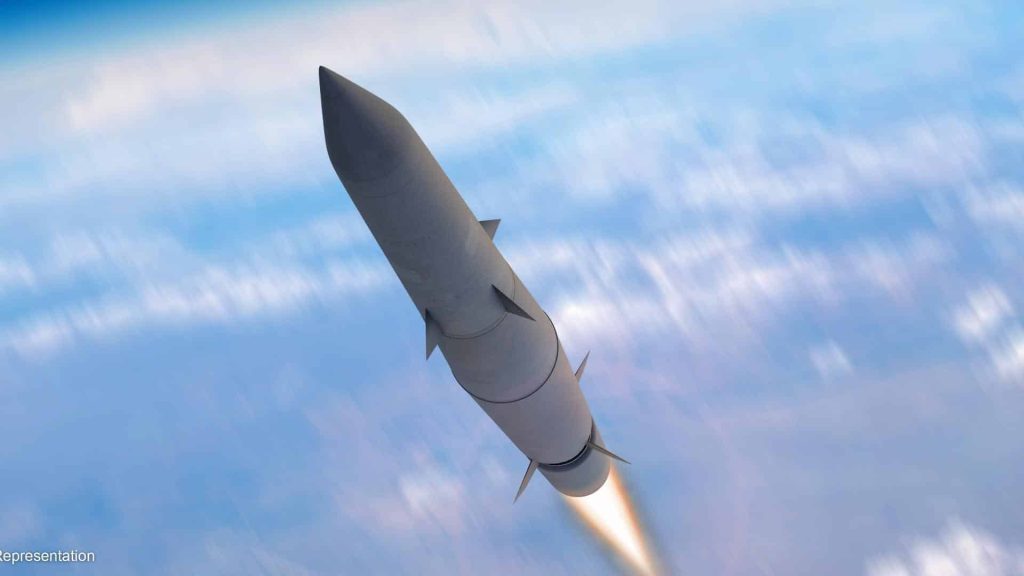
Northrop Grumman has publicly detailed, for the first time, how work is divided between the United States and Japan in the co-development of the Glide Phase Interceptor (GPI), a next-generation missile designed to defeat hypersonic threats.

At a media briefing in Tokyo on April 22, the U.S. defense contractor presented a schematic outlining the allocation of key components between the two nations, providing concrete substance to earlier statements that the program is structured as a “50-50” partnership.

While Japan’s Ministry of Defense had previously described the general framework of the U.S.-Japan workshare in Japanese, Northrop Grumman’s latest briefing offered a more detailed and granular breakdown.

The GPI is designed to intercept hypersonic glide vehicles (HGVs) traveling at speeds exceeding Mach 5 during their glide phase—an engagement window that has proven difficult for existing ballistic missile defense systems. The program was formally agreed upon at the August 2023 summit between then–Prime Minister Fumio Kishida and U.S. President Joe Biden, underscoring the growing urgency of countering advanced missile threats in the Indo-Pacific.

A Clearly Defined Workshare

GPI Key Program Workshare Between the United State and Japan (Credit: Northrop Grumman)

According to Northrop Grumman’s presentation, the interceptor is a three-stage missile with clearly delineated responsibilities between the two countries.

The United States is responsible for the first-stage booster, the third-stage solid rocket motor, and key elements of the kill vehicle, including the aeroshell, avionics package, and seeker—components central to sensing, guidance, and terminal engagement.

Japan, for its part, is assigned the second-stage solid rocket motor and the third-stage attitude control system (ACS), both critical for flight stability and trajectory control. In addition, Japan contributes to the kill vehicle by developing the rocket motor, fin actuators, and fins, directly influencing terminal maneuverability.

The schematic presented at the briefing visually reinforced this division, highlighting a distribution in which U.S. contributions are concentrated in propulsion and sensor integration, while Japan plays a significant role in flight control and maneuver systems.

Depth of Japan’s Contribution

One of the key takeaways from the disclosure is the extent of Japan’s involvement. Rather than supplying isolated components, Japan contributes to critical elements of propulsion, attitude control, and terminal maneuvering.

This structure reflects a high degree of technical integration between the two nations, consistent with Northrop Grumman’s characterization of the program as a balanced workshare.

Industry and Alliance Integration

Troy Brashear, Vice President for International Space Business Development at Northrop Grumman, emphasized that the GPI program reflects broader cooperation across the missile defense kill chain.

“Northrop Grumman is involved in the full spectrum of missile defense— from understanding the threats to killing the attack vehicle and making the battle damage assessment,” Brashear said. “But what I would also like to highlight is the partnership and collaboration between the United States and Japan across each of these segments.”

He added that the program is designed to counter what he described as a “real” and “imminent” hypersonic threat, particularly for Japan given its geographic proximity to potential adversaries.

Brashear also pointed to the diagram shown during the briefing, noting that it illustrates a “50-50 content share” between the two countries across missile stages and the kill vehicle.

Program Status

Northrop Grumman image

Northrop Grumman’s GPI concept was selected in 2024, marking a key milestone in the program’s development.

Northrop’s GPI concept has three features: 1) acceleration by a three-stage rocket motor, 2) destruction of the target by a kill vehicle in the warhead section, and 3) launch from an Aegis destroyer’s vertical launch system (VLS), according to Japan’s Ministry of Defense.

In November 2024, the Ministry of Defense in Tokyo signed a contract with Mitsubishi Heavy Industries worth about 56 billion yen (around $350 million) for the design and manufacture of Japan’s assigned components, with delivery scheduled for March 2029.

The GPI is expected to be deployed on Japan Maritime Self-Defense Force (JMSDF) Aegis destroyers as well as the planned Aegis System Equipped Vessels (ASEVs). Japan aims to field the first ASEV by March 2028, followed by a second by March 2029.

A Next-Generation Interceptor

The GPI builds on earlier U.S.-Japan missile defense cooperation, most notably the SM-3 Block IIA, but represents a significant step forward in addressing hypersonic threats that challenge existing defense architectures.

As development progresses, the program is likely to serve as a key benchmark for future U.S.-Japan defense industrial cooperation, particularly in terms of technological integration and alliance interoperability. Whether the two countries can translate this balanced workshare into an operational capability against hypersonic threats will be a key question for regional security in the coming years.


Source link

Related Posts

US strengthens nuclear umbrella for Japan

June 10, 2026

Japan’s largest fruit import under threat from ethylene shortage | News

June 10, 2026

😢​ Sweden and Japan snub Tigres’ stadium

June 10, 2026
Add A Comment
Leave A Reply Cancel Reply

Top Posts

Chinese Wall may stem India tech flows for electronics and automobile

June 1, 2026

Abandoned malls, whispers of nuclear war and young foreigners detained. This is what’s REALLY going on in Dubai… and the chilling warning one taxi driver gave to the Mail’s IAN BIRRELL

April 11, 2026

Von der Leyen warned about China. Europe didn’t listen. Will it now?

June 6, 2026
Don't Miss

Rise in China’s producer prices continues amid ongoing tensions in Middle East

By IslaJune 10, 2026

Emre Aytekin10 June 2026•Update: 10 June 2026In China, the upward trend in producer prices, driven…

Seven people and two companies charged after deadly Hong Kong fire

June 10, 2026

Developer AHS buys Shangri-La hotel in Dubai and plans to launch new Dh25bn project this year

June 10, 2026

US strengthens nuclear umbrella for Japan

June 10, 2026
SUBSCRIBE TO OUR NEWSLETTER

Get our latest downloads and information first. Complete the form below to subscribe to our weekly newsletter.


I consent to being contacted via telephone and/or email and I consent to my data being stored in accordance with European GDPR regulations and agree to the terms of use and privacy policy.

Stay In Touch
  • Facebook
  • YouTube
  • TikTok
  • WhatsApp
  • Twitter
  • Instagram
Top Trending

‘This is something we see as tangible outcome of the right of development’: Egyptian diplomat says after touring Changan Automobile Group’s AVATR Digital Intelligence Factory in Chongqing

By IslaJune 10, 2026

Assessing India’s Monetary Policy and Growth Amid External Headwinds

By IslaJune 10, 2026

Zoud and Alef Education partner to empower UAE students with financial literacy skills

By IslaJune 10, 2026
Most Popular

Stephenson Harwood Eyes Bangkok Office Launch – Law.com

April 14, 2026

Boeing Deliveries Advance Malaysia Airlines Fleet Upgrade

May 26, 2026

British Airways extends Dubai suspension until October

June 3, 2026
Our Picks

Delton Technology (Guangzhou) Inc. Announces Board Meeting to Approve Q1 2026 Results on April 29, 2026 1 – Minichart

April 17, 2026

Passengers stuck for hours at Kuala Lumpur International Airport due to baggage system breakdown

April 20, 2026

Dubai to make parents legally responsible for kids’ dangerous e-Scooter riding under new safety law

April 16, 2026
SUBSCRIBE TO OUR NEWSLETTER

Get our latest downloads and information first. Complete the form below to subscribe to our weekly newsletter.


I consent to being contacted via telephone and/or email and I consent to my data being stored in accordance with European GDPR regulations and agree to the terms of use and privacy policy.

© 2026 Simply Invest Asia.
  • Get In Touch
  • Cookie Policy
  • Privacy policy
  • Terms & Conditions

Type above and press Enter to search. Press Esc to cancel.

SUBSCRIBE TO OUR NEWSLETTER

Get our latest downloads and information first.

Complete the form below to subscribe to our weekly newsletter.


I consent to being contacted via telephone and/or email and I consent to my data being stored in accordance with European GDPR regulations and agree to the terms of use and privacy policy.