
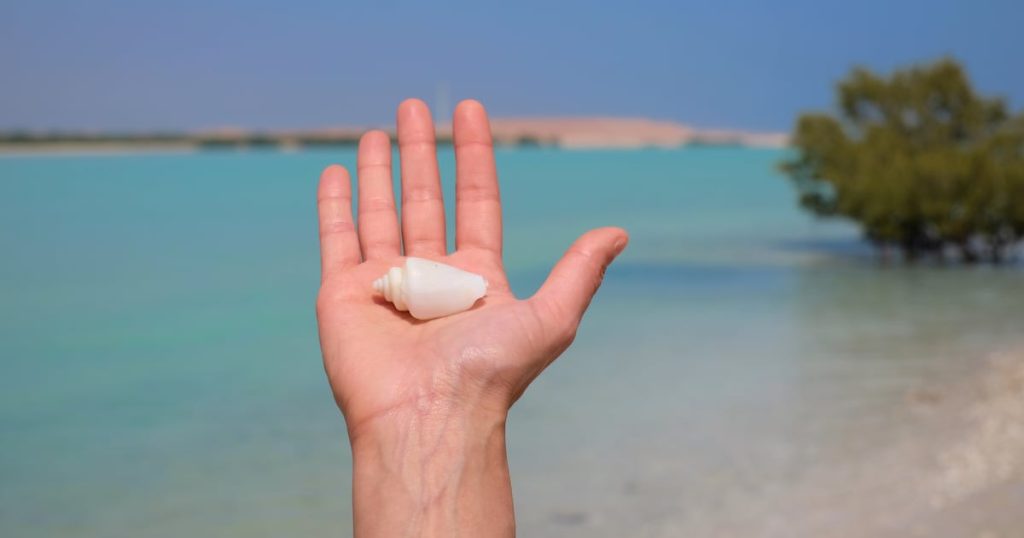
Mangroves and beaches were essentially the supermarkets of the Iron Age in what is now the UAE, a study has found.
These natural environments provided an abundance of diverse shells that were easy to collect. Analysis of thousands of shells from the Muweilah archaeological site in Sharjah has offered insights into life in the region between 1000 and 600 BC, including signs that society may have been well organised.
In the study, researchers identified no fewer than 40,668 types of shells, sometimes using a device called a sediment splitter to separate differently sized shells. Just under two thirds of the shells were from gastropods, which include snails, and the rest were from bivalves, a group that includes mussels and oysters.
Abundant biodiversity
Gastropods, 24 species of which were identified in the study, and bivalves, which were represented by 30 species, are types of mollusc.
More than 90 per cent of gastropod shells were from the giant mangrove whelk, which lives in the mud in mangroves. A key food source with a protein content of up to 28 per cent, they were easily collected from mangroves at low tide.
The study was written by Ines De La Fortuna Muller Garcia, a PhD student, and Prof James Nebelsick. Both are from the University of Tubingen in Germany.
Some shells showed changes that may have been caused by cooking. Boiling does not change the colour or shininess of shells, the researchers said, but grilling can alter the colour and make them appear dull, while burning causes blackening.
“The variation in cooking techniques may reflect differences in taste preferences or possibly the socio-economic status of the site’s inhabitants,” the researchers wrote. “These observations, taken together with the broader assemblage characteristics, point to a nuanced pattern of mollusc use at Muweilah, where environmental accessibility, species-specific processing requirements and potential cultural preferences appear to have influenced both collection and preparation strategies.”
Natural tools
While some species were collected from mangroves, others, particularly bivalves, were picked up from the beach. Some bivalves may have been used as food, but mostly it was the snails that were eaten. Some smaller snail shells are thought to have been used as flooring material.
In a modern-day echo of this ancient use of seashells for flooring, a bivalve has been shown in separate research to be suitable for making floor tiles when ground down.
It is thought that shells found at Muweilah from a species called Asaphis violascens may have been used as tools, because such shells have been used as scrapers elsewhere, archaeological evidence from Indonesia shows.
Other types of shell may, likewise, have functioned as tools, although this suggestion is tentative because the researchers did not find evidence of wear.
The site also yielded a large shell that probably functioned as a container or bowl. Nearly all of the shells were easily picked up from the land, with a small number being from species that burrowed into the ground and would have been harder to find.
There are also indications, such as the presence of boreholes from predators, that some shells were picked up after the creature had died.