
June 5, 2026
TOKYO – A reduction in the consumption tax rate for food items to 1% is seen within the government as the most viable option as it could be implemented when the next fiscal year starts in April.
Prime Minister Sanae Takaichi will make a final decision based on discussions that began in earnest on Wednesday at the national council on social security, which has members from the ruling and opposition parties.
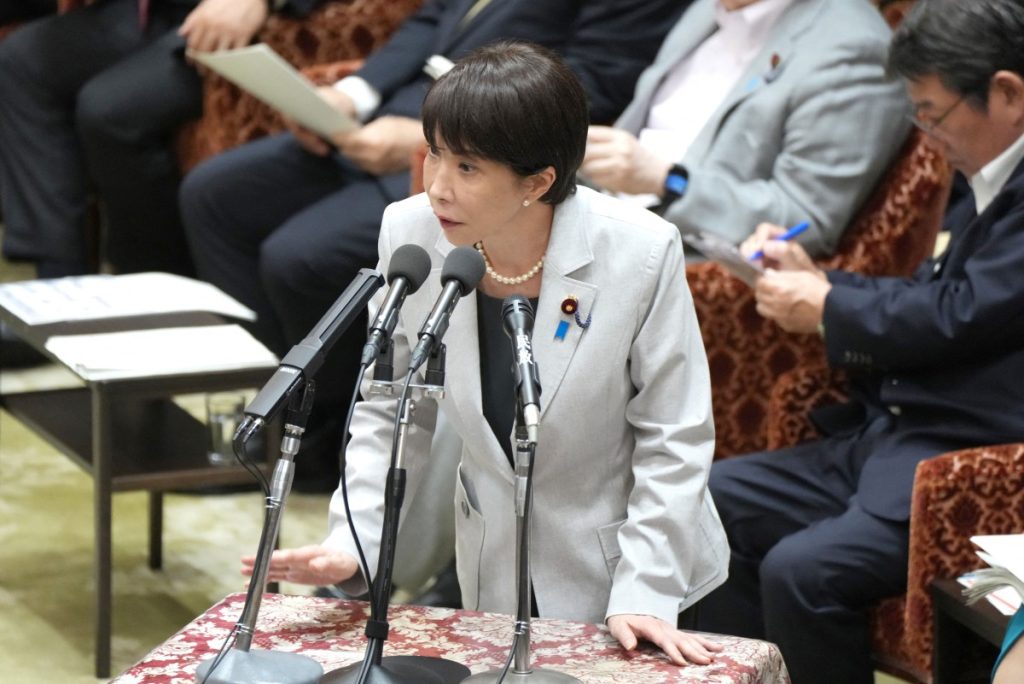
“We’ll gather ideas from all parties during the council’s meetings, and I’d like to consider ways to overcome various issues and reach a conclusion,” Takaichi said during a plenary session of the House of Representatives on Wednesday.
During the day’s working-level meeting of the council, Economy, Trade and Industry Ministry officials explained that necessary updates to cash register systems, even those at supermarkets and department stores in regional areas, could “largely” be completed within six months if the tax rate was cut to 1%.
By presenting the proposal as the leading option that could be introduced in the shortest amount of time, there was a growing perception that the groundwork had been laid for Takaichi’s decision.
Some government and ruling party officials had expressed support for bringing forward the introduction of a refundable tax credit program and not implementing any reduction in the consumption tax rate. However, cutting this tax has been a pet policy of Takaichi’s even before she became prime minister. After assuming the top post, Takaichi has described this policy as a “long-held wish,” and she has shown scant interest in calls for no tax cuts.
“The prime minister has been consistent in her strong resolve to cut the consumption tax rate,” a government official told The Yomiuri Shimbun.
As the time to make her decision approaches, Takaichi has reportedly told close aides that she will “emphasize promptness and sufficiency.” Shortly before February’s lower house election, Takaichi mentioned she aims to lower the consumption tax rate within fiscal 2026, indicating that she is set on achieving this at an early date.
Takaichi had insisted on cutting the rate to 0%. However, even if bills to amend the rate to zero were submitted to the extraordinary Diet session to be convened this autumn, cash register systems could not be updated in time for the tax rate change which would be scheduled for next April.
Opinion surveys conducted by media outlets have revealed favorable public views of the 1% plan. According to one of Takaichi’s aides, the 1% rate has caught her eye as “an attractive option that would be accepted by the public.”
However, pushing forward with this plan also leaves Takaichi open to criticism that she is breaking an election promise. In the last lower house election, the Liberal Democratic Party campaigned on a commitment to speed up consideration of reducing the consumption tax on food to zero for two years.
The plan also states that about ¥600 billion gained through the 1% consumption tax would be returned through subsidies and other channels, which would allow Takaichi, who has insisted on keeping her election promise, to claim that the tax rate is “effectively zero.” It appears that she is trying to strike a balance between keeping an election promise and ensuring the policy is implemented quickly.
Hurdles ahead
Significant hurdles still need to be cleared before Takaichi can make a final decision on a 1% rate.
During Wednesday’s working-level talks, opposition parties were collectively fuming that the media reported the 1% plan in advance. Kazuyoshi Akaba, head of the Centrist Reform Alliance’s tax system research council, said, “There’s no need to hold this meeting that seems to be just for window-dressing.”
Itsunori Onodera, head of the national council on social security and chairman of the LDP’s Research Commission on the Tax System, indicated he would urge the opposition parties to support the 1% plan. “Reaching consensus at this council would serve to accelerate implementation” of the new system, Onodera said to reporters after the meeting.
The ruling parties do not hold a majority in the House of Councillors. Given this situation, Takaichi explained in the Diet that the relevant bill will be submitted if the opposition camp cooperates. The 1% plan received a degree of support from the ruling parties at Wednesday’s meeting, so the focus will now shift to whether the opposition parties will also get behind it.
Slashing the consumption tax rate to 1% would entail a 7 percentage point tax hike two years later. LDP Secretary General Shunichi Suzuki is adamant that the proposed reduction “will definitely be only for a limited time,” but some government officials remain worried about how this will unfold.
“Will raising the tax rate be politically possible?” one official said. Drawing up a viable “exit strategy” also will become a major issue that needs to be tackled.