
Close Menu
Simply Invest Asia
  • Home
  • About us
  • Explore industries/sectors
    • Automobile
    • Aviation
    • Banking
    • Biotechnology
    • Chemical & Fertilizer
    • Entertainment and Media
    • Food Processing
    • Healthcare
    • Iron and Steel
    • Leather
    • Mining
    • Oil and Gas
    • Pharmaceutical
  • Explore by countries
    • China
    • Dubai / UAE
    • Hong Kong
    • India
    • Indonesia
    • Japan
    • Malaysia
  • Explore cities
    • Bangkok
    • Beijing
    • Chongqing
    • Delhi
    • Dubai
    • Guangzhou
    • Jakarta
    • Kuala Lumpur
  • Why Asia
Facebook X (Twitter) Instagram Threads
Trending:
  • Amundi, State Bank of India Announce Listing Of SBI Funds Management
  • Chengdu Rongcheng vs Beijing Guoan Prediction, Betting Tips, Lineups & Odds
  • No discussions yet regarding general election – Zahid | Malaysia
  • How Japan is putting AI in its cybernetic place
  • Subscription car business Carbar seeks $10m for merger with UAE’s Carasti
  • UOB Private Bank Sets Out Hong Kong AuM, Headcount Growth Goals
  • Price of parenting: the household maths giving China’s consumers pause
  • Delhi Police likely to withdraw FIRs as CJP protest ends
  • Journey through aviation history – The Island
  • Jesuit university in Indonesia opens doctoral program in theology
  • Italian students who sparked outcry over bad behaviour on Bangkok train apologise following fines
  • Madinati explained: How to report road, traffic and infrastructure issues in Dubai
  • Lloyds Bank seeking permission to open in the Cotswolds
  • Invesco Biotechnology & Genome ETF : PBE – 24/7 Wall St.
  • Residents cash in on Dubai real estate cooldown amid Mideast war
  • Vedanta Iron & Steel Q1 Results: Earnings call on July 30 – scanx.trade
  • Hong Kong Developers Adjust Greater Bay Area Strategy as Mainland Property Crisis Reshapes Market – News and Statistics
  • From marches to memes: why India’s youth turned against Modi
Sunday, July 26
Facebook X (Twitter) Instagram
Simply Invest Asia
  • Home
  • About us
  • Explore industries/sectors
    • Automobile
    • Aviation
    • Banking
    • Biotechnology
    • Chemical & Fertilizer
    • Entertainment and Media
    • Food Processing
    • Healthcare
    • Iron and Steel
    • Leather
    • Mining
    • Oil and Gas
    • Pharmaceutical
  • Explore by countries
    • China
    • Dubai / UAE
    • Hong Kong
    • India
    • Indonesia
    • Japan
    • Malaysia
  • Explore cities
    • Bangkok
    • Beijing
    • Chongqing
    • Delhi
    • Dubai
    • Guangzhou
    • Jakarta
    • Kuala Lumpur
  • Why Asia
Simply Invest Asia
Home»Explore by countries»Japan»Japan’s growing ties with NATO risks importing bloc confrontation into Asia-Pacific_英语频道_央视网(cctv.com)
Japan

Japan’s growing ties with NATO risks importing bloc confrontation into Asia-Pacific_英语频道_央视网(cctv.com)

By IslaApril 19, 20264 Mins Read
Share
Facebook Twitter Pinterest Threads Bluesky Copy Link


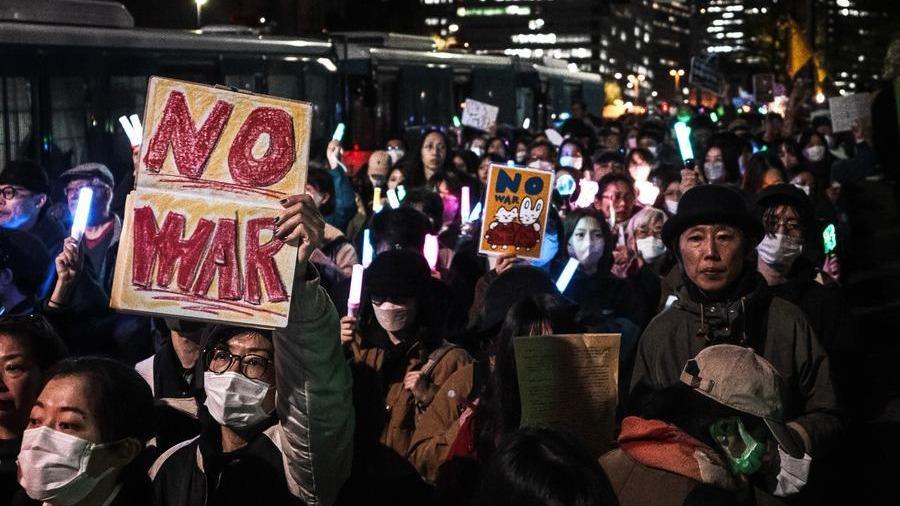
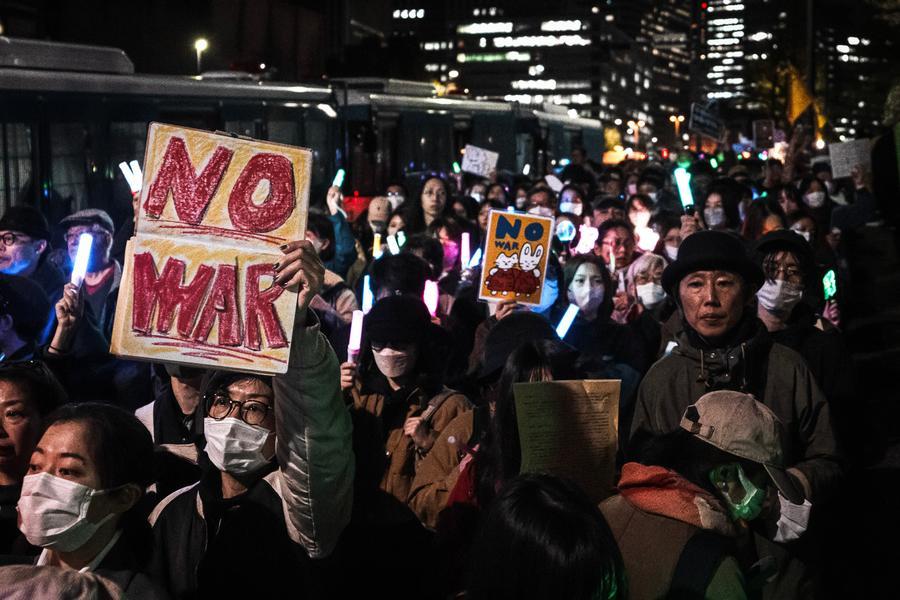
People participate in a protest outside the parliament building in Tokyo, Japan, April 8, 2026. (Xinhua/Jia Haocheng)

People participate in a protest outside the parliament building in Tokyo, Japan, April 8, 2026. (Xinhua/Jia Haocheng)

Under Takaichi’s leadership, Japan has intensified efforts to develop “counterstrike” capabilities, increase military spending, and relax arms export restrictions. Coupled with closer ties to NATO, these moves mark a clear departure from its postwar pacifist principles.

TOKYO, April 18 (Xinhua) — An unusually large delegation of around 30 NATO ambassadors visiting Tokyo this week involves more than routine diplomacy: It underscores Japan’s growing push to draw external military blocs into the Asia-Pacific, a move that risks unsettling regional peace and stability.

The NATO delegation’s agenda, as reported by NHK, including meetings with Japanese Cabinet ministers, visits to companies to explore defense-industrial cooperation, and a tour of a U.S. base in Yokosuka, underscores that this is not mere diplomatic routine but a deepening focus on security and defense collaboration.

At a time when Japanese Prime Minister Sanae Takaichi is angling to revise Japan’s constitution and expand Japan’s military capabilities, Tokyo’s accelerating alignment with NATO risks not only importing bloc confrontation into the region, but also exposing the limits of such cooperation.

Under Takaichi’s leadership, Japan has intensified efforts to develop “counterstrike” capabilities, increase military spending, and relax arms export restrictions. Coupled with closer ties to NATO, these moves mark a clear departure from its postwar pacifist principles.

For Japan, the problem runs deeper. Its economy is deeply embedded in the Asia-Pacific, while its security posture is increasingly tied to the United States and, now, NATO. This growing disconnect creates a strategic paradox: Binding itself to an extra-regional military bloc risks undermining the very regional stability on which its prosperity depends.

NATO’s growing engagement in the Asia-Pacific, through dialogue, joint exercises and high-profile visits, has fueled concerns about transplanting alliance-based security logic into a region shaped by cooperation and development. Japan’s active embrace of this model, however, is not a stabilizing force. Instead, it heightens the danger of division and confrontation in a region that has long avoided rigid bloc politics.

Founded in 1949 as a collective defense alliance during the Cold War, NATO has outlived its original mandate and is clinging to life by expanding its scope. From interventions in the Balkans to operations in Afghanistan and Libya, the military alliance has consistently demonstrated a military-oriented character.

More fundamentally, the NATO-Japan alignment is marked by structural contradictions on both sides. For NATO, reaching into Asia offers a way to project relevance despite internal fragmentation. For Japan, it is a means to pursue greater strategic weight. But this convergence is driven less by shared long-term interests than by short-term expediency.
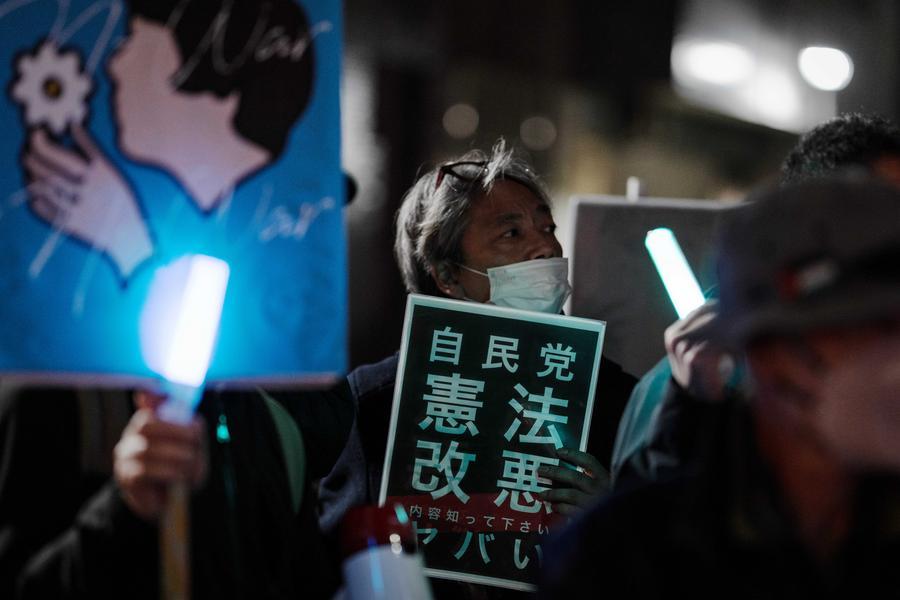
People protest during a rally in front of the Prime Minister’s Office in Tokyo, Japan, Feb. 27, 2026. (Xinhua/Jia Haocheng)

Rather than providing real security guarantees, the NATO-Japan alignment risks pulling the region into external rivalries and heightening tensions that do not originate in Asia.

In practice, this kind of cooperation is more likely to generate uncertainty than security. It would instigate bloc-based thinking, weaken mutual trust among regional countries, and complicate existing security arrangements that have long relied on openness and inclusiveness. As outside military actors become more involved, the peril of miscalculation and confrontation increases.

The Asia-Pacific does not face the kind of binary ideological divide that necessitates factional confrontation. Instead, it has long benefited from a development-oriented environment in which economic integration and multilateral cooperation take precedence over military alliances.

Importing NATO’s security model puts regional stability in jeopardy. Efforts to introduce exclusive military groupings or to strengthen alliance networks targeting specific countries could erode trust, exacerbate tensions and even trigger an arms race. Rather than enhancing security, such moves are more likely to weaken it.

Given Japan’s history of militarist aggression and wartime atrocities, alongside a constitutional commitment to peace, any move toward a more assertive military role, particularly in coordination with an external alliance like NATO, will inevitably be met with vigilance and profound concern across the region.

At a time of global uncertainty, Asia does not need an extension of Cold War alliances into its strategic landscape. What the region requires instead is a cooperative security framework that emphasizes dialogue, development and shared prosperity.


Source link

Related Posts

How Japan is putting AI in its cybernetic place

July 26, 2026

Japan PM Takaichi’s “0 to 3 hours sleep” post spurs workstyle debate

July 26, 2026

Retro Japan: Former Shimazu residence a century-old mansion full of luxury, elegance

July 26, 2026
Add A Comment
Leave A Reply Cancel Reply

Top Posts

China Scraps 12,000 Degrees in Biggest Academic Overhaul in Years

June 14, 2026

Chinese Wall may stem India tech flows for electronics and automobile

June 1, 2026

Abandoned malls, whispers of nuclear war and young foreigners detained. This is what’s REALLY going on in Dubai… and the chilling warning one taxi driver gave to the Mail’s IAN BIRRELL

April 11, 2026
Don't Miss

Amundi, State Bank of India Announce Listing Of SBI Funds Management

By IslaJuly 26, 2026

This week, Amundi and the State Bank of India announced the successful listing of SBI…

Chengdu Rongcheng vs Beijing Guoan Prediction, Betting Tips, Lineups & Odds

July 26, 2026

No discussions yet regarding general election – Zahid | Malaysia

July 26, 2026

How Japan is putting AI in its cybernetic place

July 26, 2026
SUBSCRIBE TO OUR NEWSLETTER

Get our latest downloads and information first. Complete the form below to subscribe to our weekly newsletter.


I consent to being contacted via telephone and/or email and I consent to my data being stored in accordance with European GDPR regulations and agree to the terms of use and privacy policy.

Stay In Touch
  • Facebook
  • YouTube
  • TikTok
  • WhatsApp
  • Twitter
  • Instagram
Top Trending

Lloyds Bank seeking permission to open in the Cotswolds

By IslaJuly 26, 2026

Invesco Biotechnology & Genome ETF : PBE – 24/7 Wall St.

By IslaJuly 26, 2026

Residents cash in on Dubai real estate cooldown amid Mideast war

By IslaJuly 26, 2026
Most Popular

Blind spots in Washington’s anti-China lens

July 1, 2026

Foreign visitors to Japan hit record high for March

April 15, 2026

Countering Misinformation Early: Evidence from a Classroom-Based Field Experiment in India –

May 6, 2026
Our Picks

Indonesia Joins Singapore, Thailand, Malaysia, Philippines, Cambodia, Laos and More Countries in Southeast Asia’s Competitive Tourism Arena, With Bali and Raja Ampat as Star Attractions, Yet Infrastructure Gaps and Travel Complexity Prevent It from Overtaking Vietnam

May 31, 2026

Beijing Joins Shanghai, Guangzhou, Chengdu and Hangzhou in Massive Travel Surge as China’s Railway Network Sees Explosive Dragon Boat Festival Holiday Passenger Rush and Nationwide Train Capacity Expansion

June 19, 2026

Scientists succeed in transforming food waste into sustainable aviation fuel.

July 5, 2026
SUBSCRIBE TO OUR NEWSLETTER

Get our latest downloads and information first. Complete the form below to subscribe to our weekly newsletter.


I consent to being contacted via telephone and/or email and I consent to my data being stored in accordance with European GDPR regulations and agree to the terms of use and privacy policy.

© 2026 Simply Invest Asia.
  • Get In Touch
  • Cookie Policy
  • Privacy policy
  • Terms & Conditions

Type above and press Enter to search. Press Esc to cancel.

SUBSCRIBE TO OUR NEWSLETTER

Get our latest downloads and information first.

Complete the form below to subscribe to our weekly newsletter.


I consent to being contacted via telephone and/or email and I consent to my data being stored in accordance with European GDPR regulations and agree to the terms of use and privacy policy.