
Published on
May 31, 2026

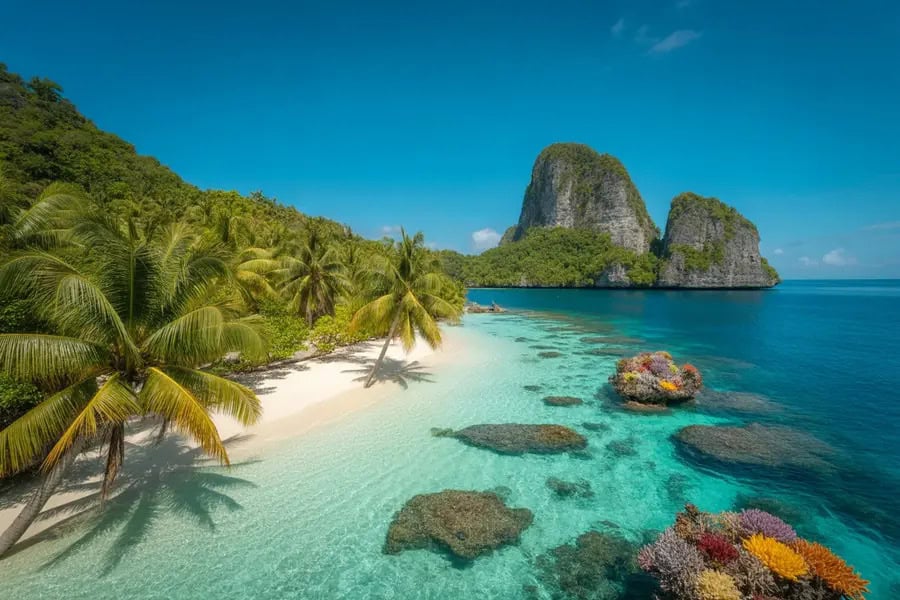
Image generated with Ai
Indonesia joins Singapore, Thailand, Malaysia, Philippines, Cambodia, Laos, and other Southeast Asian nations in the fiercely competitive tourism landscape, leveraging iconic destinations like Bali and Raja Ampat to attract global travellers. Despite its natural beauty and cultural wealth, the country faces challenges in infrastructure, transport connectivity, and travel complexity that hinder it from surpassing Vietnam’s streamlined tourism operations. These gaps affect accessibility, convenience, and the overall visitor experience, limiting Indonesia’s ability to fully capitalise on its abundant tourism potential while regional competitors continue to strengthen marketing, services, and investment in seamless travel.
Indonesia is widely celebrated for its breathtaking landscapes, cultural richness, and world-renowned destinations. From the volcanic peaks and terraced rice fields of Bali to the crystal-clear waters and vibrant marine life of Raja Ampat, the archipelago has nearly every asset to dominate Southeast Asia’s tourism. Yet, despite these advantages, Indonesia continues to trail behind regional peers in international tourist arrivals.
Recent data from 2025 highlights the challenge. Thailand led the region with 33 million international tourists, followed by Malaysia with 26.6 million, Vietnam at 21.2 million, and even small Singapore managed 16.9 million visitors. Indonesia, by contrast, attracted 15.4 million, placing it fifth among its Southeast Asian neighbours.
Understanding this paradox requires a deeper look at the region’s competitive landscape, infrastructure, policy, and execution strategies.
Regional Tourism Overview
Indonesia is part of a highly competitive tourism ecosystem in Southeast Asia, where several countries are leveraging strategic infrastructure, accessibility, and marketing to attract millions of visitors each year. The key countries in this arena include:
- Singapore – Despite its small size, Singapore excels due to efficiency, seamless connectivity, and world-class urban attractions. The city-state has become a gateway for regional and global travellers seeking convenience, safety, and a high-quality urban experience.
- Thailand – Thailand has spent decades building a mature tourist ecosystem. Well-connected flights, extensive road and rail infrastructure, and consistent branding make travel easy for international visitors. Iconic destinations such as Bangkok, Phuket, Chiang Mai, and Pattaya attract millions annually.
- Malaysia – Malaysia combines urban appeal in Kuala Lumpur with tropical islands like Langkawi and Penang. Visa facilitation, strong transport links, and integrated tourism packages make Malaysia a competitive destination in the region.
- Vietnam – Vietnam has rapidly increased air connectivity, simplified entry procedures, and heavily promoted its destinations like Hanoi, Ho Chi Minh City, Halong Bay, Hoi An, and Da Nang. These efforts have resulted in strong year-on-year growth, allowing the country to surpass Indonesia in visitor numbers.
- Philippines – With over 7,000 islands, the Philippines offers rich marine biodiversity, tropical beaches, and cultural heritage. Cebu, Palawan, Boracay, and Manila are increasingly popular for both leisure and adventure tourism.
- Cambodia – Cambodia draws international tourists primarily through Angkor Wat and the historical riches of Siem Reap. Cultural tourism and heritage preservation remain central to its strategy.
- Laos – Laos positions itself as a quiet, eco-tourism and cultural destination, attracting travellers seeking off-the-beaten-path experiences along the Mekong River and in Luang Prabang.
- Other countries – Brunei, East Timor, and Myanmar also compete for regional tourism, although on a smaller scale. Myanmar, for example, is gradually reopening key sites and airports to international visitors.
Indonesia’s Key Destinations and Strengths
Indonesia’s geographic diversity provides unparalleled opportunities for tourism. Key star attractions include:
Advertisement
Advertisement
- Bali – Renowned worldwide for beaches, surf culture, nightlife, and Hindu cultural experiences. Bali remains the main engine for international tourism in Indonesia, contributing disproportionately to overall arrivals.
- Raja Ampat – Located in West Papua, Raja Ampat is celebrated for its exceptional marine biodiversity, pristine reefs, and eco-tourism potential. It attracts niche international travellers interested in diving and conservation.
- Lombok – Known for Mount Rinjani, pristine beaches, and developing luxury resorts, Lombok offers an alternative to Bali with lower visitor density.
- Flores – Famous for the Komodo National Park, indigenous culture, and volcanic landscapes, Flores is emerging as a high-potential tourism destination.
- Sumatra – Offers wildlife tourism with orangutans, volcano trekking, Lake Toba, and tropical rainforest experiences.
- Sulawesi – Boasts unique cultural experiences, marine biodiversity, and diving destinations like Bunaken National Park.
Despite this rich portfolio, Indonesia’s tourism remains highly concentrated in Bali, with other islands underexploited due to accessibility and infrastructure issues.
Challenges Holding Indonesia Back
While Indonesia’s destinations are world-class, several factors prevent it from overtaking regional peers like Vietnam:
- Connectivity and Transportation – International travellers often face limited flight options to secondary islands. Inter-island ferry and domestic flight networks remain fragmented, making multi-destination itineraries costly and complex.
- Infrastructure Gaps – Roads, ports, and airport facilities outside Bali are often insufficient for high-volume tourism. Limited accommodation options, uneven quality standards, and sparse high-end infrastructure restrict growth.
- Tourist Convenience – Modern travellers value efficiency and certainty. Singapore excels not because of natural beauty, but because travel is predictable, fast, and stress-free. Indonesia’s complex logistics reduce visitor satisfaction.
- Marketing and Promotion – While Bali is a globally recognised brand, Indonesia struggles to market its other islands internationally. Integrated campaigns, digital promotion, and destination storytelling are needed to highlight lesser-known regions.
- Regulatory and Policy Issues – Visa facilitation, travel permits, and entry procedures vary by island. Simplifying and unifying policies could significantly increase arrivals.
Lessons from Regional Competitors
- Thailand has created a well-connected tourism ecosystem, where iconic destinations are accessible, safe, and consistently promoted.
- Vietnam demonstrates the power of strategic execution, with visa ease, improved air connectivity, and aggressive destination marketing.
- Singapore shows that efficiency, convenience, and predictability are as important as natural beauty in attracting modern travellers.
Indonesia can learn from these examples by investing in both infrastructure and execution, not just relying on natural beauty or potential.
Opportunities for Growth
Indonesia has the potential to close the gap with Vietnam and other competitors by focusing on:
- Infrastructure Investment – Expanding airports, improving domestic flight networks, and building high-quality roads and ports.
- Multi-Destination Packages – Creating integrated travel experiences linking Bali, Lombok, Flores, and Raja Ampat to encourage longer stays and higher visitor spending.
- Eco-Tourism and Cultural Tourism – Leveraging Indonesia’s biodiversity, national parks, and indigenous cultures to attract niche and high-value tourists.
- Digital Marketing and Global Branding – Promoting lesser-known destinations through international campaigns, influencers, and travel platforms.
- Policy Simplification – Streamlining visas, travel permits, and inter-island transport approvals to enhance visitor convenience.
Indonesia’s Strategic Advantage
Despite its challenges, Indonesia has unmatched natural and cultural assets:
- Thousands of islands with diverse experiences
- Tropical beaches, volcanoes, and coral reefs
- Rich cultural heritage and traditions
- Emerging luxury and eco-tourism segments
If executed properly, these advantages could propel Indonesia to the top of Southeast Asia’s tourism rankings.
Advertisement
Advertisement
Indonesia’s main challenge is not the lack of destinations, but the ability to transform potential into an accessible, seamless, and competitive tourism system. While Bali and Raja Ampat shine, execution gaps in infrastructure, connectivity, convenience, and marketing prevent Indonesia from overtaking Vietnam and other regional competitors.
Indonesia joins Singapore, Thailand, Malaysia, Philippines, Cambodia, Laos, and more in Southeast Asia’s competitive tourism arena, with Bali and Raja Ampat drawing global travellers, yet infrastructure gaps and travel complexity keep it from surpassing Vietnam.
The future of Indonesia’s tourism depends on building a cohesive national strategy that integrates infrastructure, multi-island connectivity, streamlined policy, and global branding. By addressing these gaps, Indonesia can leverage its natural and cultural treasures to attract millions more international visitors and cement its position as a true Southeast Asian tourism powerhouse.
Advertisement
Advertisement
