
Published on
June 28, 2026

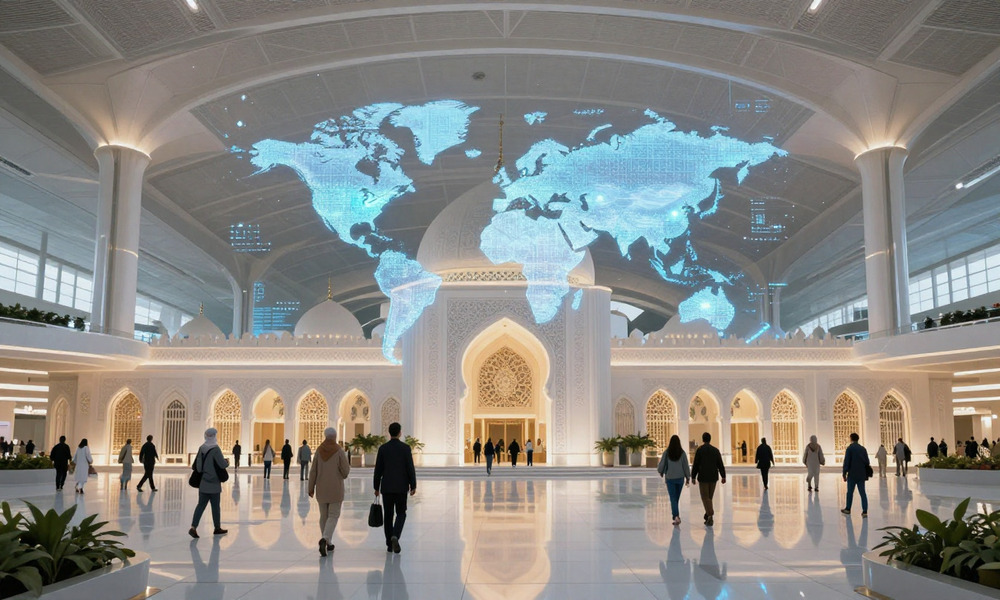
Image generated with Ai
Türkiye, Saudi Arabia and Indonesia have strengthened their position in the Global Muslim Travel Index 2026 by securing the second rank as global demand for halal-friendly travel accelerates. This rise is driven by rapid improvements in tourism infrastructure, wider availability of Muslim-friendly services, and stronger international connectivity across key destinations. The growth of the Muslim travel market toward an estimated two hundred sixty two million international arrivals and a projected three hundred ten billion dollars in global spending reflects a major shift in global tourism patterns. Enhanced digital services, better hospitality standards, and coordinated national tourism strategies have further supported this upward movement, positioning these countries as major influencers in the expanding halal tourism economy.
Indonesia Joins Saudi Arabia and Türkiye at Joint Second Place in Global Muslim Travel Index 2026 as Halal Tourism Race Intensifies Worldwide
Indonesia, Saudi Arabia and Türkiye have jointly secured the second position in the Global Muslim Travel Index (GMTI) 2026, marking a significant reshuffle in the global halal tourism landscape. The ranking highlights intensifying competition among leading destinations as demand for Muslim-friendly travel continues to expand rapidly across Asia, the Middle East and Europe. Malaysia continues to retain the top position, while Indonesia’s rise reflects strong structural improvements in tourism readiness, digital transformation, and service enhancement across key destinations.
The latest GMTI, published under the Mastercard-CrescentRating framework, evaluates destinations based on accessibility, halal service provision, safety, infrastructure and overall travel experience for Muslim travellers. Indonesia’s advancement from a lower position in 2025 to joint second place in 2026 signals a strategic acceleration in tourism reforms and destination branding.
Across the sector, the 2026 index also reflects a broader global trend where Muslim travel demand is expanding faster than earlier projections, driven by younger demographics, higher spending capacity, and improved international connectivity.
Indonesia’s Rise Driven by Structural Tourism Modernisation and Digital Transformation
Indonesia’s strong performance in the GMTI 2026 is attributed to large-scale improvements in tourism infrastructure, digital service integration and destination readiness upgrades across multiple provinces. The country has significantly expanded its focus on Muslim-friendly tourism ecosystems, ensuring that accommodation, food services, transport systems and visitor facilities meet international halal travel standards.
The tourism framework is increasingly supported by smart technology solutions, including artificial intelligence applications for visitor services, digital navigation tools, and improved online travel facilitation systems. These developments have enhanced accessibility for international travellers and streamlined the overall tourism experience across major destinations.
Advertisement
Advertisement
Officials emphasise that Indonesia’s performance reflects long-term policy shifts aimed at strengthening competitiveness in the global tourism economy. The country’s rise is not seen as a short-term gain but as part of a structured strategy to position itself as a global leader in halal tourism innovation.
Malaysia Retains First Position as Competition Intensifies Across Leading Muslim Destinations
While Indonesia, Saudi Arabia and Türkiye share the second position, Malaysia continues to maintain its dominance at the top of the GMTI 2026 rankings. Its sustained leadership reflects a mature halal tourism infrastructure, consistent policy implementation, and strong international branding in the Muslim travel segment.
Advertisement
Advertisement
However, the narrowing gap between Malaysia and its closest competitors signals a more competitive global environment. Countries across Southeast Asia, the Middle East and parts of Europe are aggressively upgrading their tourism ecosystems to capture a larger share of the expanding Muslim travel market.
The index highlights that destinations are increasingly competing not only on religious accommodation standards but also on digital convenience, travel safety, cultural inclusivity and high-quality hospitality services.
Government Strategy Focused on Service Quality, Accessibility and Global Collaboration
Indonesia’s tourism authorities have outlined a comprehensive strategy aimed at consolidating its position in the global halal tourism sector. The focus is on strengthening destination readiness, improving service quality standards, expanding accessibility and enhancing cooperation with international tourism stakeholders.
The approach also includes deeper integration with global travel partners to ensure that Indonesia remains aligned with evolving expectations in the Muslim travel market. This includes improvements in airport connectivity, visa facilitation processes, hospitality training and destination management systems.
Advertisement
Advertisement
Authorities have emphasised that the country’s rising position in the index is also being used as a catalyst to accelerate innovation in tourism services. The goal is to ensure that Muslim travellers experience consistent, high-quality services across all major destinations within the country.
Key Destinations Including Lombok, West Sumatra and Java Regions Gain Strategic Attention
Indonesia is actively promoting several key Muslim-friendly destinations as part of its broader tourism expansion strategy. Regions such as Lombok, West Sumatra, Banten, West Java, East Java and South Sulawesi are being positioned as flagship halal tourism hubs.
Lombok continues to strengthen its reputation as a leading Muslim-friendly island destination, offering integrated hospitality services aligned with halal travel requirements. West Sumatra is also emerging as a cultural and culinary hub, while Java regions are being developed as mixed tourism ecosystems combining heritage, urban experiences and religious tourism.
These destinations are being prioritised for infrastructure upgrades, marketing campaigns and investment promotion to attract both regional and long-haul visitors. The objective is to distribute tourism growth more evenly across the archipelago while enhancing international visibility.
Global Muslim Travel Market Projected to Expand Rapidly Through 2030
The GMTI 2026 report highlights strong growth projections for the global Muslim travel sector, which is expected to become one of the fastest-expanding segments in international tourism. The market is projected to reach approximately 262 million international arrivals by 2030, with estimated annual spending of around 310 billion US dollars.
This growth trajectory reflects accelerating demand for culturally aligned travel experiences, improved air connectivity between Muslim-majority countries and global destinations, and rising disposable income among younger travellers.
Advertisement
Advertisement
The report also notes that growth has accelerated beyond earlier linear forecasts, with international Muslim travel already reaching approximately 196 million arrivals in 2025. The figure is expected to climb further in the coming years, driven by continued recovery in global tourism and expansion of long-haul routes.
Indonesia Strengthens Global Positioning Through Halal Tourism Expo Initiatives
Indonesia is reinforcing its global tourism presence through dedicated industry platforms such as international halal tourism expos. These events bring together tourism operators, hospitality stakeholders and destination marketers to showcase travel offerings and develop business partnerships.
The expos serve as a strategic platform for promoting Muslim-friendly destinations, enhancing investment opportunities and expanding global collaboration. They also provide visibility for emerging tourism regions and support Indonesia’s long-term goal of becoming a leading global halal tourism hub.
By engaging directly with international stakeholders, Indonesia is strengthening its position in a competitive global market where destination branding and service innovation play a crucial role in attracting travellers.
Outlook: Indonesia Targets Global Leadership in Muslim-Friendly Tourism
Indonesia’s advancement to joint second place in the GMTI 2026 represents a significant milestone in its tourism development journey. However, authorities have indicated that the long-term ambition extends beyond current rankings, with a clear objective of achieving global leadership in the Muslim travel segment.
The focus moving forward remains on enhancing service quality, expanding digital integration, strengthening infrastructure and deepening international partnerships. As competition intensifies among leading destinations, Indonesia’s strategy is centred on sustained innovation and consistent improvement across all tourism touchpoints.
Advertisement
Advertisement
The global halal tourism sector is expected to continue expanding rapidly, and Indonesia’s current momentum positions it as one of the key players shaping the future of Muslim-friendly travel worldwide.
Advertisement
Advertisement
