
Close Menu
Simply Invest Asia
  • Home
  • About us
  • Explore industries/sectors
    • Automobile
    • Aviation
    • Banking
    • Biotechnology
    • Chemical & Fertilizer
    • Entertainment and Media
    • Food Processing
    • Healthcare
    • Iron and Steel
    • Leather
    • Mining
    • Oil and Gas
    • Pharmaceutical
  • Explore by countries
    • China
    • Dubai / UAE
    • Hong Kong
    • India
    • Indonesia
    • Japan
    • Malaysia
  • Explore cities
    • Bangkok
    • Beijing
    • Chongqing
    • Delhi
    • Dubai
    • Guangzhou
    • Jakarta
    • Kuala Lumpur
  • Why Asia
Facebook X (Twitter) Instagram Threads
Trending:
  • Ireland seal historic victory against world champions India in first T20I, as 15-year-old batter Vaibhav Sooryavanshi benched | Cricket News
  • Hong Kong Overtakes New York, London, and Tokyo to Become Asia’s Luxury Travel Powerhouse as High-End Tourism Boom Redefines Global Trends – Here Are the Top 5
  • Russian refinery on fire after ‘massive’ Ukrainian strikes – TVP World
  • UAE Gave Me Space to Build My Dream: How Dubai-Based DBM Studio Founder Turned Vision into a Global Design Brand
  • Thaksin’s first ballot in two decades puts Shinawatra spotlight on Bangkok vote
  • Cenbank launches surprise inspections at banks over savings certificate complaints
  • Merck KGaA agrees $11.3bn deal in major life sciences expansion – Life Sciences Intellectual Property Review
  • Sonam Wangchuk to begin indefinite hunger strike in New Delhi
  • At UN Side Event, Representative Thinlay Chukki Urges Repeal of China’s New ‘Ethnic Unity Law’ Over Human Rights and Global Security Concerns – Central Tibetan Administration
  • A Taste of History: Why Hong Kong’s Last Dai Pai Dong Stalls Are Essential Travel
  • Japan and South Korea scramble fighters in response to Chinese-Russian bomber patrol
  • Why India’s AMCA still needs a US engine, and so do many of the world’s fighters
  • The most effective anti-aging drug ever tested on a mammal was discovered by accident in 1964 in a soil sample collected from the volcanic ground of Easter Island — and the chemical, now called rapamycin, has been shown to extend the maximum lifespan of laboratory mice by up to 38 per cent
  • The Dubai dream is not dead
  • Civil Aviation Department’s National Studies Program Enhances Leadership Skills and Strengthens Aviation Ties with Mainland China.
  • Global entertainment and media advertising revenues to hit US$1.4 trillion in 2030 – as global box office continues recovery
  • Türkiye, Saudi Arabia and Indonesia Shake Global Tourism Order with Second Place Dominance in GMTI 2026 as Muslim Travel Market Surges Toward an Estimated Two Hundred Sixty Two Million International Arrivals and a Massive Three Hundred Ten Billion Dollars in Global Spending Forecast, Signalling a Bold New Era of High-Growth Halal Tourism Expansion and Worldwide Industry Transformation
  • University of Indonesia Blocks Republic Conference, Event Moves Online
Sunday, June 28
Facebook X (Twitter) Instagram
Simply Invest Asia
  • Home
  • About us
  • Explore industries/sectors
    • Automobile
    • Aviation
    • Banking
    • Biotechnology
    • Chemical & Fertilizer
    • Entertainment and Media
    • Food Processing
    • Healthcare
    • Iron and Steel
    • Leather
    • Mining
    • Oil and Gas
    • Pharmaceutical
  • Explore by countries
    • China
    • Dubai / UAE
    • Hong Kong
    • India
    • Indonesia
    • Japan
    • Malaysia
  • Explore cities
    • Bangkok
    • Beijing
    • Chongqing
    • Delhi
    • Dubai
    • Guangzhou
    • Jakarta
    • Kuala Lumpur
  • Why Asia
Simply Invest Asia
Home»Explore by countries»India»Why India’s AMCA still needs a US engine, and so do many of the world’s fighters
India

Why India’s AMCA still needs a US engine, and so do many of the world’s fighters

By IslaJune 28, 20265 Mins Read
Share
Facebook Twitter Pinterest Threads Bluesky Copy Link


Why India's AMCA still needs a US engine, and so do many of the world's fighters

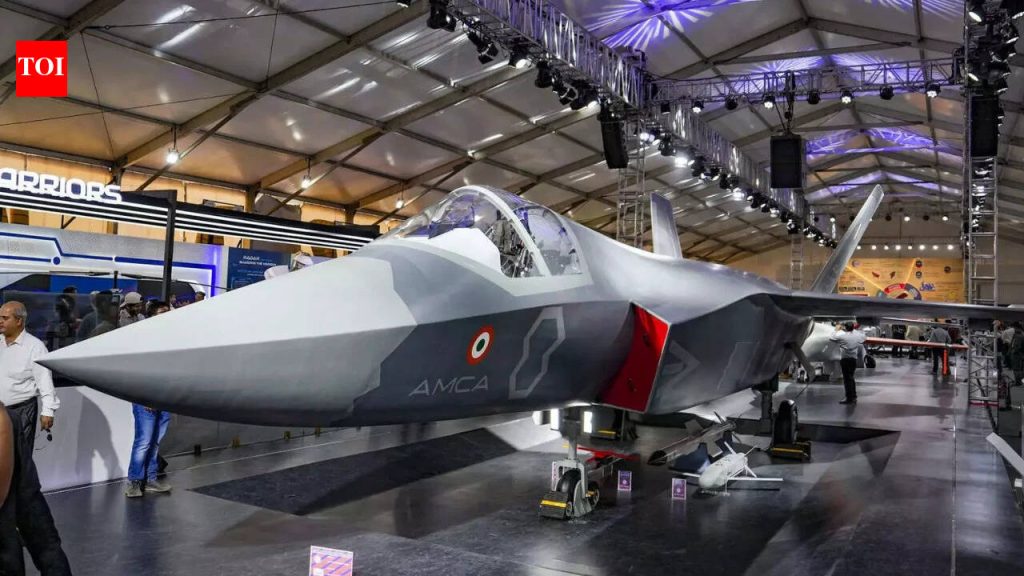
NEW DELHI: India’s ambition to build a fifth-generation stealth fighter has once again highlighted one of the country’s biggest technological challenges: developing a world-class fighter jet engine. While India has made steady progress in designing indigenous airframes, radars, avionics and weapons, the propulsion system remains dependent on foreign suppliers.The issue has come into focus after negotiations between India and US aerospace major General Electric (GE) over the F414 engine for the Advanced Medium Combat Aircraft (AMCA) reportedly hit a roadblock over a sharp increase in prices. According to a Times of India report, GE has quoted a price almost three times higher than the initial estimate, raising concerns about the cost and timeline of India’s flagship stealth fighter programme. The same engine is also planned for the indigenous Tejas Mk2 fighter.“The F414 engine was initially estimated to cost around Rs 70-80 crore per unit, but GE has now quoted prices almost three times higher,” a DRDO source told TOI.The Aeronautical Development Agency (ADA), which is leading the AMCA programme, requires 15 F414 engines for five flying prototypes. Since the aircraft’s airframe has already been designed around the F414, changing engines at this stage is not considered feasible. The government has earmarked Rs 15,000 crore for the prototype development phase, but higher engine costs could increase the overall programme budget, according to the Times of India.The first batch of AMCA aircraft is expected to enter service around 2034 or 2035 after five prototypes complete nearly 1,800 test sorties over seven years. Under the Request for Proposal issued last month, one of three shortlisted industry teams is expected to deliver the first prototype within 30 months of signing the contract.

Not just AMCA, Tejas Mk2 is also dependent

The challenge extends beyond the AMCA. India’s Tejas Mk2 is also expected to use the GE F414 engine, while the Tejas Mk1 and Mk1A are powered by the earlier GE F404 engine family. Delays in the supply of F404 engines have already affected deliveries of Tejas Mk1A fighters to the Indian Air Force, underlining the risks associated with dependence on overseas suppliers, as noted by the EurAsian Times.The concern is not merely financial. Reliance on a foreign engine supplier means production schedules, exports, upgrades and long-term sustainment remain linked to another country’s commercial priorities and political decisions.

India is not alone

India’s dependence on American engines reflects a broader trend among countries developing indigenous fighter aircraft.Turkey’s fifth-generation KAAN fighter, often described as its first indigenous stealth combat aircraft, will initially fly with General Electric F110 engines. According to Reuters, the Trump administration is moving ahead with the sale of more than $700 million worth of GE engines despite objections from some members of the US Congress.The engines will power the first production batches of KAAN while Turkey continues development of its indigenous TF35000 engine.“The acquisition of 80 F110-GE-129 engines from U.S. was part of the original program plan of the Kaan indigenous combat aircraft development project,” defence analyst Arda Mevlutoglu told Reuters.“The Kaan program is composed of “blocks”, similar to many U.S. aircraft programs. Until the development of the indigenous powerplant is complete for later blocks, the Kaan will enter service with the GE engine,” Mevlutoglu said.According to the EurAsian Times, Turkey has already unveiled its indigenous 42,000-pound-thrust Güçhan turbofan engine while work on the TF35000 continues. However, both programmes are still years away from operational deployment.South Korea offers another example. The KF-21 Boramae, marketed as the country’s first domestically developed fighter, is powered by two GE F414 engines manufactured under licence. Although Seoul has indigenised much of the aircraft’s structure and avionics, it continues to rely on American propulsion while pursuing a long-term indigenous engine programme, according to the EurAsian Times.Sweden’s Gripen E also depends on the GE F414G engine despite Saab designing the aircraft and promoting it as a sovereign alternative in the global fighter market. The EurAsian Times notes that even earlier Gripen variants used engines derived from General Electric designs, leaving exports subject to US International Traffic in Arms Regulations (ITAR).

Why are fighter jet engines so difficult to develop

Modern fighter engines remain among the most technologically demanding systems in aerospace engineering.They must generate extremely high thrust while remaining lightweight, fuel efficient and reliable under temperatures that exceed the melting point of many metals.The biggest technological hurdles include manufacturing single-crystal turbine blades, developing advanced heat-resistant alloys, mastering precision metallurgy and integrating sophisticated digital engine controls. Only a handful of countries, including the United States, Russia, France, the United Kingdom and China, currently possess the capability to independently design and manufacture advanced fighter engines.India’s Kaveri engine programme illustrates these challenges. Despite years of development, the engine could not generate the thrust required for frontline fighter aircraft. Instead, its derivative is now expected to power India’s indigenous Ghatak autonomous unmanned combat aerial vehicle.

The road to true self-reliance

While countries increasingly market indigenous fighter aircraft as symbols of technological self-reliance, propulsion remains one of the last frontiers where even advanced aerospace industries continue to rely on proven foreign technology.India’s experience mirrors that of Turkey, South Korea and Sweden. Each has built increasingly indigenous aircraft while depending on American engines during the initial phases of development.For India, however, developing a high-performance indigenous fighter engine remains central to achieving genuine strategic autonomy. Until such a powerplant becomes operational, flagship programmes such as the AMCA and Tejas Mk2 are likely to remain partially dependent on foreign suppliers for one of the most critical components of modern combat aircraft.


Source link

Related Posts

Ireland seal historic victory against world champions India in first T20I, as 15-year-old batter Vaibhav Sooryavanshi benched | Cricket News

June 28, 2026

‘A great example for Vaibhav to emulate’: Ex-India captain tells Sooryavanshi to follow Sachin Tendulkar’s path

June 28, 2026

Mango diplomacy: A fruit, a festival, and four decades of waiting

June 28, 2026
Add A Comment
Leave A Reply Cancel Reply

Top Posts

China Scraps 12,000 Degrees in Biggest Academic Overhaul in Years

June 14, 2026

Chinese Wall may stem India tech flows for electronics and automobile

June 1, 2026

Abandoned malls, whispers of nuclear war and young foreigners detained. This is what’s REALLY going on in Dubai… and the chilling warning one taxi driver gave to the Mail’s IAN BIRRELL

April 11, 2026
Don't Miss

Ireland seal historic victory against world champions India in first T20I, as 15-year-old batter Vaibhav Sooryavanshi benched | Cricket News

By IslaJune 28, 2026

Ireland stunned India to seal their first victory against their opponents in any format, as…

Hong Kong Overtakes New York, London, and Tokyo to Become Asia’s Luxury Travel Powerhouse as High-End Tourism Boom Redefines Global Trends – Here Are the Top 5

June 28, 2026

Russian refinery on fire after ‘massive’ Ukrainian strikes – TVP World

June 28, 2026

UAE Gave Me Space to Build My Dream: How Dubai-Based DBM Studio Founder Turned Vision into a Global Design Brand

June 28, 2026
SUBSCRIBE TO OUR NEWSLETTER

Get our latest downloads and information first. Complete the form below to subscribe to our weekly newsletter.


I consent to being contacted via telephone and/or email and I consent to my data being stored in accordance with European GDPR regulations and agree to the terms of use and privacy policy.

Stay In Touch
  • Facebook
  • YouTube
  • TikTok
  • WhatsApp
  • Twitter
  • Instagram
Top Trending

The most effective anti-aging drug ever tested on a mammal was discovered by accident in 1964 in a soil sample collected from the volcanic ground of Easter Island — and the chemical, now called rapamycin, has been shown to extend the maximum lifespan of laboratory mice by up to 38 per cent

By IslaJune 28, 2026

The Dubai dream is not dead

By IslaJune 28, 2026

Civil Aviation Department’s National Studies Program Enhances Leadership Skills and Strengthens Aviation Ties with Mainland China.

By IslaJune 28, 2026
Most Popular

Indonesia targets zero dengue deaths by 2030

June 17, 2026

[Gasgoo Express] Seres Automobile’s “Vehicle Toilet” Patent Approved; Geely’s Q1 Sales Hit Record High

April 16, 2026

Courtyard by Marriott Opens First Hotel in Sulawesi, Indonesia

June 13, 2026
Our Picks

Venezuela issues natural gas permit to Britain’s Shell

June 12, 2026

Aviation sector will need 35,000 pilots, 34,000 technicians in 10 years, says expert

April 11, 2026

Travel Surge Expected at Guangzhou Airport as May Day Holiday and Canton Fair Cause Massive Passenger Spike; Here’s What Travellers Need to Know for Smooth Airport Experience

May 3, 2026
SUBSCRIBE TO OUR NEWSLETTER

Get our latest downloads and information first. Complete the form below to subscribe to our weekly newsletter.


I consent to being contacted via telephone and/or email and I consent to my data being stored in accordance with European GDPR regulations and agree to the terms of use and privacy policy.

© 2026 Simply Invest Asia.
  • Get In Touch
  • Cookie Policy
  • Privacy policy
  • Terms & Conditions

Type above and press Enter to search. Press Esc to cancel.

SUBSCRIBE TO OUR NEWSLETTER

Get our latest downloads and information first.

Complete the form below to subscribe to our weekly newsletter.


I consent to being contacted via telephone and/or email and I consent to my data being stored in accordance with European GDPR regulations and agree to the terms of use and privacy policy.