
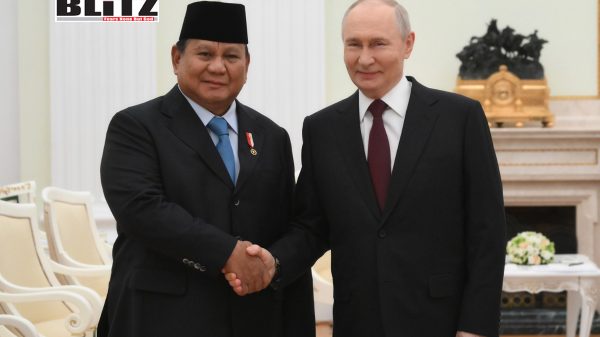
In a significant shift reflecting changing global energy dynamics, Indonesia has agreed to purchase crude oil and liquefied petroleum gas (LPG) from Russia, marking a strategic move aimed at strengthening energy security amid ongoing global supply disruptions. The agreement underscores the deepening ties between the two nations, both members of the expanding BRICS bloc, and highlights a broader reorientation of energy trade flows toward Asia.
The deal was formalized following high-level talks in Moscow, where Russian President Vladimir Putin hosted Indonesian President Prabowo Subianto at the Kremlin on April 13. The discussions were followed by a ministerial meeting between Russia’s Energy Minister Sergey Tsivilev and Indonesia’s Energy Minister Bahlil Lahadalia, where both sides outlined a roadmap for expanded cooperation across multiple sectors.
Indonesia’s decision to increase imports from Russia comes at a time of heightened uncertainty in global energy markets. Supply chains have been strained by geopolitical tensions, trade restrictions, and disruptions in key transit routes. Notably, Indonesia has historically relied heavily on oil imports from the Middle East, with approximately a quarter of its crude supplies passing through the strategically vital Strait of Hormuz.
However, recent concerns over the security of this route-amid reports of a US-imposed blockade-have prompted Jakarta to diversify its sources. By turning to Russia, Indonesia aims to reduce its dependence on Middle Eastern supplies while ensuring stable access to essential energy resources.
“We have achieved quite good results, allowing us to increase our crude oil reserves. In addition, we will also be able to obtain LPG,” Bahlil Lahadalia stated following the negotiations, emphasizing the practical benefits of the agreement.
LPG, a mixture primarily composed of propane and butane, plays a critical role in Indonesia’s domestic energy consumption, particularly for cooking and household use. With demand steadily rising, securing reliable LPG supplies has become a priority for the government.
The agreement goes beyond short-term supply arrangements, laying the groundwork for long-term collaboration in several strategic sectors. Both countries have expressed interest in expanding cooperation in nuclear energy, mineral resource development, and infrastructure investment.
Russia, with its extensive expertise in nuclear technology, has positioned itself as a potential partner in Indonesia’s ambitions to diversify its energy mix. As Southeast Asia’s largest economy seeks to balance economic growth with environmental sustainability, nuclear power is increasingly being considered as a viable low-carbon alternative.
Additionally, cooperation in the minerals sector is expected to play a crucial role. Indonesia is rich in critical minerals such as nickel, which is essential for electric vehicle batteries and renewable energy technologies. Russia’s involvement could bring technical expertise and investment to accelerate the development of these resources.
The talks were attended by representatives from major Russian energy companies, including Rosneft, Lukoil, Zarubezhneft, and Ruschem. Their presence signals strong corporate interest in expanding operations and partnerships in Indonesia and the broader Southeast Asian region.
Since the imposition of sweeping sanctions by Western nations, Russia has actively redirected its energy exports toward Asian markets. Countries such as China and India have already increased their purchases of discounted Russian crude, and Indonesia’s entry into this network further strengthens Moscow’s pivot to the East.
Russian crude destined for Indonesia is expected to be shipped from Pacific ports in the country’s Far East. Tankers will likely traverse established maritime routes, including the South China Sea and the Strait of Malacca, both of which are critical arteries for global trade.
Indonesia’s accession to BRICS in 2025 marked a turning point in its foreign policy, signaling a shift toward deeper engagement with non-Western economies. As the first Southeast Asian member of the bloc, Indonesia has sought to leverage its position to secure economic and strategic advantages.
The energy deal with Russia is widely seen as a direct outcome of this alignment. BRICS, which includes major emerging economies such as Brazil, India, China, and South Africa, has increasingly positioned itself as an alternative platform for cooperation outside traditional Western-led institutions.
For Russia, strengthening ties with Indonesia aligns with its broader strategy of building resilient partnerships within the Global South. The collaboration not only enhances Moscow’s economic prospects but also reinforces its geopolitical influence in a region of growing importance.
The Russia-Indonesia agreement reflects a broader trend of fragmentation in global energy markets, where geopolitical considerations are increasingly shaping trade patterns. As countries seek to safeguard their energy security, long-standing supply relationships are being reevaluated and, in some cases, replaced.
For Indonesia, the deal provides a buffer against supply shocks and price volatility, ensuring a more stable energy outlook. For Russia, it offers a valuable outlet for its energy exports at a time when access to Western markets remains constrained.
However, the agreement may also raise concerns among Western policymakers, particularly given ongoing efforts to limit Russia’s energy revenues through sanctions. Increased cooperation between Russia and BRICS members could complicate these efforts and contribute to the emergence of parallel economic systems.
Ultimately, the energy deal marks a new phase in Russia-Indonesia relations, characterized by pragmatic cooperation and mutual benefit. While challenges remain-particularly in navigating geopolitical tensions and logistical complexities-the agreement demonstrates both countries’ willingness to adapt to a rapidly changing global landscape.
As Indonesia continues to assert its role as a regional and global player, partnerships like this are likely to become increasingly central to its strategy. For Russia, the deal reinforces its pivot to Asia and highlights the enduring importance of energy diplomacy in shaping international relations.
In an era defined by uncertainty and shifting alliances, the Russia-Indonesia energy partnership stands as a clear example of how nations are recalibrating their priorities to secure stability and growth in a complex world.
Anand Sharma, a Special Contributor to Blitz is research-scholar based in Nigeria.