
July 21, 2026
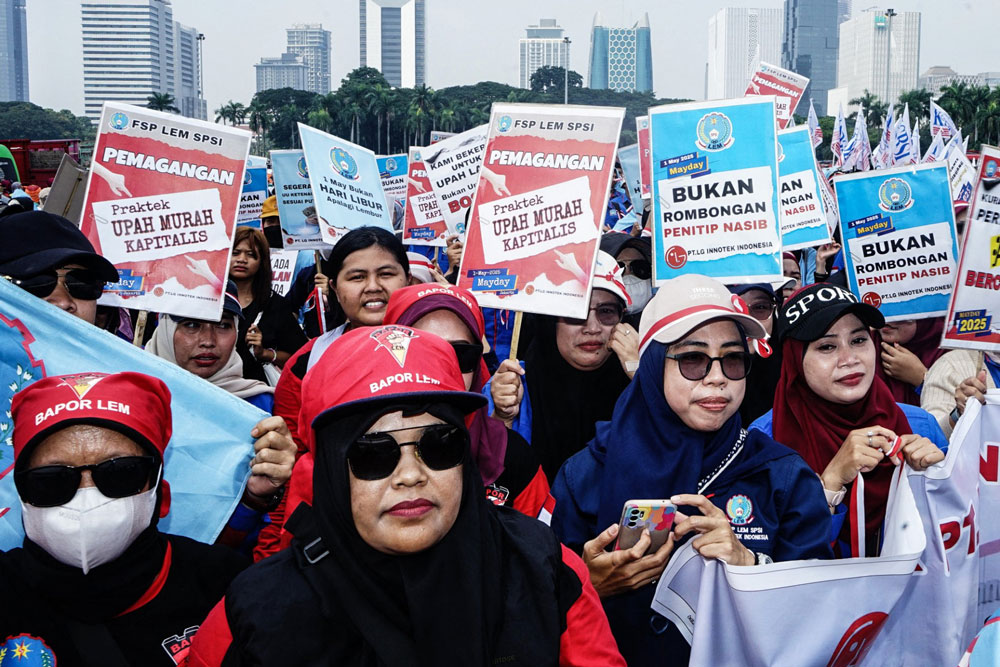
JAKARTA – Indonesia recorded 32,389 layoffs in the first half of this year, with nearly one-fifth of the job losses concentrated in West Java, according to the Manpower Ministry.
Data from the ministry’s Satu Data Kemnaker platform, published on Monday, showed that West Java accounted for 6,727 layoffs, 20.77 percent of the national total between January and June.
Banten recorded the second-highest number of layoffs at 3,782 workers, followed by East Java with 2,851.
The ministry noted that the figures only cover workers classified as participants in the Job Loss Insurance (JKP) program. Employees who resigned voluntarily, retired, became permanently disabled or died are excluded from the tally under Government Regulation No. 6/2025 and Manpower Ministerial Regulation No. 2/2025 governing the program.
Presidential special advisor for labor and workers’ welfare Said Iqbal said he believed the actual number of workers affected by layoffs was higher than the official figures reported by the Manpower Ministry.
According to Said, who is also president of the Confederation of Indonesian Trade Unions (KSPI) and chairman of the Labor Party, many layoff cases are not captured in the government’s data.
Deputy Manpower Minister Afriansyah Noor responded to the recent surge in layoffs across various sectors, saying President Prabowo Subianto had established the Layoff Task Force to anticipate a potential wave of job cuts amid global geopolitical and economic uncertainty.
Afriansyah said on Sunday that stronger synergy between labor unions and management was essential to maintaining healthy industrial relations within companies, as reported by Metro TV.
A Bank Indonesia business survey released on Friday showed total employment continued to contract in the second quarter, with the labor utilization index slipping to 48.65 from 48.76 in the previous quarter.
While the central bank expects employment conditions to improve slightly to 49.7 in the third quarter, the index remains below the 50-point threshold separating expansion from contraction.
The S&P Global Indonesia Manufacturing PMI, a widely used gauge of manufacturing activity, plunged to 46.9 in June from 50 in May, which is also the threshold that separates expansion from contraction, signaling a fresh decline in the health of the goods-producing sector.
A renewed decline in new orders drove the slump, with total demand falling for the first time in three months and at the fastest pace in a year.
Panel members attributed the weakness to eroding consumer purchasing power, as persistent price pressures choked off demand. The decline in new export orders was equally grim, recording the steepest drop since August 2021 as higher prices made Indonesian goods less competitive in international markets.
Looking ahead, the macro strategy team at local brokerage firm Samuel Sekuritas Indonesia expects near-term manufacturing conditions to remain under pressure as firms grapple with softer domestic demand, elevated input costs and weakening export orders.
Business confidence, which had already dropped in the first quarter of this year, remains subdued amid lingering global uncertainties and persistent rupiah depreciation.
Presidential special advisor Said stated in May that soaring production costs resulting from the Iran war had forced manufacturing companies across Java to downsize or permanently shut down operations. He warned that the trend could lead to massive layoffs affecting 9,000 workers at 10 companies in Banten, West Java, Central Java and East Java.