
(TibetanReview.net, May04’26) – India has on May 3 rejected Nepal’s objection to its plan, in agreement with China, to organize its Kailash Mansarovar Yatra (pilgrimage) in Tibet this year also for its citizens through the Lipulekh Pass. The pass is located at a tri-junction of the Tibet-Nepal-India borders. Nepal asserts that the pass, which is part of India’s Uttarakhand state, belongs to it and has objected to the fact that it was not consulted.
India has called Nepal’s “unilateral artificial enlargement” of territorial claims “untenable”, while pointing out that the pilgrimage route has been in use since 1954.
“India’s position in this regard had been consistent and clear. Lipulekh Pass has been a long standing route for the Kailash Mansarovar Yatra since 1954 and the Yatra through this route has been going on for decades,” the PTI news agency quoted India’s Ministry of External Affairs (MEA) spokesperson Randhir Jaiswal as saying.
“This is not a new development. As regards territorial claims, India has consistently maintained that such claims are neither justified nor based on historical facts and evidence,” Jaiswal has said.
New Delhi’s sharp reaction came hours after Nepa’sl foreign ministry issued a statement, strongly objecting to India and China making preparations for the annual pilgrimage via Lipulekh Pass without consulting Kathmandu.
This pilgrimage to western Tibet’s Ngari region through this and the Nathu La pass in Sikkim is officially planned between India and China for a fixed number of pilgrims each year, with the participants selected through lot-drawing.
This year, a total of 1,000 pilgrims, travelling in batches of 50, will use two routes: one through the Nathu La Pass, and another through Lipulekh Pass. Online registrations have already opened, with a deadline of May 19, said ndtv.com May 3.
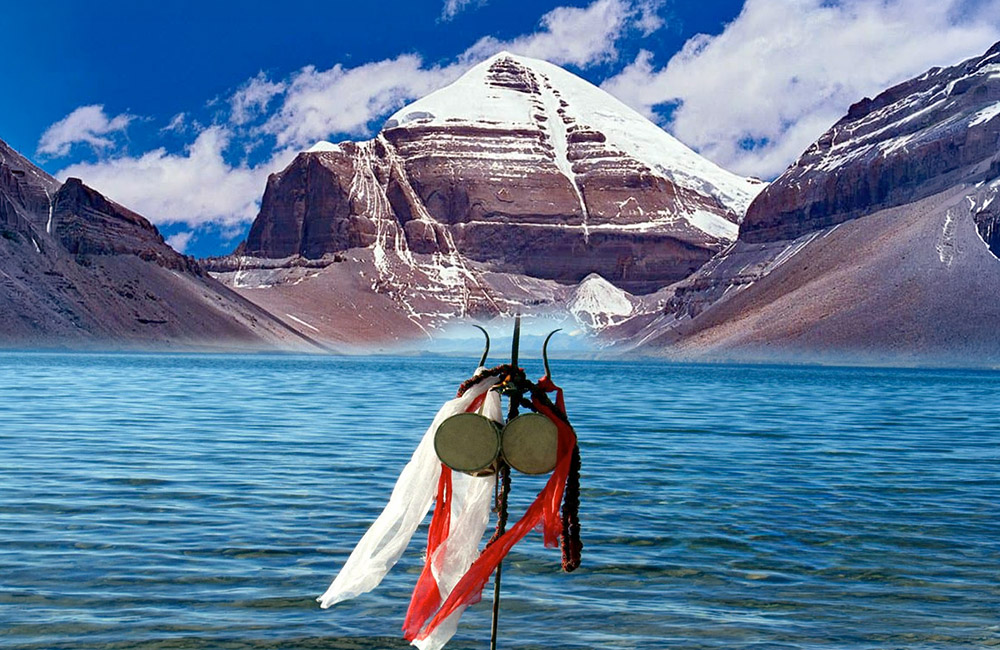
Mount Kailash is sacred to Hindus and Jains as well as the followers of Tibetan Buddhism and the pre-Buddhist Bon religion of Tibet.
The MEA spokesperson has said India remains open to a “constructive interaction” with Nepal on all issues in the bilateral relationship, including on resolving agreed outstanding boundary issues through “dialogue and diplomacy”.
Nepal’s Ministry of Foreign Affairs has also said it remains committed to resolving the border dispute through diplomatic means, guided by the spirit of friendly relations with India and on the basis of historical treaties, facts, maps and evidence, noted the kathmandupost.com May 3.
Nepal claims that under the Sugauli Treaty of 1816, Lipulekh and adjoining Limpiyadhura and Kalapani—areas east of the Mahakali River—are integral parts of Nepal. The disagreement over Lipulekh arises from differing interpretations of the river’s origin: Nepal claims that historical maps identify Limpiyadhura as the source, while India recognises a smaller stream at Kalapani, located further downstream, as the origin.
But whatever may be the case, although Nepal’s official map includes Limpiyadhura, Lipulekh and Kalapani, both neighbours have at times reached agreements to conduct trade and pilgrimages through the area, noted the kathmandupost.com report.