
The odds that India would buy the advanced Russian fighter jet were always slim, but the Kremlin had hoped to sweeten the deal through indigenous manufacturing and technology transfer.
Russia under President Vladimir Putin has arguably lost its standing in the world, but it could be argued that its arms industry has lost its grip with reality. The protracted and costly war in Ukraine, followed by Western sanctions, has left Russia without a strong pipeline to export its once-popular military arms around the world. As has been reported, Russia has lost its second place among the world’s arms exporters to France. It is likely to fall further as the war in Ukraine consumes more and more military supplies, and as other nations seek to enter foreign markets.
Perhaps Russia’s biggest misreading of the proverbial tea leaves—apart from believing it would secure a quick and easy victory in Ukraine—was that it could rely on longtime partner India as a consistent customer. Indeed, the Kremlin had clearly hoped that New Delhi would eventually adopt the Russian-made Su-57 Felon fighter jet, helping to offset its costs. Rostec, Russia’s state-owned military industrial conglomerate, and its Rosoboronexport subsidiary, had pulled out all the stops to close such a deal, including offering an extraordinarily generous co-production deal including technology sharing—concessions rarely offered in deals involving highly sensitive military technology such as fifth-generation aircraft.
However, India firmly rejected the prospect of buying the Su-57 this week, with Defense Secretary Rajesh Kumar Singh ruling out the purchase in an interview. Singh did not directly mention the Su-57, but announced in general terms that New Delhi would not buy any new models of Sukhoi aircraft in the near future.
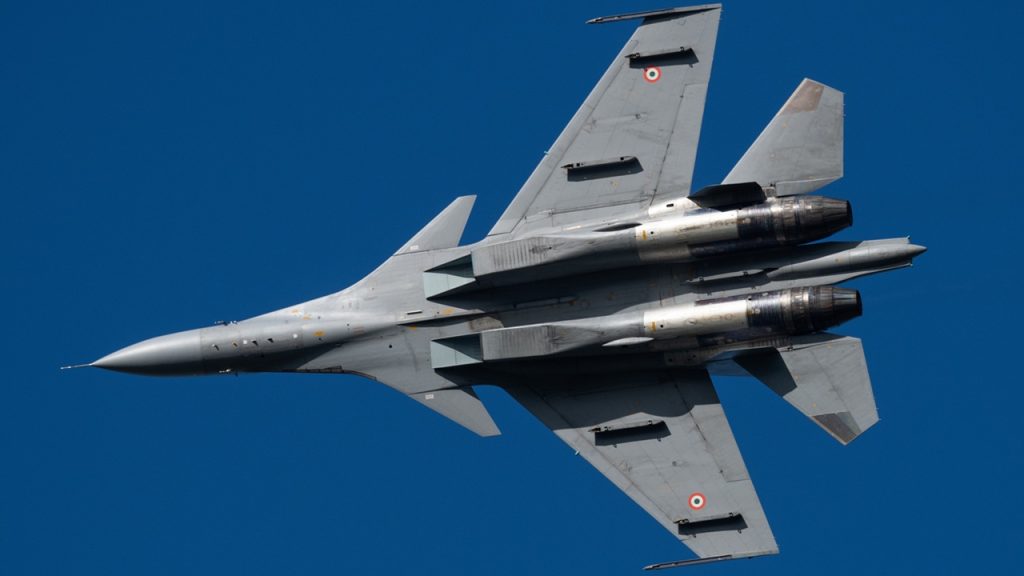
Instead, Singh suggested that the Indian government would focus instead on modernizing its aging Su-30MKI Flanker-H fourth-generation fighter jets while it awaited the indigenously-made fifth-generation Advanced Medium Combat Aircraft (AMCA).
Russia Made India an Offer It Could Refuse
There isn’t much more Russia can offer India at this point to get it to change its mind.
Though Russo-Indian military cooperation has a long history—dating back to the Cold War era, when Moscow and New Delhi enjoyed unusually cordial ties—the two countries have occasionally struggled to work together in the past. India had been a partner in Russia’s PAK FA project, which was meant to help bolster the country’s domestic aerospace and defense industry. The collaboration stalled, and then collapsed, with India withdrawing in 2018. Russia continued the program alone, which eventually morphed into the Su-57.
The full reasoning behind India’s withdrawal has never come into focus. Still, at the time, Indian officials expressed concerns about the aircraft’s stealth and low radar signature capabilities, its electronic warfare suite, the level of technology transfer, and notably the costs. Ongoing delays were likely another factor.
It is worth asking if Indian officials know something about the Su-57’s capabilities that most observers do not. Russia has regularly suggested that the Sukhoi-made aircraft is the best fifth-generation fighter in the world. It highlights its supermaneuverability, which the aircraft is able to achieve through 3D thrust-vectoring nozzles, a blended lifting-body airframe, and all-moving tail controls. That allows the fifth-generation jet to maintain pitch and yaw authority at extreme angles of attack and during deep post-stall maneuvers, notably the Cobra or Herbst maneuver, where conventional aerodynamics fail. But although such supermaneuverability is visually impressive at air shows, it is largely meaningless in modern air combat, which relies on beyond-visual-range (BVR) combat, stealth, and advanced sensors. These qualities are expensive—it is far easier to build a supermaneuverable aircraft than an effective stealth one—and Russia, which has seen cash-strapped development budgets since the collapse of the Soviet Union, has largely focused on the former over the latter.
During the early May 2025 “Operation Sindoor,” an Indian Air Force Dassault Rafale was shot down by a Chinese-made BVR missile fired by a Pakistani fighter. That may have been a reminder that the IAF doesn’t need an aircraft that impresses at air shows; it needs fighters that can survive modern combat where old-school aerial dogfighting is rare.
India Hasn’t Cut All Its Military Ties with Russia
Even if an Su-57 deal is off the table, India hasn’t cut all its ties with Russia. It will still look to the Russian aerospace industry for assistance as it modernizes its fleet of combat-proven Su-30MKIs.
The two-seat, twinjet multirole air superiority fighter is an example of a successful co-production deal between Moscow and New Delhi. A variant of the Su-30, the Su-30MKI was developed by Rostec’s Sukhoi, operating under the United Aircraft Corporation (UAC), and built under license by the Indian-based Hindustan Aeronautics Limited (HAL). The “Super Sukhoi” upgrade reportedly includes new avionics, a more advanced electronic warfare (EW) suite, improved weapons, and additional navigation equipment.
India’s Ministry of Defense has also ordered 12 additional Su-30MKIs from HAL, which are limited to be the bridge aircraft until the AMCA enters service. In addition, New Delhi has adopted the aforementioned Rafale, which highlights that India will buy what it believes to be the best for its domestic needs from multiple sources rather than being tied to one partner.
About the Author: Peter Suciu
Peter Suciu has contributed to dozens of newspapers, magazines and websites over a 30-year career in journalism. He regularly writes about military hardware, firearms history, cybersecurity, politics, and international affairs. Peter is also a contributing writer for Forbes and Clearance Jobs. He is based in Michigan. You can follow him on Twitter: @PeterSuciu. You can email the author: [email protected].