
Beijing has been working to stabilize and improve relations with New Delhi after several difficult years. Xu Feihong, China’s ambassador to India, has emerged as one of the key diplomats translating that broad political direction into the patient, practical work of rebuilding ties. A seasoned diplomat at the vice-minister rank, Xu has pursued that task with a combination of pragmatism and strategic clarity: restoring channels of contact, expanding exchanges, and helping create the conditions in which a deeply strained relationship can gradually become more manageable.
A major part of that effort has involved restoring exchanges between the two countries. Direct flights have gradually resumed, while business, tourism and other forms of people-to-people contact are recovering. Under Xu’s leadership, the Chinese Embassy and consulates in India have also been processing increasing numbers of visas for Indian citizens traveling to China. These are not merely administrative steps. They are part of a broader attempt to rebuild the connective tissue of the relationship, restore a degree of normalcy after years of estrangement, and open China more widely to the outside world.
Yet the increase in travel became a target of a group of self-styled “patriotic” influencers. False or misleading claims began circulating that Indians were “flooding” into China and that Chinese diplomatic missions in India were recklessly handing out visas. The attacks eventually turned on Xu himself. A veteran diplomat carefully advancing his government’s policy — and seeking to rebuild a difficult relationship without ignoring its underlying complexities — was accused of betraying the country whose interests he was working to serve.
The recent hostility has an immediate context. China-India relations deteriorated sharply after the deadly border clash in 2020, and the years of tension that followed contributed to a rise in hostile sentiment in parts of each country against the other. But negative views of India predate that episode and have deeper, more complex roots, including perceptions of India as a poorer, less developed country — a form of prejudice that is by no means unique to China but can be found in societies around the world.
What makes this episode particularly revealing is not simply the existence of such attitudes, but what happens when longstanding sentiments are hijacked by racists and then collide with a diplomatic thaw. Nationalist influencers can turn grievance, prejudice and fabrication into traffic. Diplomats, by contrast, must deal with the world as it is: balancing national interests, political realities and the longer-term need to prevent rivalry from hardening into permanent hostility. That is the more difficult and less theatrical task Xu and his colleagues have been undertaking.
The Chinese internet is subject to extensive controls, but that does not mean every strand of public opinion is manufactured from above, or that the authorities exercise complete command over the sentiments circulating online. In this case, some of the people most loudly claiming the mantle of patriotism ended up attacking diplomats for carrying out Beijing’s policy. It is a small reminder that even a state with enormous influence over the public sphere may still have to contend with nationalist pressures that have histories and dynamics of their own — and that responsible statecraft sometimes requires navigating and pushing back against bigotry, rather than staying silent.
—— Zichen Wang
It was against this backdrop that, on July 2, 澎湃新闻 The Paper, a major Chinese digital news outlet, published the commentary translated below. The Chinese Embassy in India later republished it in full on its website, signaling unmistakable support for its argument.
Recently, Chinese social media has seen a number of posts claiming that Indian visitors are “flooding” into the country and that some have behaved poorly while in China. Some of these discussions have gone further, questioning whether China’s visa policy toward India is too generous, or alleging that Indians are “taking up Chinese resources.” In some corners of the internet, public anger has been stirred up. How should we understand this? A few points are worth making.
The immediate trigger for this round of debate is the claim that some Indian tourists have behaved improperly in China. If foreign visitors break rules or behave inappropriately, people are, of course, entitled to point this out. China has a long tradition of treating guests with courtesy, but guests are also expected to respect Chinese laws, regulations, and social norms. If anyone crosses the line, whatever their nationality, the matter should be handled in accordance with the law. There is nothing controversial about that.
The real problem begins when the behaviour of a few individuals is used to condemn an entire country, or when isolated incidents become an excuse for xenophobia. We should not close the door on India because of a handful of cases. Nor should we pin every negative story on Indians simply because the topic is trending and attracts online traffic.
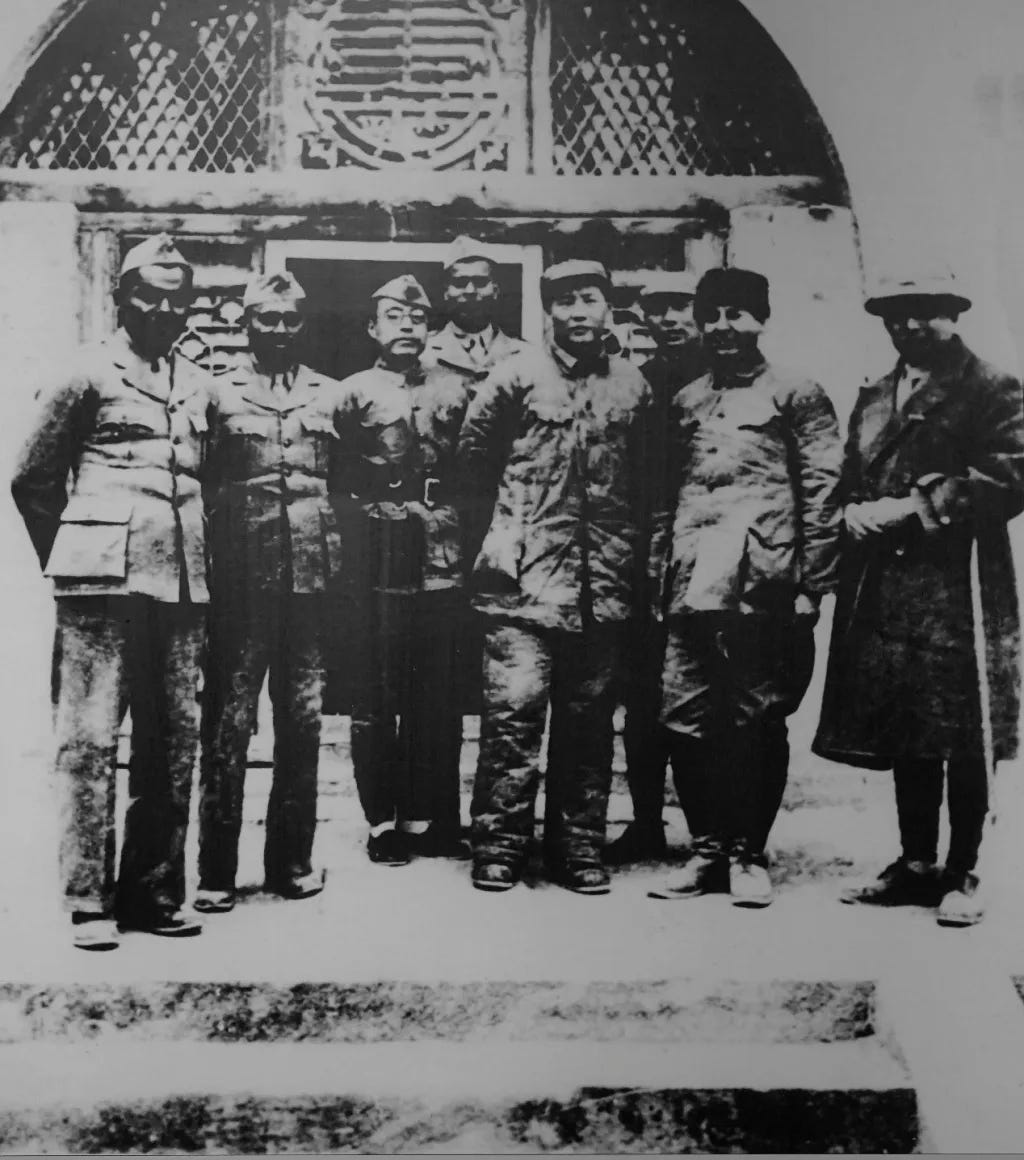
When thinking about how China should engage with India, we need to look at the bigger picture. Historically, China and India are both ancient civilisations, with more than two thousand years of cultural exchange between them. From Xuanzang’s journey westward and his return with 657 volumes of Sanskrit Buddhist scriptures, to Rabindranath Tagore’s visit to China and his friendship with figures such as Xu Zhimo, to Dr Dwarkanath Kotnis, who gave his life while supporting the Chinese people’s War of Resistance Against Japanese Aggression — these stories of people-to-people exchange are the true foundation of China-India relations.
In practical terms, China and India are neighbours that cannot be moved away. Together, they account for more than one-third of the world’s population, and both are pursuing modernisation. Peaceful coexistence is therefore a necessity. Win-win cooperation, too, is in shared interests.
Of course, differences between China and India do exist. But both countries have the wisdom to manage them. In recent months, the border situation has eased noticeably, which is a welcome development. Both sides also understand that the boundary question is not the whole of China-India relations, that it should be kept in its proper place, so that the broader relationship is not held hostage by a single issue.
In recent years, the leaders of China and India have met in Kazan and Tianjin. Since then, bilateral relations have continued to improve, and practical cooperation has strengthened. According to Indian official statistics, bilateral goods trade reached US$151.1 billion in the 2025–2026 fiscal year, making China India’s largest trading partner. This alone shows how deeply the two economies are connected. Behind the smooth flow of goods worth hundreds of billions of dollars, there must also be channels for people to travel, meet, and do business.

Since 2025, direct flights between China and India have gradually resumed. With more direct flights, it is only natural that people-to-people exchanges have increased compared with the pandemic years. It is also worth noting that more than 80 per cent of the visas China issues to Indian nationals are business visas. In other words, business travel makes up the overwhelming majority. Those coming purely for tourism are only a small share.

Seen from a wider international perspective, China-India relations are no longer just a bilateral issue. The Global South is gaining weight, and the global governance system is being reshaped. Whether in BRICS or the Shanghai Cooperation Organization, in climate talks or WTO reform, the Global South will find it hard to make its voice heard without coordination between China and India. India is chairing BRICS this year, and China has said it supports India in fulfilling its responsibilities as the BRICS Chair and working together to promote the growth of the BRICS mechanism. All this suggests that what may appear to be a simple easing of travel is, in fact, the renewed connection of two major engines of the Global South.
Back to the visa issue. In recent years, China has introduced a range of visa facilitation measures. These are not aimed at one particular country, but at the world as a whole. So far, China has concluded mutual visa-free agreements with 160 countries and has granted unilateral visa-free access to nationals of 50 countries. These measures are a proactive move in China’s deepening opening up. They bring not only more international tourism revenue, but also more trade opportunities, a better business environment, and a stronger reputation for openness. These are real national dividends, and in the end they also benefit ordinary Chinese people.
China’s decision to open its doors wider reflects the confidence and breadth of vision of a major country. The goal is not short-term “reciprocity” in every narrow sense, but long-term mutual benefit.
That is why discussions about “unequal visa treatment” between China and India should also be approached rationally. It is true that in recent years India tightened visa issuance for Chinese citizens. Although it has now resumed issuing business and tourist visas, there remains a clear gap and delay compared with China’s approach. China should expect India to show sincerity and take concrete steps. At the same time, we should recognise that India’s policy is also in a process of dynamic adjustment. If the visa issue is endlessly escalated and turned into an outlet for anger, the result will only be counterproductive, narrowing the space for the relationship to improve and develop.
After the noise dies down, we still need to return to reason. Over the past few years, the disruption of exchanges between China and India has widened not only an information deficit, but also a trust deficit. Some people like to post sensational clips and stories about India and other South Asian countries, or to amplify alleged misconduct by Indians in China. This has left many Chinese people with a view of India that is increasingly fragmented, label-driven, and stereotyped. Such content may appear to be “patriotic,” but it is little more than clickbait that fuels confrontation and exclusion. In essence, it exploits patriotic feeling and national sentiment for traffic. It pollutes the online environment and does not reflect the open and confident mindset a major country should have.
Chinese civilisation has always valued openness and inclusiveness. As the saying goes, the sea is vast because it accepts all rivers. As citizens of a major country, we should have that same sense of proportion, confidence, and generosity.