
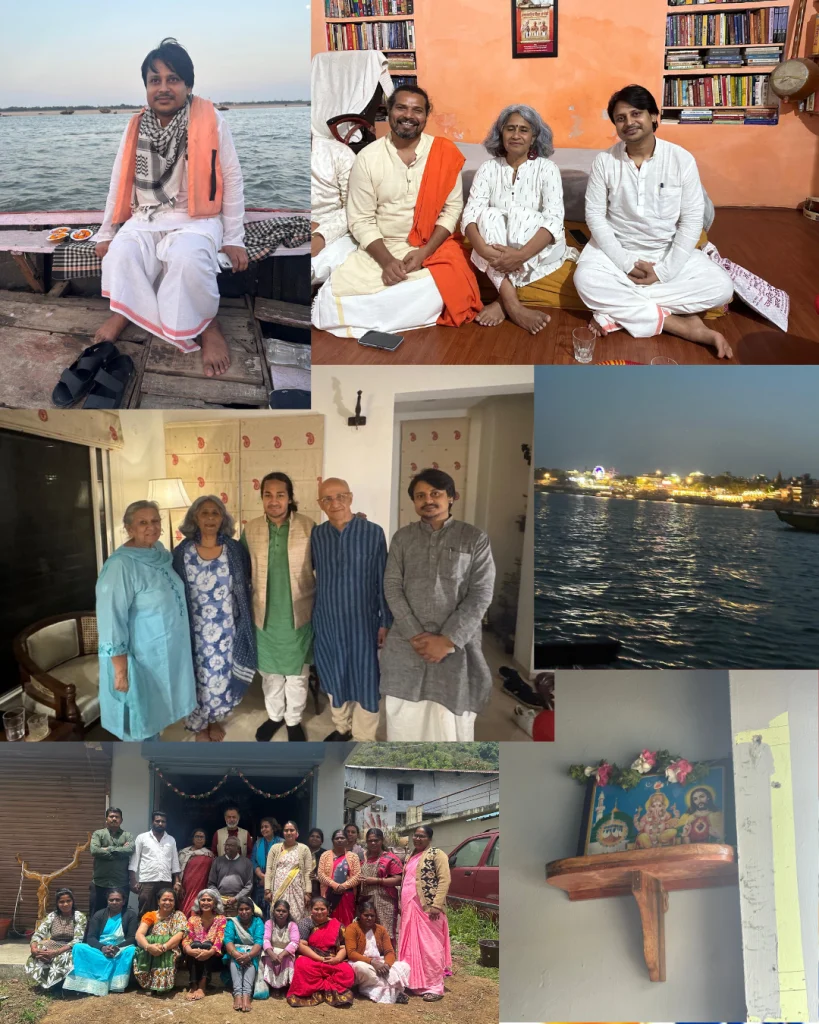
Harsh Mander, Yogendra Yadav, the swamis I met in Benares, Shashank ji at Ganges View, the progressive residents I met in Kodaikanal — again and again, people spoke of Hindus for Human Rights with warmth, seriousness, and respect. They believe in us and encourage our work. I carry those sentiments with me.
There is a particular loneliness in this work. To oppose Hindutva as Hindus is to be misunderstood from many directions at once. The Hindu right calls us traitors. Some secular allies worry that any Hindu language is already compromised. Many ordinary people are afraid. Many others are exhausted. And yet, on this trip, I felt something shift. Not in the condition of the country, which remains grave. But in the recognition of the work.
People see why it matters that Hindus speak against Hindu supremacy.
People see why it matters that we refuse to surrender Hindu traditions to those who use them to sanctify violence, hierarchy, misogyny, caste, Islamophobia, greed, and authoritarianism.
People see why it matters that love is not softness, but discipline. That interfaith solidarity is not symbolism, but survival. That the work of repair must be spiritual, political, ecological, and deeply human all at once.
India today is not simply a country in crisis. It is a country being remade. The question is whether it will be remade only by those who have captured power, or whether it can still be remade by those who knit: the dissenters, the truth-tellers, the caretakers, the young, the poor, the religious leaders who refuse hate, the Muslims who still hope, the Hindus who refuse supremacy, the people who protect rivers and books and memory and one another.
I returned from India with grief. I also returned with clarity.
The flags may no longer need to cover everything. But the work of love remains visible wherever people still refuse to give up on one another.
We must be strong.
We must not give up.
We must knit India.