
Close Menu
Simply Invest Asia
  • Home
  • About us
  • Explore industries/sectors
    • Automobile
    • Aviation
    • Banking
    • Biotechnology
    • Chemical & Fertilizer
    • Entertainment and Media
    • Food Processing
    • Healthcare
    • Iron and Steel
    • Leather
    • Mining
    • Oil and Gas
    • Pharmaceutical
  • Explore by countries
    • China
    • Dubai / UAE
    • Hong Kong
    • India
    • Indonesia
    • Japan
    • Malaysia
  • Explore cities
    • Bangkok
    • Beijing
    • Chongqing
    • Delhi
    • Dubai
    • Guangzhou
    • Jakarta
    • Kuala Lumpur
  • Why Asia
Facebook X (Twitter) Instagram Threads
Trending:
  • China exports slow as Middle East turmoil weighs – Financial Times
  • BUY/SELL/HOLD: Hong Kong Market Update (4/14/26) – Smartkarma
  • 44% YoY Net Profit Drop, Yet 14.4 Billion Yuan Investment in Bold Tech Transformation Push
  • A-share oil and gas stocks generally declined, with Tongyuan Petroleum falling more than 5%.
  • How Dubai Communities Help Children Find Calm in Uncertain Times Through Football, Doodling and Reading
  • LVMH fashion -2%; UAE slump; ME -1%; Watches & Jewelry +7% — TradingView News
  • China to improve community healthcare, expand rehabilitation care services: official
  • Wage protest turns violent in India – Asia News Network
  • Moment’s Flymingo Box tapped for Garuda
  • APT73/Bashe Targets Malaysian Engineering Firm Whessoe
  • How Kanamic Network Is Tackling Japan’s Aging Society With Cloud Healthcare Solutions
  • Indonesian law for Myanmar general – Editorial
  • New rules aim to spice up Chongqing hotpot sector
  • Hong Kong Gifts and Premium Fair and Home InStyle to Unveil Market Trends in April 2026 – Asia News Network
  • Ellie Kildunne on being stranded in Dubai during airspace shutdown
  • China’s EV makers accelerate push into chips, AI amid global cooperation
  • Can India and Pakistan seize this moment?
  • Delhiwale: 30 years of ‘Jai Kishan’ | Latest News Delhi – Hindustan Times
Tuesday, April 14
Facebook X (Twitter) Instagram
Simply Invest Asia
  • Home
  • About us
  • Explore industries/sectors
    • Automobile
    • Aviation
    • Banking
    • Biotechnology
    • Chemical & Fertilizer
    • Entertainment and Media
    • Food Processing
    • Healthcare
    • Iron and Steel
    • Leather
    • Mining
    • Oil and Gas
    • Pharmaceutical
  • Explore by countries
    • China
    • Dubai / UAE
    • Hong Kong
    • India
    • Indonesia
    • Japan
    • Malaysia
  • Explore cities
    • Bangkok
    • Beijing
    • Chongqing
    • Delhi
    • Dubai
    • Guangzhou
    • Jakarta
    • Kuala Lumpur
  • Why Asia
Simply Invest Asia
Home»Explore by countries»India»Can India and Pakistan seize this moment?
India

Can India and Pakistan seize this moment?

By IslaApril 14, 20264 Mins Read
Share
Facebook Twitter Pinterest Threads Bluesky Copy Link


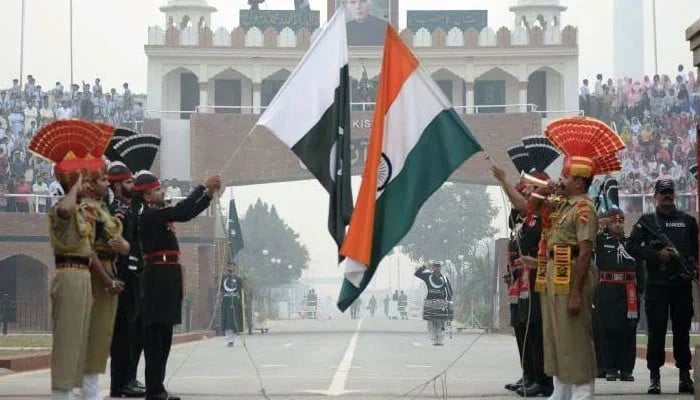
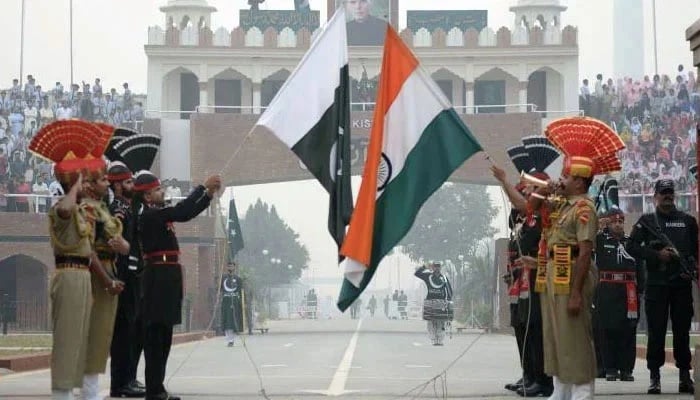
Pakistani and Indian soldiers take part in the flag-lowering ceremony at the Pak-India Wagah Border. — AFP/File

The war on Iran brings into focus a hard strategic truth: rivalries do not stay frozen. They don’t quietly fade into the background. They accumulate pressure, absorb grievances and harden over time. And eventually – through nationalism, miscalculation or sheer resource stress – they snap.

For India and Pakistan, this is not a distant lesson. It is uncomfortably close. Occupied Jammu and Kashmir is a live fault line. It carries years of accumulated tension – ceasefire violations, doctrinal signaling and increasingly toxic domestic narratives. The most dangerous assumption in South Asia today is that this uneasy equilibrium can hold indefinitely. It cannot.

And when it breaks, the trigger may not be territory alone. It is just as likely to be water.

The Indus basin, it must be remembered, is not merely a river system; it is Pakistan’s lifeline. India’s upstream position creates a form of leverage that is rarely stated openly but always present. The Indus Waters Treaty now shows visible strain. A sustained disruption would not just hurt Pakistan; it would shake it at its core. Agriculture would falter, power generation would stumble, and food security could quickly spiral into crisis.

Here, comparisons with the Middle East begin to break down. In the Iran theatre, damaged infrastructure can eventually be rebuilt – ports repaired, refineries restored, capital re-injected. South Asia offers far less room for recovery. Even a limited conflict between India and Pakistan would not remain contained for long. It would strike densely populated areas, disrupt energy systems, and choke economic arteries almost immediately. And with both sides nuclear-armed, the margin for error is dangerously thin. This is not a region that can afford to ‘learn by doing’.

There have been moments of restraint before. The Cuban Missile Crisis forced two superpowers to step back from the brink and put safeguards in place. Closer to home, the Lahore Declaration briefly showed that even entrenched adversaries can shift course. But symbolism, however powerful, rarely lasts on its own. What endures is quieter, sustained engagement that gradually builds mutual stakes.

Paradoxically, the Iran conflict itself creates a narrow opening for South Asia. India’s strategic investment in Iran’s Chabahar Port, designed to bypass Pakistan and reach Central Asia, is now caught in regional instability. That disruption creates space, if Islamabad is willing to think beyond familiar patterns.

Pakistan could step forward with a clear, interest-based proposition: offer India guaranteed, secure land access to Afghanistan and Central Asia through its territory – reliable, tariff-light transit corridors that serve India’s trade and energy ambitions. In return, India would be required to ease its tight administrative grip over Kashmir, opening space for civil liberties, political expression and meaningful engagement. This would not resolve the dispute overnight, but it could begin to shift it from a rigid zero-sum contest to a more managed, de-escalatory process.

This is not concessionary diplomacy. It is strategic tradecraft. When both sides have something tangible to gain – and something real to lose – the logic of perpetual confrontation begins to weaken.

Water, meanwhile, needs to move to the centre of the conversation. A modernised Indus framework is no longer optional. Real-time data sharing, satellite monitoring and neutral technical arbitration must replace ambiguity and suspicion. Joint flood forecasting, shared hydroelectric projects, and coordinated climate responses can serve as practical starting points. The glaciers feeding the Indus are retreating faster than negotiations move and that gap is becoming dangerous.

For any of this to hold, diplomacy has to work on multiple levels at once. Formal talks must address core disputes. Quiet backchannels must remain active when politics intervenes. When one channel stalls, others must carry the load. That is how fragile progress survives.

The lesson from Iran is not just that wars are destructive. It is that unresolved rivalries have a way of resurfacing at the worst possible moment – when trust is low, tempers are high, and options are limited. South Asia is edging towards that space.

The choice is immediate. Continue managing hostility until it breaks or reshape the relationship before it does. Restraint is not weakness; dialogue is not surrender and delay is

not neutrality.

India and Pakistan still have time – but not much – to act with purpose and imagination. If they fail, the next thaw in their long-frozen rivalry will not bring relief. It will bring fire.


The writer is an Islamabad-based researcher with a special interest in India, Pakistan and regional affairs. He can be reached at: [email protected]


Source link

Related Posts

Wage protest turns violent in India – Asia News Network

April 14, 2026

Lufthansa cabin-crew strike cancels 520 flights, derails Indian corporate itineraries

April 13, 2026

Military Production Minister explores expanded cooperation with India’s Parasn

April 13, 2026
Add A Comment
Leave A Reply Cancel Reply

Top Posts

Abandoned malls, whispers of nuclear war and young foreigners detained. This is what’s REALLY going on in Dubai… and the chilling warning one taxi driver gave to the Mail’s IAN BIRRELL

April 11, 2026

US trade chief says tech restrictions to block Chinese autos

April 10, 2026

Japan to release extra 20 days’ oil reserves from May

April 10, 2026
Don't Miss

China exports slow as Middle East turmoil weighs – Financial Times

By IslaApril 14, 2026

China exports slow as Middle East turmoil weighs Financial Times Source link

BUY/SELL/HOLD: Hong Kong Market Update (4/14/26) – Smartkarma

April 14, 2026

44% YoY Net Profit Drop, Yet 14.4 Billion Yuan Investment in Bold Tech Transformation Push

April 14, 2026

A-share oil and gas stocks generally declined, with Tongyuan Petroleum falling more than 5%.

April 14, 2026
SUBSCRIBE TO OUR NEWSLETTER

Get our latest downloads and information first. Complete the form below to subscribe to our weekly newsletter.


I consent to being contacted via telephone and/or email and I consent to my data being stored in accordance with European GDPR regulations and agree to the terms of use and privacy policy.

Stay In Touch
  • Facebook
  • YouTube
  • TikTok
  • WhatsApp
  • Twitter
  • Instagram
Top Trending

New rules aim to spice up Chongqing hotpot sector

By IslaApril 14, 2026

Hong Kong Gifts and Premium Fair and Home InStyle to Unveil Market Trends in April 2026 – Asia News Network

By IslaApril 14, 2026

Ellie Kildunne on being stranded in Dubai during airspace shutdown

By IslaApril 14, 2026
Most Popular

China’s ‘fictitious names’ mischievous, says India | India News

April 12, 2026

Dubai, eternal city – Financial Times

April 11, 2026

China to improve community healthcare, expand rehabilitation care services: official

April 14, 2026
Our Picks

Thousands Of Travellers Grounded Around China As Shanghai, Beijing, Chengdu, Guangzhou, Shenzhen, Xi’an, Wuhan, And More Delay 1,439 And Cancel 164 Flights, Disrupting China Eastern, Air China, China Southern, And Others

April 11, 2026

India says deeply concerned by reports of civilian casualties in Lebanon

April 11, 2026

How The Himadri Speciality Chemical (BSE:500184) Story Is Evolving With A Steady ₹470 Target

April 12, 2026
SUBSCRIBE TO OUR NEWSLETTER

Get our latest downloads and information first. Complete the form below to subscribe to our weekly newsletter.


I consent to being contacted via telephone and/or email and I consent to my data being stored in accordance with European GDPR regulations and agree to the terms of use and privacy policy.

© 2026 Simply Invest Asia.
  • Get In Touch
  • Cookie Policy
  • Privacy policy
  • Terms & Conditions

Type above and press Enter to search. Press Esc to cancel.

SUBSCRIBE TO OUR NEWSLETTER

Get our latest downloads and information first.

Complete the form below to subscribe to our weekly newsletter.


I consent to being contacted via telephone and/or email and I consent to my data being stored in accordance with European GDPR regulations and agree to the terms of use and privacy policy.