
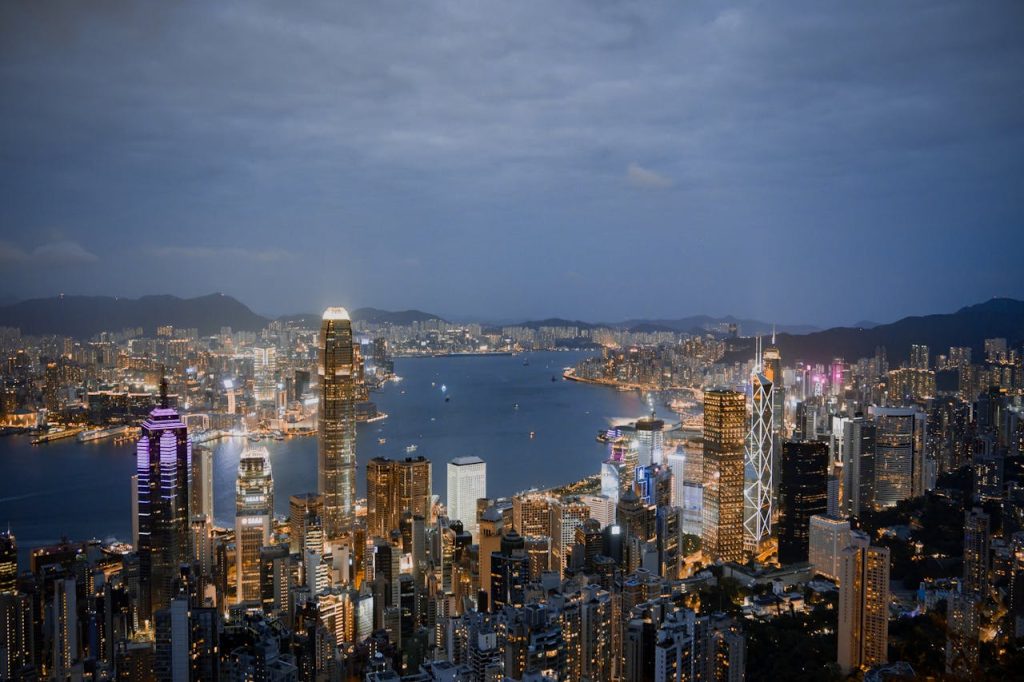
Hong Kong’s benchmark Hang Seng Index closed at 25,182.39 on Friday 29 May 2026, advancing 0.70% on the session and providing a modestly positive end to what had been an exceptionally volatile month for the city’s equity market.
The day’s gains were driven by a broad improvement in risk appetite following reports that the United States and Iran had reached a preliminary agreement to extend their ceasefire by 60 days, with the possibility of unrestricted shipping resuming through the Strait of Hormuz.
The Hang Seng’s Friday recovery contrasted with the heavier losses experienced on Thursday, when the index fell 1.27% to 25,006 amid renewed uncertainty about the progress of US–Iran negotiations. The sharp swings between sessions reflected the extreme sensitivity of Hong Kong equities to geopolitical developments, given the city’s role as a major financial hub with deep linkages to both global capital flows and mainland Chinese economic activity.
Friday’s session saw broad participation in the rally, with notable gains in the technology, financial services, and consumer discretionary segments. Lenovo Group was a standout performer during the week, gaining substantially as optimism surrounding AI-driven demand for its devices and enterprise hardware solutions continued to support the stock. Among other notable movers on Friday, Pop Mart International advanced 5.8%, AIA Group gained 2.3%, and Innovent Biologics surged 6.1% on continued positive sentiment toward its oncology pipeline.
Context: Hong Kong’s May 2026 — A Turbulent Journey
The Hong Kong Stock Exchange and its primary Hang Seng Index have navigated May 2026 through a near-constant geopolitical headwind. The Hang Seng entered the month in the 25,000–25,500 range and experienced sharp swings in both directions as successive reports about US–Iran ceasefire prospects — many of them subsequently denied or disputed — drove day-to-day price action with unusual intensity.
The widening of Hong Kong’s trade deficit to HKD 29.5 billion in April 2026, published during the week, was an additional reminder of the structural pressures facing the Hong Kong economy. The city’s role as a re-export and financial services centre means it is acutely exposed to shifts in global trade volumes, and the combination of Strait of Hormuz disruptions and rising US-China tensions over semiconductor and technology exports created a particularly challenging backdrop for business confidence and investment.
A technical pattern of some significance was noted in market analysis published during the week: the Hang Seng’s price action showed characteristics consistent with a developing head-and-shoulders formation in the medium-term chart, with a critical support level identified around 25,200. Friday’s close above this threshold — at 25,182 — provided technical relief, although a sustained move above 25,500 will be required to definitively break the pattern and signal a more constructive trend.
Sector and Stock Analysis
Technology and AI-Linked Stocks
Tencent Holdings, one of the Hang Seng’s largest constituents, traded positively on Friday (+0.4% intraday) after sharp losses on Thursday (-2.3%). The company remains at the centre of two intersecting narratives: the global AI expansion driving demand for cloud computing and digital services, and the regulatory and trade-policy environment that constrains its operational freedom and international growth prospects.
SMIC, China’s most advanced domestic chip manufacturer, and Xiaomi continued to attract divergent views from investors. SMIC’s long-term thesis as a beneficiary of China’s semiconductor self-sufficiency drive remains intact, but near-term constraints from equipment access limitations weigh on production capacity expansion timelines. Xiaomi’s strong position in the AI-enabled smartphone market and its expansion into electric vehicles provided a more immediately positive narrative, though the stock gave back some gains on Friday.
Financial Services
Financial stocks in Hong Kong demonstrated resilience through much of May. HSBC, which relocated its headquarters to Hong Kong several years ago and maintains the city as a major operational hub, benefited from sustained institutional demand. The privatisation of Hang Seng Bank by HSBC, completed in January 2026, removed the former subsidiary from the exchange but did not materially affect HSBC’s overall earnings profile in the city. AIA Group, the pan-Asian insurance powerhouse, continued to attract sovereign wealth and long-term institutional interest, supported by demographic tailwinds across Southeast Asia.
Structural Themes for the Hong Kong Market
The Hong Kong Stock Exchange occupies a unique structural position in global finance as the primary gateway between international capital markets and mainland Chinese equities through the Stock Connect programmes. The Connect schemes — linking Hong Kong to the Shanghai and Shenzhen exchanges — remain operational and active, providing a critical mechanism for foreign investors to access Chinese equities and for mainland investors to access Hong Kong-listed stocks.
Despite political and regulatory changes that have reshaped Hong Kong’s institutional environment since 2020, the exchange has maintained its function as a premier listing destination for Chinese companies seeking international capital and a global investor base. The city’s position within China’s ‘one country, two systems’ framework, combined with its common law legal heritage and sophisticated financial infrastructure, continues to make it the preferred venue for large-cap Chinese corporate fundraising.
The Hang Seng Index itself has evolved in recent years to reflect this changing landscape, with the addition of mainland Chinese technology companies and a reduction in the historic dominance of traditional banking and property sectors. The index now offers investors meaningful exposure to AI infrastructure, e-commerce, cloud services, and the broader digital economy alongside its traditional financial and real estate constituents.
Week Ahead: 1–5 June 2026
The week ahead will be dominated by the same geopolitical variable that has shaped May: the outcome of US–Iran diplomatic engagement. A confirmed ceasefire extension with a credible framework for reopening the Strait of Hormuz would be unambiguously positive for Hong Kong equities, reducing the oil price premium, easing global inflationary pressures, and improving risk appetite across emerging and developed market equities simultaneously.
Within Hong Kong and the broader China complex, the Caixin Manufacturing PMI for May will be closely watched. A reading above 50 would suggest that Chinese manufacturing activity is holding up better than feared despite trade headwinds, and would support a recovery in export-oriented names listed on the Hong Kong exchange.
Any development in the US-China technology decoupling story — particularly regarding semiconductor export controls, the status of AI chip sales to Chinese companies, or commentary from US legislators about potential new restrictions — could move the market significantly. Hong Kong’s exchange is particularly sensitive to these dynamics given the concentration of mainland technology companies among its largest constituents.
Technically, the Hang Seng must hold the 25,200 support level and break convincingly above 25,500 to establish a more positive trend. A failure at 25,200 would open a path toward a retest of the 23,900 support zone. For the week ahead, the directional bias is cautiously positive, conditional on geopolitical resolution, with a target range of 25,000–26,000 if ceasefire news is confirmed.