
by Thalia Kehoe Roden, Melissa del Aguila, and Patrick Poon
語言:
English
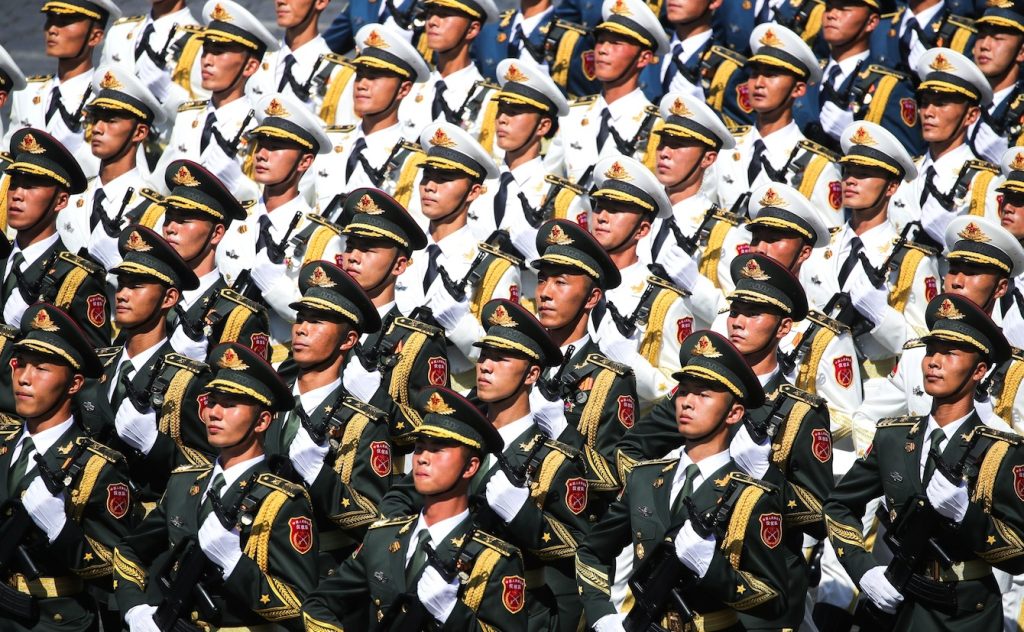
Photo Credit: Kremlin.ru/CC BY 4.0
ACCORDING TO HUMAN rights experts across the region who participated in the annual human rights survey conducted by the Human Rights Measurement Initiative (HRMI), a New Zealand-based NGO, China and Hong Kong continue to rank among the worst human rights violators in East Asia, particularly in civil and political liberties and empowerment rights.
This week, as HRMI released its latest annual dataset, another example of the ongoing crackdown emerged in Hong Kong: the targeting of Hunter Bookstore in Sham Shui Po district, a venue popular among civil society members and progressive communities. The bookstore owner, Leticia Wong, a former pro-democracy district councillor, and her husband, were arrested by the police on suspicion of selling seditious books and organising activities targeting young people and students that incited hatred against the government, as well as receiving funds from foreign political organisations. They were interrogated for two days before they were released on bail.
The arbitrary nature of Hong Kong’s National Security Law is comparable to, and arguably even more draconian than, the similar legislation of the so-called “Ethnic Unity and Progress Law” in China that aims at forcible assimilation. The laws and judicial interpretations of new laws would still be disguised as being discussed and approved by the Standing Committee of the National People’s Congress. But with the Chief Executive as the supreme power to certify what constitutes national security literally put the executive’s power above the legislature and the courts.
The way in which the Hong Kong government uses both the National Security Law and the unrestrained power of the Chief Executive to interpret the law is similar to the ‘Law on Promoting Ethnic Unity and Progress’ which was recently passed by the Chinese government and is used to abuse the law in the name of ‘ethnic unity’. The clear intent of this law in China is to exert more state control over Uyghurs and Tibetans through forced assimilation into Han Chinese culture to further erode their cultural identities, religious practices, and customs.
In Hong Kong, the aim appears to be the diminishing of colonial-era democratic influences, particularly the tradition of respecting freedoms and the rule of law. We have all borne witness to how Hong Kong is changing from a free society to an authoritarian city like the Communist Chinese regime. HRMI’s data over the past several years documents this decline, as Hong Kong’s previously fairly high scores for civil and political rights have converged to be nearly the same as China’s very low scores.
Reports from human rights experts who participated in HRMI’s annual human rights survey paint a dire picture: Hong Kong’s and China’s empowerment and safety from the state rights are among the lowest in Asia, and in fact are also comparable to North Korea’s scores. For the first time this year, HRMI was able to provide quantitative data for North Korea across many civil and political rights, such as on freedom of expression.
China is aggressively exporting not just its consumer products, but also its authoritarian model, self-sufficiency and distorted human rights values. Taiwan’s human rights scores are the best in East Asia in HRMI’s sample, but we cannot ignore China’s influence and efforts to spread propaganda across the island state and beyond. China’s ambition is to reshape the concept of universal values to align more closely with its own political agenda.
The United States of America’s human rights scores are also dropping alarmingly in HRMI’s new scores. Discrimination and violations against immigrants, and anyone even perceived to have been born outside the United States are rampant. Massive cuts to United States funding for civil society in other countries will have a far-reaching impact on local and regional human rights organisations in need of foreign support to help their development, human rights, and humanitarian work. It also shows the United States’ dwindling commitment to international affairs and human rights. With its 250 years of history, built on a foundation of human rights and democracy, the United States should show an example of respecting and upholding human rights rather than violating them.
China’s transnational repression data is another major concern. Of the 77 human rights experts who shared their knowledge with HRMI, it was observed that Chinese citizens promoting democracy, Uyghurs, Tibetans, and Hong Kong activists are among the groups particularly at risk of rights violations by the state, even when living abroad. Their relatives in China and Hong Kong are also the targets of repression. Other tactics include death threats, the threats of being detained if they returned to China and Hong Kong, as well as freezing their bank accounts.
As tensions between China and Taiwan have intensified in recent years, the potential human rights implications for the wider region, and for the neighbouring regions of Southeast Asia, South Asia, and even Africa, remain uncertain. This is underscored by developments such as the abrupt ‘postponement’ of RightsCon in Zambia, one of the world’s largest human rights gatherings, which was originally scheduled to take place in May of this year, and appears to have been cancelled due to Chinese objections to Taiwanese participation.
Looking at the global data, in particular on transnational repression, we need to step up our efforts to counter China’s increasing influence in shaping the human rights narrative and the universal values of human rights, especially on freedom of expression and the arbitrary definition and use of national security as an excuse to crack down on dissidents. The implication is not just regional but global and far-reaching.