
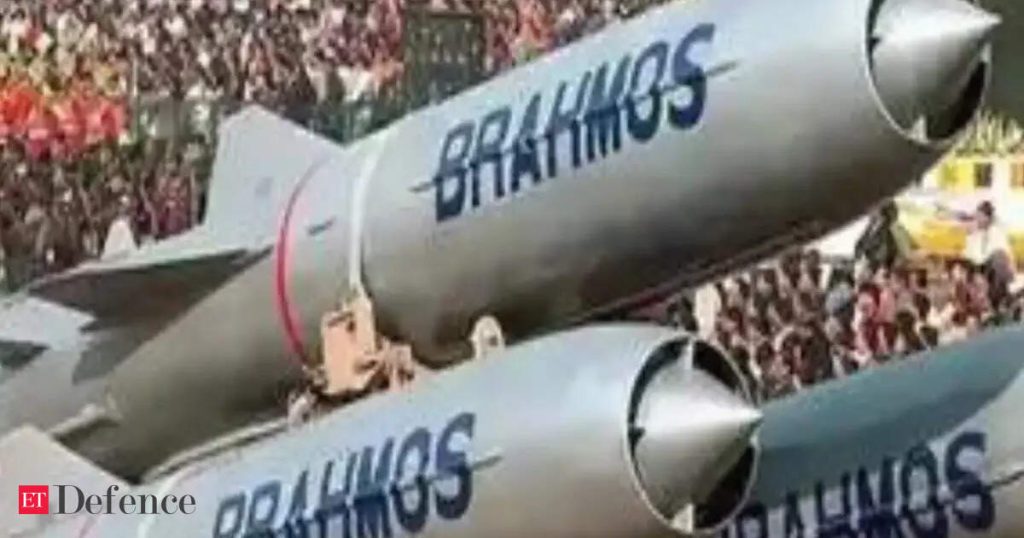
At a time when regional countries are becoming less certain about the durability of American security commitments, the spread of a belt of BrahMos batteries in China’s backyard could emerge as one of the most significant shifts in the military balance around the South China Sea.
Also Read: Made in India, deployed abroad- The expanding map of India’s arms exports
The BrahMos belt
The significance of an Indonesia deal lies not merely in the sale itself but in where it fits into a larger regional picture. The Philippines has already acquired BrahMos batteries and Vietnam has now joined the list. Indonesia appears poised to become the third Southeast Asian operator of the missile. Malaysia and Thailand have also reportedly shown interest. If these discussions mature into contracts, the result would be a chain of BrahMos batteries positioned around some of Asia’s most strategically sensitive waters.
While each deal strengthens the defence capabilities of a partner country, they actually begin to form something larger — a distributed network of coastal anti-ship missile forces capable of threatening hostile naval movements across large sections of the South China Sea and its surrounding approaches.

This is particularly important because geography favours the defenders. The countries surrounding the South China Sea occupy coastlines, islands and chokepoints through which naval forces must operate. Long-range coastal missile batteries allow relatively smaller powers to exploit that geographic advantage without matching China ship for ship.
Why the South China Sea matters
The South China Sea is not merely a regional waterway. It is one of the world’s most important maritime corridors, carrying trillions of dollars in trade every year. It is also the site of overlapping territorial claims involving China, Vietnam, the Philippines, Malaysia and others.Also Read: China’s warning reveals what really happened at Modi-Takaichi summit
For years, China has enjoyed a growing military advantage in these waters. It has built artificial islands, expanded military infrastructure and deployed increasingly sophisticated naval and coast guard forces. Smaller Southeast Asian countries often found themselves confronting a much larger power with limited means of imposing costs on Chinese operations. The problem has never been China’s ability to seize control of the sea. The challenge has been the inability of smaller states to credibly threaten Chinese vessels operating near disputed areas.
That equation begins to change when coastal states acquire high-speed anti-ship missiles capable of reaching deep into contested waters.
Why BrahMos changes the equation
The BrahMos missile is particularly suited for this role. Its combination of speed, accuracy and flexibility makes it one of the most dangerous coastal defence weapons available on the international market. Travelling at nearly three times the speed of sound, it dramatically compresses an adversary’s reaction time. A defending country does not need a massive navy if it possesses the ability to threaten major warships from concealed positions along its coastline.
This challenge is especially relevant for China. Much of China’s maritime strategy depends on deploying large naval and coast guard platforms across contested waters. According to defence analysts, BrahMos poses a significant threat to such vessels because of its speed, penetration capability and resistance to electronic interference.
In practical terms, a significant number of missile batteries can force a stronger navy to operate more cautiously. Warships may need to remain farther from contested areas, devote greater resources to air defence and constantly account for the possibility of missile attacks from multiple directions. It is not about sinking ships but convincing an adversary that the costs of aggressive action are high.
The American factor
The growing interest in BrahMos cannot be understood without considering changing perceptions about the United States. For decades, many Southeast Asian countries relied on the stabilising effect of American military presence. Even nations without formal alliances benefited from the knowledge that the US Navy remained deeply engaged in regional security. Today, however, there is increasing uncertainty. Successive shifts in American strategic priorities have led many regional capitals to question whether Washington will remain as consistently focused on the Indo-Pacific as it was in previous decades.
Whether those concerns are fully justified is almost beside the point. In international politics, perceptions often matter as much as reality. As doubts grow, countries are investing more heavily in their own deterrent capabilities. They are seeking tools that can help them defend national interests without depending entirely on external powers. The popularity of coastal missile systems across Asia reflects that trend.
For many governments, BrahMos offers a relatively affordable way to impose significant costs on a stronger adversary.
India’s expanding strategic footprint
For India, the implications extend beyond defence exports. Every BrahMos deal creates long-term military relationships involving training, maintenance, logistics and operational support. The missile becomes a gateway to deeper defence cooperation. Over time, this creates a network of security partnerships linking India with key maritime states across Southeast Asia. Such relationships strengthen India’s role as a resident Indo-Pacific power and expand its influence in a region that is becoming central to global geopolitics.
Importantly, India offers regional countries an additional strategic option. Southeast Asian states have long sought to avoid choosing between major powers. Defence cooperation with India helps diversify their security partnerships while preserving strategic autonomy. That makes New Delhi an attractive partner for countries that want stronger deterrence against China but do not necessarily want to be seen as joining a US-led containment framework.
A distributed deterrence against China
None of this means that China’s military superiority in the region is about to disappear. The Chinese navy remains the largest in Asia and one of the most powerful in the world. Beijing retains enormous advantages in resources, shipbuilding capacity and military infrastructure.
What changes is the operational environment. A South China Sea bordered by multiple BrahMos operators becomes more difficult to dominate. Chinese commanders would have to plan for missile threats emerging from several directions. Naval deployments would become riskier. Coercive actions against individual countries would carry greater uncertainty. Instead of confronting isolated states, China could find itself dealing with a loose but increasingly capable collection of coastal powers possessing similar deterrent capabilities, that is BrahMos.
The balance of power would not flip overnight. But it would become more contested than it is today.
If Indonesia joins the BrahMos club and Malaysia or Thailand eventually follow, Southeast Asia could witness the emergence of an entirely new security architecture. It would not be based on alliances, permanent military bases or collective defence treaties. Instead, it would rest on distributed deterrence, where multiple countries possess the means to impose serious costs on any force seeking to dominate regional waters.
For India, such a development would represent a major strategic achievement. For Southeast Asian nations, it would provide greater confidence in defending their maritime interests. For China, it would mean operating in a neighbourhood that is no longer as permissive as it once was. The real significance of a potential Indonesia deal therefore lies beyond the contract itself. It is about the gradual construction of a missile-backed deterrent arc around the South China Sea, one that could become a defining feature of Asia’s security landscape in the years ahead.