
TEHRAN – The geopolitical landscape of the Persian Gulf has been radically redrawn following the intense 40-day military campaign launched by the United States and Israel against Iran on February 28. While the broader conflict reached a fragile, Pakistani-mediated ceasefire in April, the diplomatic and economic aftershocks are still reverberating across the region.
At the center of this transformation is the United Arab Emirates (UAE). Its highly hawkish trajectory during the war, characterized by covert military actions – including its airstrike on Iran’s Lavan Island refinery in early April that led to spillage of oil into the sea – coupled with a historic break with OPEC, and deeply complicated ties with Israel, signal a profound shift in the course of developments in the Persian Gulf.
When the U.S. and Israel started the war on Iran, Washington expected its traditional Western allies to form a unified front. Instead, a striking divide emerged. European capitals explicitly distanced themselves from the offensive framework of the strikes, which targeted Iranian military and nuclear installations and the assassination of its top political and military figures.
In a joint statement issued at the onset of the conflict, British Prime Minister Sir Keir Starmer, alongside the leaders of France and Germany, firmly rejected the offensive nature of the campaign. Starmer remarked:
“That is in our best national interest. That is my duty. I will stick to it, and I’m not going to be diverted or deflected from that by what anybody else says.”
London subsequently restricted the U.S. military’s use of British bases (such as Cyprus and Diego Garcia) strictly to “specific and limited defensive purposes.”
For long years, Iran had been warning that it would target any place from which Iran comes under attack. However, this warning was ignored by most countries bordering the southern shores of the Persian Gulf, whose countries host American military bases. However, Iraq and the Republic of Azerbaijan promised that they would not allow a single shot against Iran from their soil.
In the July 2025 war against Iran by Israel and the U.S., Iran targeted the American Al Udeid Air Base in response to the U.S. air strikes on Iran’s key nuclear infrastructure in Isfahan, Natanz, and Fordo. Even Tehran’s retaliation did not come as a wake-up call to its southern neighbors.
When the war on Iran began again in 2026, the U.S. used military bases in Qatar, Bahrain, Saudi Arabia, and the UAE in striking Iran. In response, Iran hit those bases. Again, failing to review their policies, Iran targeted, but not seriously, certain sites in these countries. It launched drones at them, but hit the UAE with drones and missiles. The more days passed, the UAE leaned heavily into its security partnership with Israel and the U.S. against Iran. It even took a stance against Pakistan for its mediation.
According to reports later confirmed by U.S. Ambassador to Israel Mike Huckabee, Israel actively deployed Iron Dome batteries and specialized military personnel to the UAE during the war to shield Emirati airspace, solidifying a functional wartime alliance.
Efforts to push Saudi Arabia and Qatar to the brink
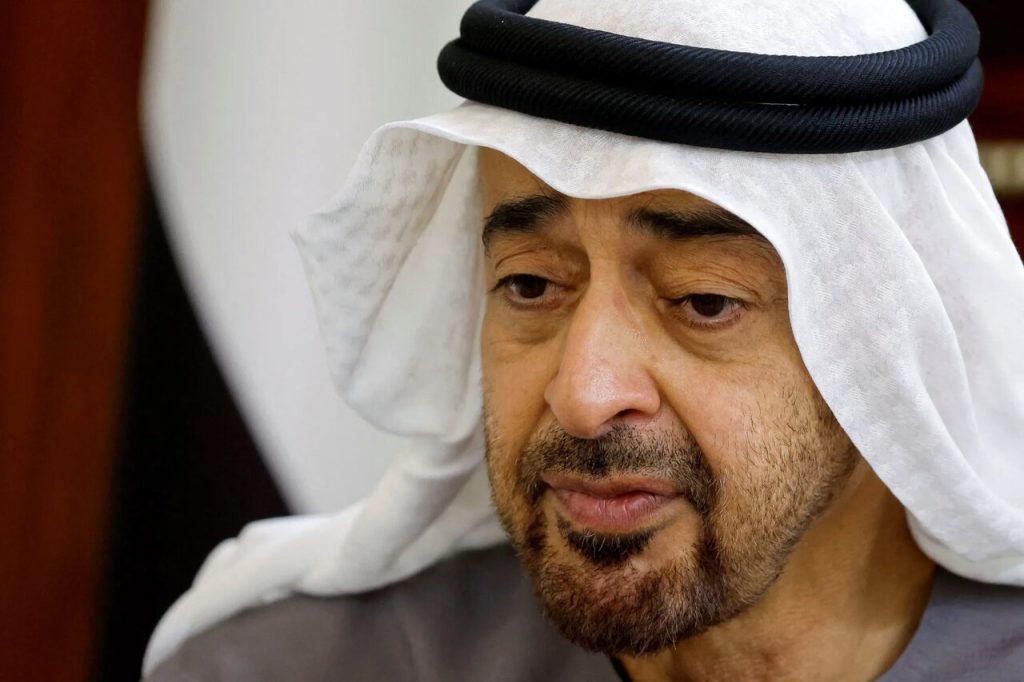
A major revelation following the ceasefire was the UAE’s active attempt to mobilize a pan-Arab military front against Tehran. Reports indicate that shortly after the February 28 strikes, UAE President Sheikh Mohamed bin Zayed Al Nahyan (MBZ) held a series of urgent phone calls with regional leaders, most notably Saudi Crown Prince Mohammed bin Salman (MBS) and the leadership of Qatar.
MBZ argued that the Gulf Cooperation Council (GCC) needed to act as a unified military bloc to strike back at Iran alongside the U.S. and Israel. However, the response from fellow leaders in the Persian Gulf was a definitive rejection, with officials summarizing the collective sentiment as: “This is not our war.”
While Saudi Arabia did execute a series of unpublicized, “tit-for-tat” retaliatory airstrikes via the Saudi Air Force in late March after its own territory was hit, Riyadh paired its military response with immediate, direct diplomacy with Tehran to prevent an uncontrolled escalation. Qatar similarly chose a path of de-escalation, throwing its weight behind diplomatic tracks.
This refusal strained UAE-Saudi relations significantly, exposing a fundamental philosophical rift.
A fresh diplomatic firestorm erupted when Israeli Prime Minister Netanyahu publicly said he had made a secret wartime visit to the UAE city of Al Ain on March 26 to meet with MBZ, hailing it as a “historic breakthrough.”
The UAE Foreign Ministry moved swiftly to issue a flat denial through its state news agency, WAM, labeling the claims completely “baseless”. It said, “Relations with Israel are public and conducted within the framework of the well-known and officially declared Abraham Accords, and are not based on non-transparent or unofficial arrangements.”
However, no one believed it. It was because the UAE citizens and the Arab public in large numbers are angry about the Israeli genocide in Gaza.
For Netanyahu, publicizing the meeting was primarily intended to increase his chances, as Israel is bracing for an election in late October.
Iranian Foreign Minister Abbas Araghchi warned on social media that any such “collusion” with Israel would be viewed by Tehran as “unforgivable.” Araghchi, participating at the BRICS foreign ministerial meeting in New Delhi, also countered excuses and lies by UAE Minister of State Khalifa Shaheen Al Marar.
The motives behind the OPEC exit
Perhaps the most tangible economic casualty of this geopolitical rift was the UAE’s shocking announcement in late April 2026 that it would withdraw entirely from OPEC and the broader OPEC+ alliance. While the UAE officially attributed the departure to its long-term independent production strategy, energy strategists argue the move was deeply political.
Justin Dargin, a Senior Fellow at the Middle East Council on Global Affairs, observed that the decision reflects both long-standing economic frustrations and the explosive new geopolitical realities of the post-war Persian Gulf:
Production caps vs. capacity: For years, the UAE has chafed under Saudi-enforced OPEC production quotas. Abu Dhabi has invested billions of dollars to boost its production capacity to 5 million barrels per day and wants the freedom to monetize these investments without being held back by Riyadh’s market-tightening strategies.
Geopolitical marginalization: The UAE was reportedly deeply alienated by being excluded from the core diplomatic negotiations that led to the April 8 ceasefire, which were primarily mediated by Pakistan and quietly supported by Saudi Arabia. Leaving OPEC serves as a powerful declaration of autonomy from Saudi economic and political hegemony.
Ultimately, an overextended strategy captures a critical turning point for a nation whose regional and global ambitions may finally be outstripping its capacity. While Abu Dhabi’s aggressive mix of economic statecraft and regional interventions has projected power far beyond its geographic weight, the friction of overreach is becoming impossible to ignore. For a small state navigating an increasingly volatile world, the line between visionary leadership and strategic vulnerability is razor-thin. Without a deliberate recalibration, this overextended posture threatens to transform the UAE’s economic prosperity into its heaviest liability.