
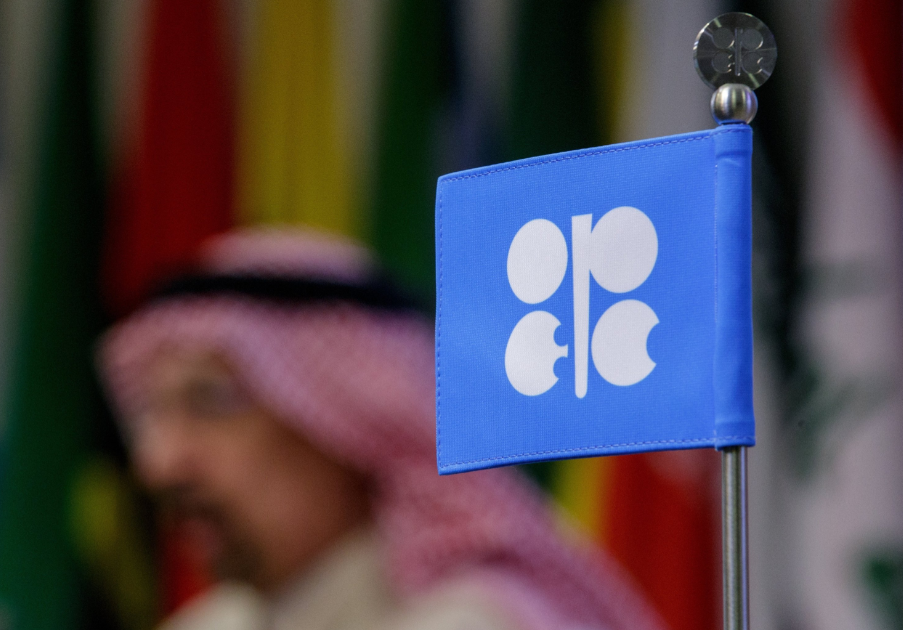
The United Arab Emirates’ announcement on April 28, 2026, that it will formally exit both OPEC and the wider OPEC+ alliance effective May 1 marks a seismic shift in global oil politics. As one of the cartel’s most significant producers with substantial spare capacity, the UAE’s departure delivers a major blow to an already strained coordinating mechanism. Independent energy consultant Kathryn Porter, writing in The Telegraph, described it as “a further blow to a cartel whose grip on international oil markets is weakening.”
Porter’s analysis highlights the UAE’s frustration with Saudi-led production quotas that have capped its output despite heavy investments in capacity expansion and infrastructure designed to bypass the Strait of Hormuz. With low production costs and genuine flexibility to ramp up or down quickly—unlike higher-cost U.S. shale producers who primarily adjust drilling activity—the UAE has long chafed under restrictions that prevented it from fully monetizing its resources. Long-term, the UAE appears to be betting on producing more oil now, ahead of potential structural demand declines from global electrification.
The timing of the exit, coming amid the ongoing Iran conflict and the effective closure of the Strait of Hormuz, adds layers of geopolitical complexity. Current supply disruptions have already created an energy shock, yet the UAE’s move signals a strategic pivot toward national interests over cartel discipline.
U.S. Financial Lifeline Strengthens the Shift
In the weeks leading up to the announcement, UAE officials—including Central Bank Governor Khaled Mohamed Balama and Minister of State for Financial Affairs Mohamed bin Hadi Al Hussaini—engaged directly with U.S. Treasury Secretary Scott Bessent on securing currency swap lines. These discussions, framed as precautionary amid dollar liquidity pressures from disrupted oil revenues, were publicly backed by Bessent. He stated that such swaps would “benefit both the UAE and the U.S.” by maintaining order in dollar funding markets and preventing disorderly asset sales.
This emerging financial alignment with Washington could prove transformative. A currency swap arrangement—potentially channeled through the Treasury’s Exchange Stabilization Fund—would provide the UAE with ready access to dollars, insulating it from short-term revenue volatility tied to the Hormuz disruptions. With this backstop, Abu Dhabi gains greater confidence to operate outside OPEC+ quotas, potentially ramping production toward its 4.8–5 million barrels per day (bpd) capacity without the fiscal risks that previously constrained it. The move reinforces a broader realignment: the UAE signaling closer coordination with U.S. interests at a moment when Saudi Arabia’s leadership of the cartel appears increasingly isolated.
Layered U.S. Leverage: Iraq’s Oil Revenues and Iran’s Future
The UAE’s enhanced independence does not occur in a vacuum. The United States continues to exert extraordinary control over Iraq’s oil revenues, a legacy arrangement dating to the 2003 invasion. Iraqi oil income flows into accounts held at the Federal Reserve Bank of New York, originally established as the Development Fund for Iraq and now managed as part of the Central Bank of Iraq’s reserves. This structure gives Washington ongoing leverage over Baghdad’s fiscal decisions, including the recent withholding of dollar shipments to pressure Iraq over ties to Iran.
This financial plumbing—combined with the UAE’s new U.S.-backed liquidity—amplifies American influence across the Gulf. It creates a de facto network of aligned producers less beholden to OPEC coordination and more responsive to market signals and U.S. policy priorities.
Looking ahead, the trajectory for Iran hangs in the balance. Depending on the outcome of current negotiations and the Iran conflict, Washington could impose Venezuelan-style controls on Tehran’s oil sector. In Venezuela, U.S. sanctions targeted PDVSA directly, slashed exports, routed revenues through tightly controlled mechanisms, and devastated production. Similar measures on Iran—potentially including intensified secondary sanctions, vessel designations, and controls on export hubs like Kharg Island—could further constrain supply if diplomacy falters. The U.S. has already eased certain Venezuela sanctions to boost global supply during the current crisis; the mirror image for Iran would tighten the noose.
Market Implications: Volatility, Competition, and a Weaker Cartel
Porter correctly notes that the remaining OPEC members will need deeper cuts to defend prices, yet historical quota compliance has been patchy. With non-OPEC supply (U.S., Canada, Brazil, Norway, and others) already accounting for well over half of global production, the cartel’s market-management power is diluted. Saudi Arabia retains swing capacity for short-term price influence, but coordinated action grows harder as the group shrinks and diversifies.
The likely outcomes:
Greater price volatility — without a strong coordinating mechanism, markets may overshoot on both the upside (supply shocks) and downside (demand weakness).
Downward pressure on prices over time — freer UAE (and potentially other independent) production increases competition.
U.S. strategic advantage — lower prices benefit American consumers and align with the Trump administration’s long-standing critique of OPEC “ripping off the rest of the world,” even as domestic shale producers navigate the trade-offs.
The test, as Porter concludes, will come the next time prices fall sharply. If Saudi Arabia pushes for cuts and others follow, the cartel may limp on. If not, we could witness the emergence of a genuinely more competitive—and potentially cheaper—global oil market in the years ahead.
The UAE’s exit, underwritten by deepening U.S. financial ties and set against American leverage over Iraq and the looming threat of escalated Iranian sanctions, accelerates a fundamental reordering.
How the UAE and the potential US control over Iran would add to the Iraq and Venezuelan oil already controlled under the US Dollar. It is an interesting way to protect the US Dollar.
OPEC’s era of dominance is not over, but its monopoly on price-setting power is eroding fast. The world of oil is becoming more fragmented, more volatile, and more aligned with U.S.-friendly producers. Time will tell how deeply this reshapes prices and geopolitics—but the direction of travel is clear.
Appendix: Sources and Links
- Kathryn Porter, “How the UAE’s shock exit from Opec will reshape the world of oil,” The Telegraph, May 2, 2026 (gift link): https://www.telegraph.co.uk/gift/027dda9e65b0fe48
- Reuters: “UAE leaves OPEC in blow to global oil producers’ group,” April 28, 2026: https://www.reuters.com/markets/commodities/uae-says-it-quits-opec-opec-statement-2026-04-28/
- Al Jazeera: “UAE exit from OPEC signals closer alignment with US interests,” May 1, 2026: https://www.aljazeera.com/economy/2026/5/1/uae-exit-from-opec-signals-closer-alignment-with-us-interests-experts-say
- CNBC: “Bessent says ‘many’ allies have asked for currency swaps,” April 22, 2026: https://www.cnbc.com/2026/04/22/iran-war-treasury-uae-scott-bessent-currency-swaps.html
- The New York Times: “Bessent Backs Financial Support for Oil-Rich U.A.E.,” April 22, 2026: https://www.nytimes.com/2026/04/22/us/politics/bessent-support-emirates.html
- The Wall Street Journal: “U.A.E. Asks U.S. About a Wartime Financial Lifeline,” April 19, 2026: https://www.wsj.com/world/middle-east/u-a-e-asks-u-s-for-a-wartime-financial-lifeline-3f9ea3a0
- Reuters: “How the U.S. controls Iraq’s oil revenues,” January 23, 2026: https://www.reuters.com/business/energy/how-us-controls-iraqs-oil-revenues-2026-01-23/
- The New York Times: “U.S. Withholding Iraq’s Own Oil Money Over Ties to Iran,” April 22, 2026: https://www.nytimes.com/2026/04/22/world/middleeast/iraq-us-dollars-shipment-iran.html
- Energy News Beat: “How soon will the US impose Venezuelan-style controls on Iran?” March 28, 2026: http://energynewsbeat.co/crude-oil-news/how-soon-will-the-us-impose-venezuelan-style-controls-on-iran-this-could-reshape-the-global-energy-market/
- Additional reporting from Bloomberg, BBC, Gulf News, and AP on the exit announcement and sanctions context (April–May 2026).
This analysis expands on Kathryn Porter’s original Telegraph piece with fresh geopolitical and financial context relevant