
- The US-Israel strikes on Iran in February 2026 triggered two months of severe disruption across Middle Eastern trade routes, with airspace closures and instability around the Strait of Hormuz cutting global air cargo capacity by an estimated 16–22 percent and exposing vulnerabilities in one of the world’s most important logistics corridors.
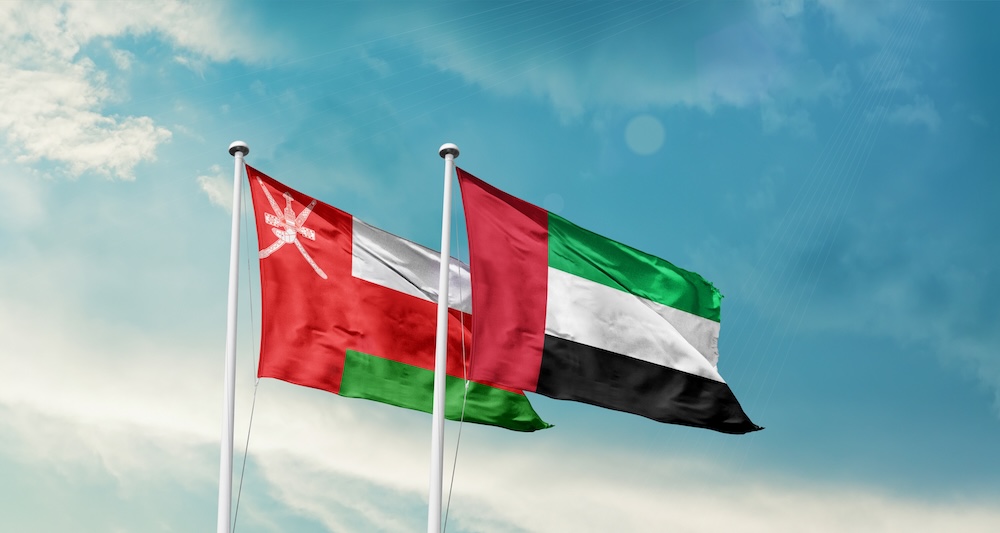
- In response, the UAE and Oman introduced the Dubai-Oman Green Corridor, a fast-tracked multimodal customs and transport route linking ports, airports and bonded land corridors to bypass the Strait of Hormuz and maintain cargo flows through co-ordinated sea, land and air logistics operations.
- Regional operators including Abu Dhabi Ports Group expanded feeder shipping services, bonded trucking, rail connections and charter airfreight operations, while analysts at PwC said the crisis demonstrated the Middle East’s growing resilience and strategic importance in future global trade networks.
On 28th February 2026, as the first missiles launched by the US and Israel passed through Middle East airspaces and struck Iran, it marked the start of unprecedented regional disruption that has now lasted for two months. The global economy was thrown into disarray as the world’s most critical commodity chokepoint, the Strait of Hormuz, became unsafe, and a key region for global air cargo flows faced airspace closures and attacks on sea and airports.
According to the latest analysis by PwC: “Air cargo has also come under significant strain as a result of the conflict. Widespread airspace closures have limited key transit corridors linking Asia, Europe and Africa, leading to a 16–22 percent reduction in global air cargo capacity, with sharper declines of up to ~39 percent on key intercontinental routes.”
“This situation is, therefore, stress-testing a region whose role in global trade has been shaped over the past 30 to 40 years through sustained investment in ports, aviation hubs, inland logistics and increasingly integrated multimodal corridors.”
Nevertheless, it catalysed a flurry of reinvention to keep supply chains running across the Middle East – from rerouting flights over adjacent airspaces, to deploying new feeder services and multimodal transport solutions. However, even as the ceasefire agreed on 8th April is holding, the Strait of Hormuz remains effectively blocked by the US and Iran, leaving trade routes disrupted.
The Dubai-Oman green corridor
One such new resilience measure being implemented, is the Dubai-Oman Green corridor, which was first activated in March to allow seamless transits into the UAE for air cargo shipments and containers destined for the Dubai mainland, Airports and Jebel Ali, that had been diverted to Omani airports and seaports due to the crisis.
In April, a new customs notice issued by the Director-General of Dubai Customs, Dr Abdulla Busenad, expanded on this to permit temporary transit of cargo from Dubai to global destinations via the Green Corridor linking Hatta to the land routes of the Sultanate of Oman. According to the notice, the measure is intended to “ensure continuity of supply chains and facilitate trade movement” in light of “current operational challenges affecting sea and air connectivity to GCC destinations”.
The corridor primarily allows goods of two types to move through the Hatta to Al Wajajah border crossing – air and sea cargo arriving at Dubai seaports and airports for re-export as well as air and sea cargo originating from the local markets. The customs process is also fast-tracked, waiving the requirement for a cash deposit and replacing it with a letter of guarantee instead as all movements are required to be carried out be a trusted bonded operator. For the purposes of air cargo, the first trusted bonded operator is designated to be dnata.
The notice explains that the bonded trucks with sealed containers will be transported to Al Wajajah custom border point, verified by Omani Customs authorities, and then cross the border into Hatta Dubai Customs border point.
Not only does this new corridor link Dubai’s logistics network with Oman’s ports but also provides a robust multimodal sea-land-air pathway that is fortified by cooperation and fast-track customs between Dubai and the Sultanate of Oman that bypasses the Strait of Hormuz.
During a high-level coordination meeting hosted earlier this month by the Ports, Customs and Free Zone Corporation in Dubai, Abdulla bin Damithan, Chairman of the Corporation emphasised that the uninterrupted flow of essential goods remains a top priority, alongside reinforcing the UAE’s position as a reliable regional and global logistics hub.
A global logistics keystone
Over the years, the UAE has become a keystone of global trade flows. According to the World Trade Organisation “World Trade Prospects and Statistics” report, the UAE was one of the world’s top 10 exporting countries in world merchandising trade in 2025.
Dr. Thani Al Zeyoudi, Minister of Foreign Trade, said, “The UAE’s top 10 ranking in goods exports for the first time in history is a testament to our nations’ competitiveness and a reflection of the world’s confidence in our economy. Despite the current geopolitical challenges, we are determined to build on this success and cement our position on the global trade map.”
The WTO report noted that the UAE’s goods and services trade has risen significantly in recent years, increasing from US$949 billion (AED3.5 trillion) in 2021 to US$1.637 trillion (AED6.014 trillion) in 2025.
Dubai International Airport is also the world’s busiest airport for international passenger traffic, according to the annual. Its geocentric location puts two-thirds of the world’s population within an eight-hour flight, while its advanced air and sea infrastructure, underpinned by powerhouse national carriers such as Emirates SkyCargo, helps streamline trade flows between Asia, Europe and the Americas.
The Green Corridor is only one amidst many measures taken to maintain supply chain resilience amidst regional disruption.
A constellation of resilience measures
During the high-level coordination meeting earlier this month, Director General of Dubai Customs, Dr Busenad stated: “Over the past period, we have successfully implemented a number of high-impact initiatives that facilitated cargo movement and enhanced supply chain efficiency. These include the issuance of Customs Notice No. (Six), enabling transit cargo movement through the green corridor with the Sultanate of Oman, the acceptance of undertaking letters as valid guarantees, and the organisation of workshops with traders to explain green corridor mechanisms and address their enquires,”
He added: “We are currently rolling out several pilot projects, including the activation of the Advance Cargo Information (ACI) system through shipping companies for all green corridor cargo, as well as the launch of a new maritime feeder service linking the region with India, further strengthening trade connectivity.”
Other initiatives highlighted include extended the grace period for re-export cargo, developing a framework to allow more land transport companies to join secured corridors, expanding the green corridor to include Saudi Arabia, and offering multiple clearance options within the corridor.
Some key routes that bolstered resilience as the Strait of Hormuz became risky are the Fujairah and Khor Fakkan Ports, which are located on the Eastern seaboard of the UAE and opens into the Gulf of Oman, south of the Strait. Since the onset of the crisis, thanks to diversified logistics capabilities, Abu Dhabi Ports Group has handled over 54,000 TEUs at Fujairah Terminals and Khor Fakkan Port, and successfully transported over 22,000 containers through its land logistics services, alongside 18,000 TEUs across its maritime network, supported by a fleet of 24 vessels operating eight feeder services.
The group also launched new regional feeder shipping services to maintain supply chain integrity, and new container feeder shipping services connecting ports in India, Pakistan and Oman, as well as Red Sea ports, and ports along the Upper Gulf region.
AD Group has also transported more than 8,000 tonnes of cargo through its air logistics services, enabled by more than 100 chartered flights. The group has also established a land bridge to transport cargo from Fujairah and Khor Fakkan through bonded customs corridors in the UAE to Khalifa Port, Jebel Ali Port, and Sharjah, using 800 trucks and four new daily rail service trips by Etihad Rail.
In addition, the UAE and Saudi Arabia have also strengthened trade links – the Saudi Ports Authority (Mawani), and the UAE-based logistics operator Gulftainer are co-ordinating on a partnership to establish direct sea-land trade corridor and connectivity between Sharjah and the city of Dammam.
According to PwC analysis, the Middle East has demonstrated the ability to absorb shocks, through rerouting cargo, leveraging and aviation logistics networks and activating inland corridors for a resilient future, it recommends scaling multimodal resilience, and prioritising driving additional efficient port capacity, building true rail connectivity, enabling cross-border interoperability and improving trucking efficiency. They also emphasise that air cargo should not be a fallback, but rather incorporated in the core system as a competitive component of the supply chain.
The analysis states: “If the lessons of this disruption are translated into coordinated action, the Middle East is well positioned not only to recover, but to emerge stronger, more resilient, and more central to the future of global trade.”