
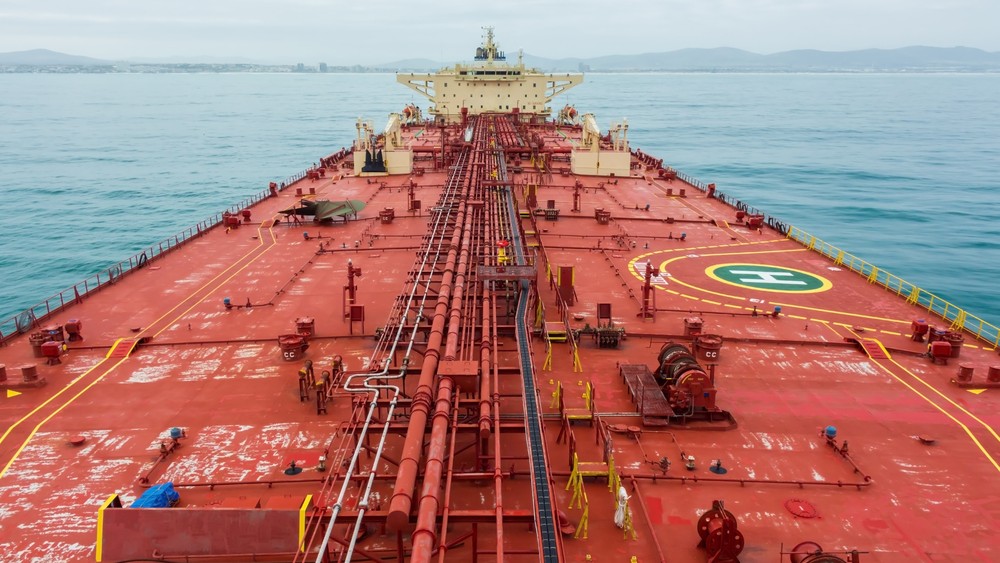
A tanker carrying crude oil to Japan has passed through the Strait of Hormuz, Reuters reported today, citing data from LSEG. This is only the second Japan-bound tanker to make it through the chokepoint since the U.S. and Israel launched strikes on Iran at the end of February.
Citing data from Kpler, Reuters also reported that the tanker is carrying 1.2 million barrels of Kuwaiti crude and another 700,000 barrels of Emirati crude. The cargoes were loaded in late February, Kpler said. The tanker is the property of Eneos. No details were disclosed about the arrangement—if any—between the Japanese company and Iranian authorities that resulted in the tanker being allowed to clear the Strait of Hormuz. Reuters did note in its report, however, that the Eneos Endeavour had switched its transponder off while traversing the strait.
Switching off location devices has become a widespread practice among vessels in the Persian Gulf as a way of avoiding detection by the Iranian army and potential attacks. Last week, three supertankers laden with crude oil successfully exited the Strait of Hormuz, carrying Iraqi and Emirati oil, all with their transponders turned off. However, there are 42 container ships still stuck in the Strait of Hormuz, while nine have successfully exited. Two have been seized by the Iranian authorities.
Resource-poor Japan is heavily dependent on Middle Eastern oil supply and felt the supply crunch almost immediately as most supplies from the region remained trapped at the Strait of Hormuz, unable to pass through the world’s most critical oil and LNG chokepoint.
For crude oil, Japanese refiners rely on imports from the Middle East for as much as 95% of their feedstocks. Most of the oil comes from Saudi Arabia, Kuwait, the United Arab Emirates, and Qatar. Of these Middle Eastern supplies, about 70% typically arrive in Japan on tankers traveling through the Strait of Hormuz.
By Irina Slav for Oilprice.com