

Today many people are feeling anxious and are carefully considering whether a crash or a major market shift might occur and when that might happen. How do you view the current situation?
I believe it is extremely important that everyone takes this issue seriously and thinks about it carefully rather than emotionally. Fortunately most executives in the real estate industry today experienced the collapse of the Japanese bubble economy around 1990. Because of that experience people are no longer simply pushing forward without reflection. Instead they constantly look at the conditions under their feet while moving ahead. In that sense the current environment is quite different from the period leading up to the previous bubble collapse.
Regarding the various activities you mentioned how are individual development projects being approached under these uncertain conditions?
Every single development is pursued with the highest level of caution and with the assumption that it must be able to respond to changes in society and the economy. At Sankei Building we advance projects only after confirming that they can adapt to shifts in the times. Even if something does not go as planned we have designed our approach so that any potential damage is relatively limited.
Could you explain the historical background of Sankei Building and how the company has transformed over time?
Sankei Building has a long history and for many years we generated revenue almost exclusively through the operation and management of office buildings. I joined the company in 2012 and while the income was very stable the business relied heavily on a single source. If offices were to fail our revenue would essentially disappear. It was a single pillar structure. Because of that I strongly felt we needed to diversify and that led us to begin a number of new initiatives.
What external factors supported this shift toward diversification?
One major factor was the return of the Liberal Democratic Party to power in 2012. The government prioritized economic revitalization and began with a low interest rate policy by significantly reducing interest rates. This created a very positive environment for the real estate industry and supported investment across the board.
How did you structure the company’s new growth pillars?
Offices remained our core business so we positioned residential development as the second pillar. After that we wanted to establish a third pillar and entered the hotel business. We completed a merger and acquisition in 2015 and as a result we created three distinct business pillars. Each of these divisions has grown steadily.
What was the key element that drove growth across these different businesses?
The central keyword has always been originality. We focused very strongly on how to create originality in every individual property and project across all divisions. In offices we are not a major developer so we cannot build top tier super premium properties. However we realized we could create mid sized offices with functionality and specifications comparable to the highest class. We developed a series of such offices and that became one of our strengths.
How did this thinking influence your residential projects?
In residential development we focused on condominiums and rental housing designed primarily from a female perspective. Decisions on specifications and layouts were made through that lens and the response from the market was extremely positive.
How was originality expressed in the hotel business?
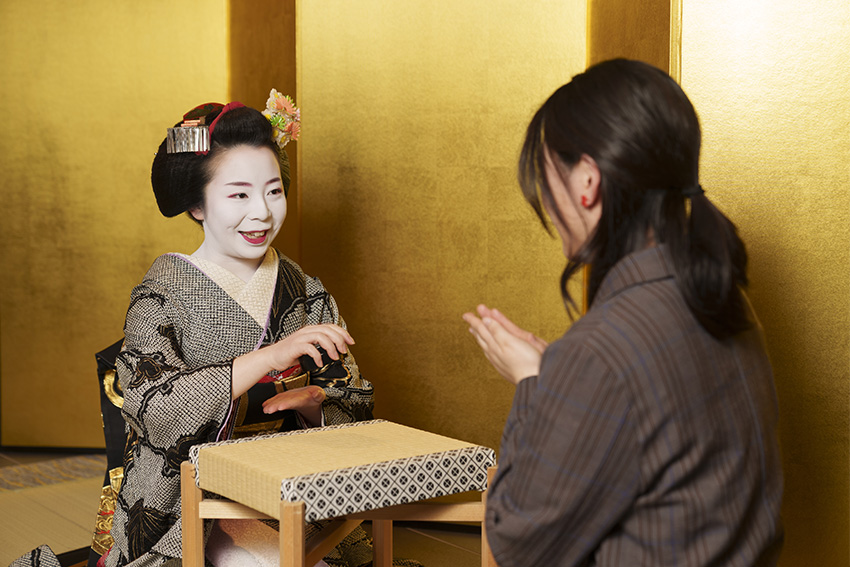
Our entry into hotels began with an acquisition that allowed us to secure a capable operator. We then focused on development in tourist destinations. A major success factor was incorporating local culture so that guests could enjoy authentic experiences. In places like Kyoto, we introduced traditional entertainment such as ozashiki play with geiko and maiko and displayed traditional crafts in hotel lobbies. These efforts were very well received.
Originality seems to be a recurring theme in your strategy.
Yes creating something memorable in every project is essential. For example in the Hareza Ikebukuro project we were invited to participate because as a developer within a media group we were seen as uniquely positioned to help energize the area. There was a belief that our involvement would make Ikebukuro more vibrant.
You have also diversified into wellness related businesses. Could you explain that?
In our care facilities, we focus on promoting independence-supportive care. From a business perspective, longer stays would generally be preferable. However, at our facilities, some residents regain their health and are able to leave. Whether this is commercially advantageous or not is another matter, but it is an approach we remain committed to continuing.
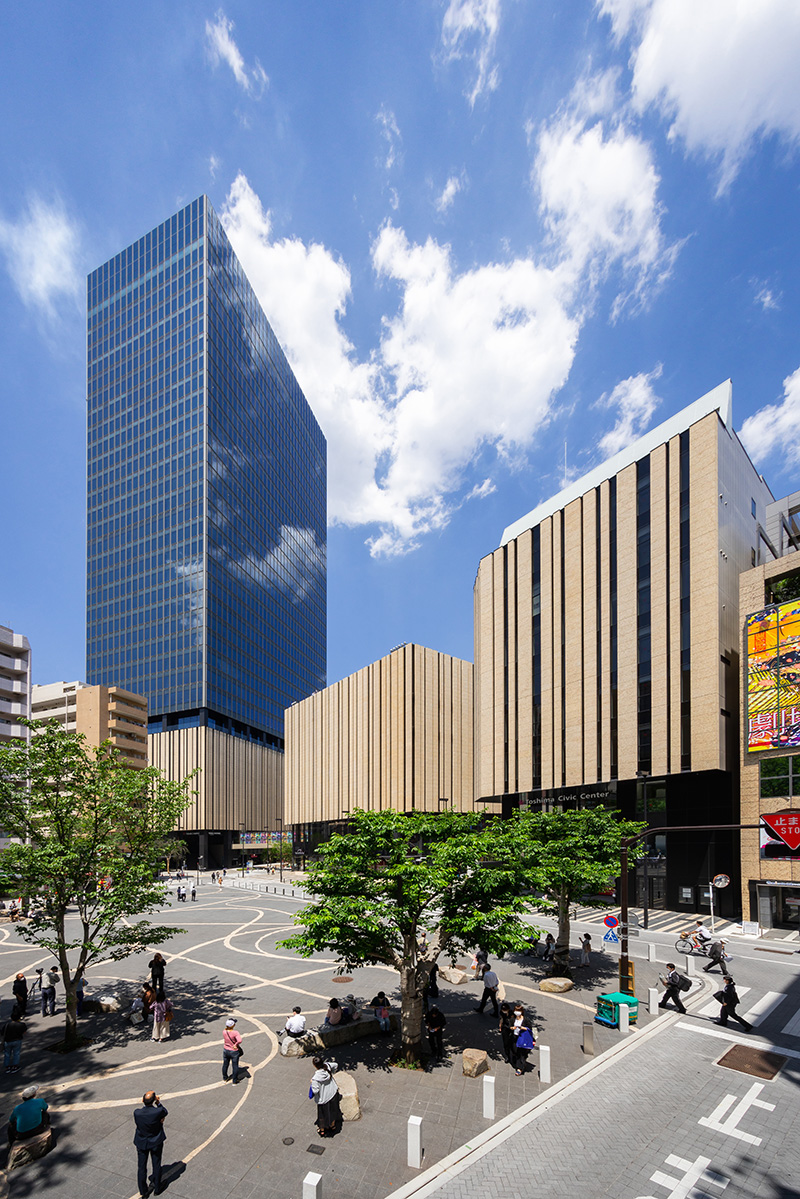
Harezaikebukuro
What are the areas the company is focusing on most strongly today?
We are paying close attention to Japan’s national policy priorities. The key themes are semiconductors and data centers. While we cannot be directly involved in semiconductor manufacturing, we are actively researching and developing businesses in surrounding areas where we can contribute.
Could you provide concrete examples of those surrounding businesses?
One opportunity has been Japans airport concession projects which involve privatization. We participate in New Chitose Airport in Hokkaido and Kumamoto Airport. Hokkaido is linked to Rapidus and Kumamoto to TSMC so we see these as strategic hubs for development.
What developments are underway in Kumamoto?
In addition to jointly developing an industrial park with Fukuoka Jisho, we are also constructing housing targeted at TSMC employees. The project comprises a single building with 619 units, and we found that there is strong demand even at relatively high rental rates, which prompted us to accelerate development. Plans have also been finalized to build serviced apartments on adjacent land.
What is your approach in Hokkaido?
In Hokkaido we are securing land around the Rapidus site and development there will likely follow a similar model to Kumamoto.
How is the data center business progressing?
Our Osaka data center began operations in January this year and we are now planning a second facility.
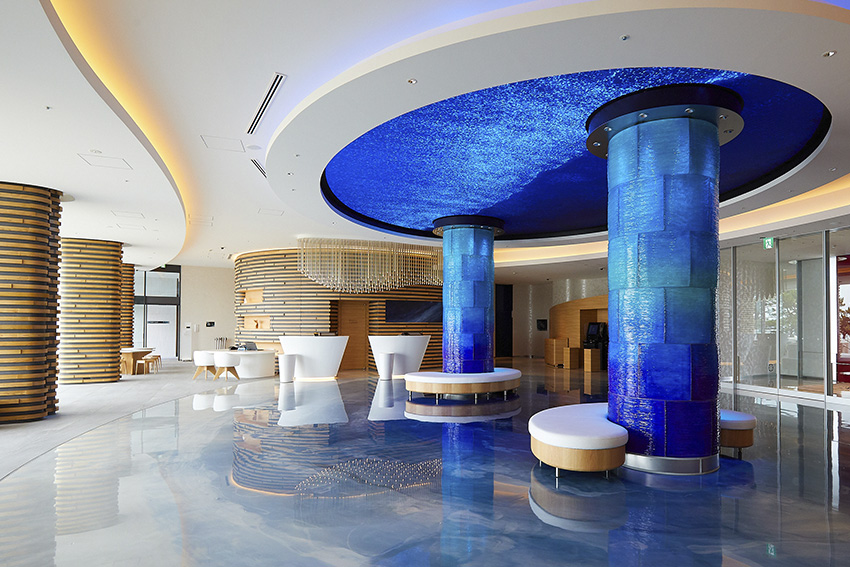
Kobesuma Hotel
Japan has experienced an unusually long period of real estate prosperity. Why has Japan been able to maintain this stability compared with markets like China or Australia?
One reason is the strong memory of the bubble collapse which has made companies far more disciplined. Another reason is that the potential of the Japanese real estate market was not fully recognized for many years. These two factors support the current stability.
Is this recognition now coming from overseas investors?
Yes, largely through relative comparison. Compared with Singapore, New York, or London, Japanese real estate is still inexpensive. In addition, Japan’s technical standards in construction are very high, which creates strong confidence. Legal frameworks are also well developed, allowing fair and transparent transactions. Combined with a weak yen and low interest rates, this results in very attractive investment efficiency.
Even so Japanese real estate is often seen as undervalued. Construction and location costs continue to rise. How do you view this challenge?
Rising costs related to location and construction quality are unavoidable. Despite the difficulty these are elements we cannot compromise on because they are essential to long term value creation.
Sustainability has become increasingly important. How does this factor into your financing strategy?
One of our distinguishing features is the use of sustainability linked loans from banks. These loans offer favorable terms when we develop environmentally friendly properties. Our cumulative borrowing through these loans has exceeded 150 billion yen. Whenever we develop a project we always consider whether we can utilize this framework.
Do you plan to become directly involved in renewable energy such as solar or wind power?
We may not be directly involved, but we believe energy shortages and environmental issues must be addressed together. We closely monitor solutions for electricity intensive projects including data centers especially new cooling technologies. If these mature we would consider participating as an investor.
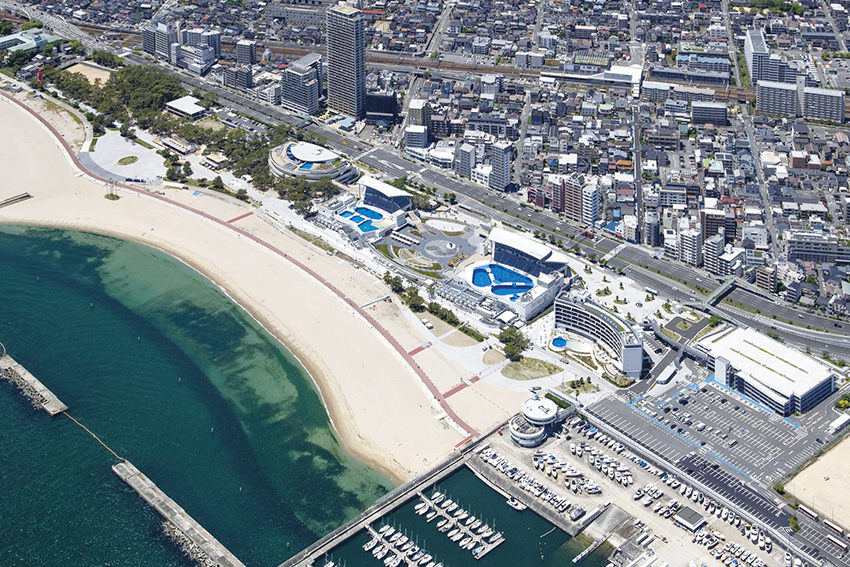
Suma Park
Data centers are often criticized for their environmental impact. How do you address this paradox?
Demand is increasing rapidly but data centers are not inherently environmentally friendly because they consume enormous power and generate noise and vibration. Improving energy efficiency is a major challenge.
Are you participating in initiatives to solve this issue?
We are closely monitoring initiatives such as the “Watt-Bit” concept. While I am unable to discuss details at this stage, we are actively observing a range of technological developments across various companies.
You are also expanding overseas. What is your guiding philosophy for international expansion and risk control?
Previously, we had very little interest in overseas markets. Precisely for that reason, we chose to focus on the United States and Vietnam as learning platforms. We initially entered the U.S. market through residential development on the West Coast, and subsequently expanded into projects such as logistics facilities in Indianapolis, where we were able to generate profits. At present, we have begun initiatives on the East Coast as well.
What opportunities do you see in the United States today?
After the pandemic office demand declined sharply. We acquired an office building near the White House in Washington DC and are converting it to residential use. We purchased a second nearby building for the same purpose. Population growth continues so we are also targeting surrounding areas such as Virginia where we have identified multiple sites.
Your company is celebrating its seventy fifth anniversary. Looking five years ahead what do you hope to achieve?
Five years will arrive very quickly. At a minimum I hope we will become a real estate company capable of responding to any situation and any challenge.
For leaders reading Bloomberg Businessweek how would you define Sankei Building in a single sentence?
I would describe us as the most flexible partner capable of fitting into any form of collaboration while expressing a shared identity with our partners. A partner that can adapt to any shape while being based in Tokyo.
Is there anything you would like to add in closing?
I am proud to have participated in this interview. Our goal is to engage not only with Japanese investors but with investors from fifty countries around the world.
For more information, please visit their website at: https://www.sankeibldg.co.jp/e/