
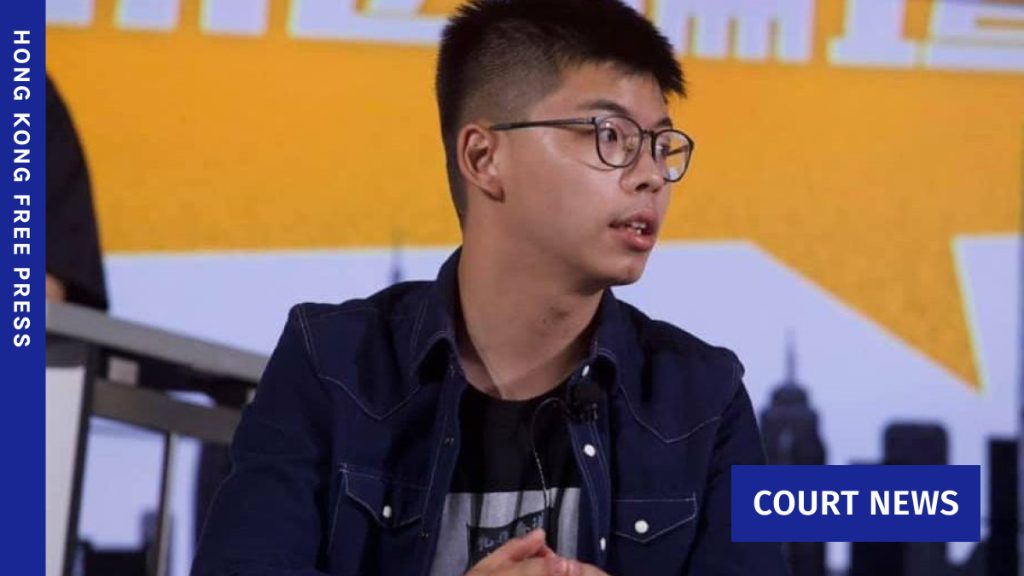
Joshua Wong’s national security case has been transferred to a higher court, where the pro-democracy activist faces up to life imprisonment, following the conclusion of committal proceedings.

Wong appeared at the West Kowloon Magistrates’ Courts on Thursday morning to face a charge of conspiring to commit foreign collusion, a crime under the Beijing-imposed national security law.
He was arrested in June last year while in jail. Wong is currently serving a four-year-and-eight-month jail sentence for his involvement in another national security case relating to election primaries in 2020, in which he pleaded guilty.
In the present case, the 29-year-old stands accused of conspiring with self-exiled activist Nathan Law and “other persons unknown” between July 1 and November 23, 2020, to request foreign countries, organisations, or individuals based overseas to impose sanctions, blockades or engage in other hostile activities against Hong Kong or China.
Law, who now lives in the UK, and Wong, along with other former student activists, co-founded pro-democracy political party Demosisto, which was disbanded hours after China’s legislature passed the national security law on June 30, 2020.
Magistrate Victor So said in August last year that Wong’s case would be transferred from the magistrate’s court to the High Court, where the maximum penalty is life imprisonment. At the magistrate’s court, the maximum penalty is two years, or three years when a defendant faces more than one offence.
Since then, Wong has appeared at a number of hearings related to the committal of the case to the High Court.

Under court reporting laws, media reports relating to procedures involving the transfer of cases from the magistrate’s court to the High Court are severely restricted.
Reports cannot publicise the contents of the procedures, and can only describe information such as the names of defendants, judges and lawyers, and information on the charges.
Wong has been remanded since November 2020, when he was detained in an unauthorised assembly case linked to the anti-extradition protests and unrest in 2019.
Beijing inserted national security legislation directly into Hong Kong’s mini-constitution in June 2020 following a year of pro-democracy protests and unrest. It criminalised subversion, secession, collusion with foreign forces and terrorist acts – broadly defined to include disruption to transport and other infrastructure.
The move gave police sweeping new powers and led to hundreds of arrests amid new legal precedents, while dozens of civil society groups disappeared. The authorities say it restored stability and peace to the city, rejecting criticism from trade partners, the UN and NGOs.


