
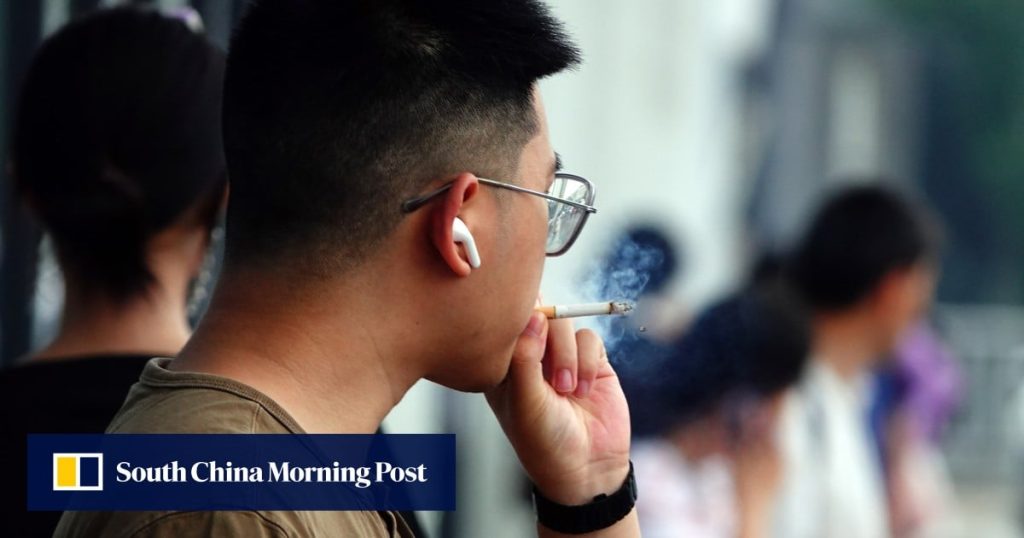
A recent incident in Shenzhen that went viral has put China’s widespread smoking habit under renewed scrutiny, reviving a long-running debate over whether Beijing should raise tobacco taxes for the first time in more than a decade.
On a rainy afternoon in April, a woman asked a smoker to put out a cigarette at a busy bus stop where nearly 10 people were waiting. The request led to a heated exchange, with the smoker arguing it was a public space, and ended with him throwing a plastic bottle at the woman before later apologising for his misconduct after police intervened.
Beijing last raised the consumption tax rate on cigarettes from 5 per cent to 11 per cent in 2015, but public health experts said it had not done enough to offset those costs.
A recent study by the Beijing-based University of International Business and Economics (UIBE) found that, rather than boosting economic growth and the central government’s fiscal revenue, the tobacco industry was in fact causing greater damage to the national economy.
In 2025, the tobacco industry’s combined net profit and tax revenue reached a record high of more than 1.65 trillion yuan (US$243.5 billion), up 3.5 per cent from the previous year, data from the State Tobacco Monopoly Administration showed. This figure was more than 4.4 times the annual profit of the Industrial and Commercial Bank of China, the world’s largest lender.