
The German government is expected to impose conditions on the US takeover of a Frankfurt-area magnet manufacturer, threatening to strain relations between Washington and Berlin and complicate the Trump administration’s efforts to break supply-chain reliance on China.
The stipulations would be part of an investment probe examining US miner Energy Fuels Inc.’s planned $1.9 billion acquisition of Vacuumschmelze GmbH & Co., according to people familiar with the review who requested anonymity because they were not authorized to discuss the internal process.
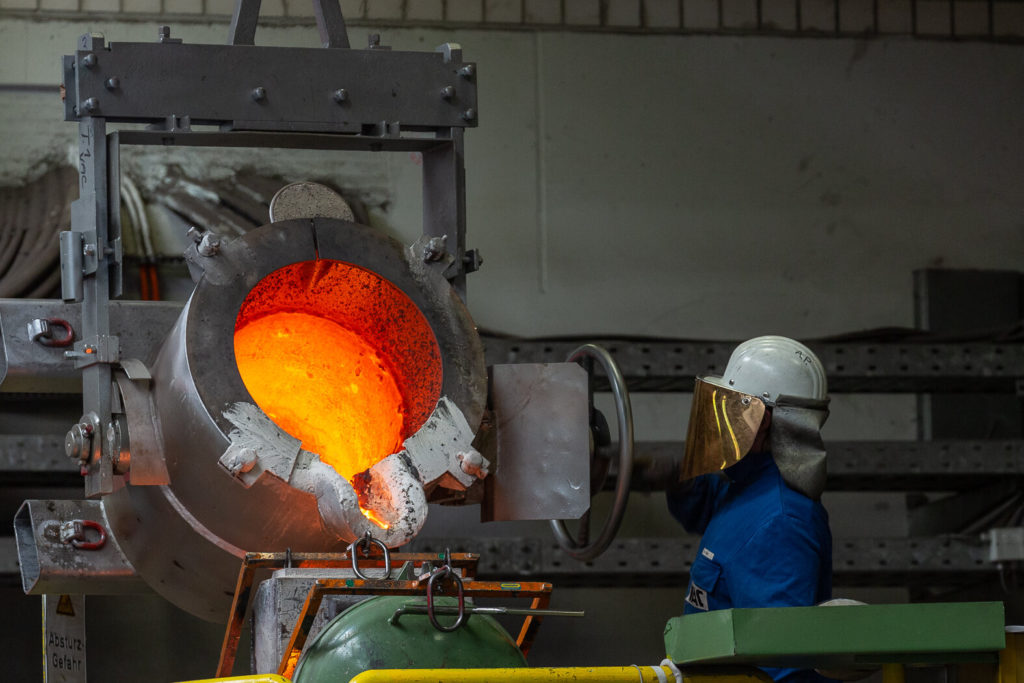
The firm, also known as VAC, is the only company in the Western world that makes permanent magnets at scale and, as such, is a major supplier for defense and auto companies. The company is seen as key to bolstering US supplies of the magnets, which are critical for manufacturing modern defense technologies like combat drones and submarines.
But the deal would also be a blow for European efforts to establish its own secure supply chains for critical industrial components.
German officials insist the investment probe is a routine step under the country’s laws whenever transactions involve companies in strategic or critical sectors of the economy.
The German Economy Ministry confirmed that the investigation is taking place in a letter to a lawmaker seen by Bloomberg. The ministry, the US Commerce Department and the Pentagon did not respond to requests for comment.
The investigation — similar to a CFIUS review in the US — allows the German government to block the transaction entirely or impose requirements to protect German interests. The government is unlikely to kill the deal but is likely to demand concessions ensuring the company’s plant outside Frankfurt remains vital to the business, the people said.
VAC CEO Erik Eschen told Bloomberg News in an interview he assumes a probe of this kind is taking place and that other European countries are also looking into the deal. He said he would be open to committing to a German facility.
“This will not be an easy process, but Germany knows how important we are and hopefully they will make the right decision,” he said.
Still, the scope of those stipulations could make the deal less appealing to Energy Fuels, or mean that US defense companies don’t realize appreciably better access to permanent magnets.
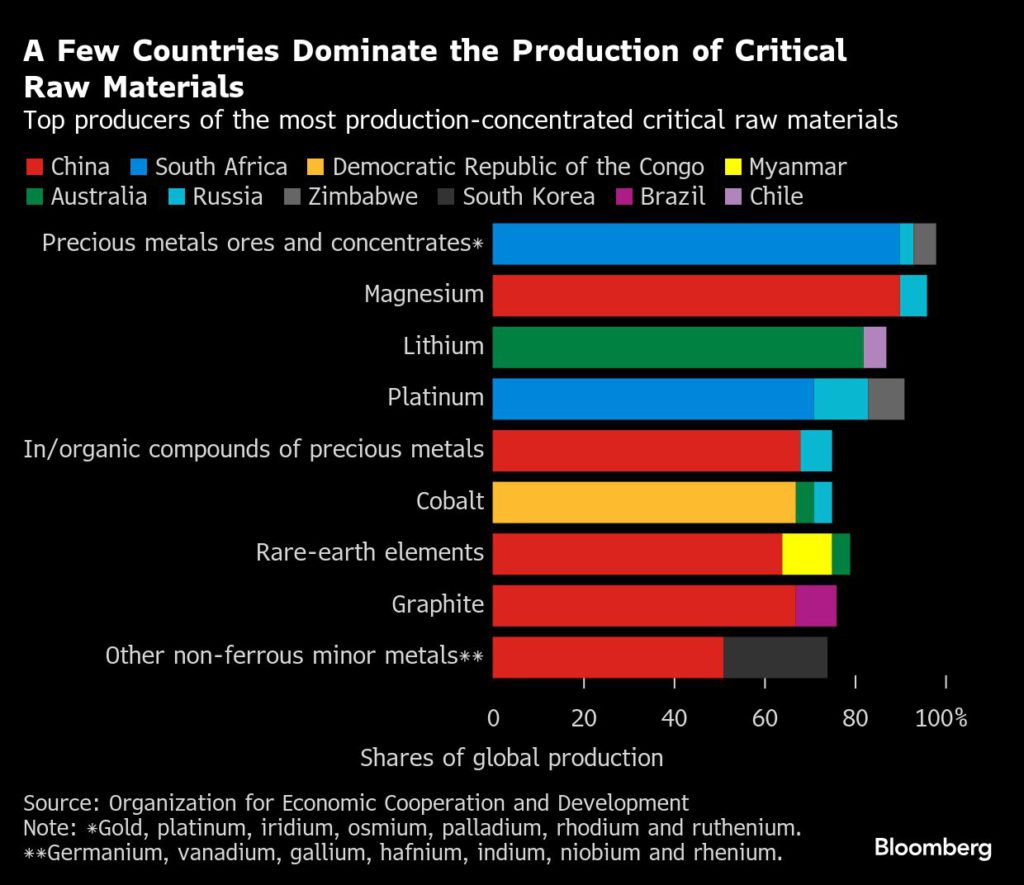
That risks the wrath of the Trump administration, which has been aggressively wooing VAC as part of its broader push to decrease dependence on Chinese critical raw materials after Beijing last year imposed sweeping export controls that threatened to cripple manufacturing.
The US has been investing in projects and companies around the world to develop a mine-to-magnet supply chain, and Treasury Secretary Scott Bessent attended the opening of a VAC plant in South Carolina last year to tout how quickly the company had been provided building permits.
But Chancellor Friedrich Merz’s government is likely to place a greater priority on Germany’s own interests.
Some German defense firms are worried they might not get access to the magnets if the US supplies its companies first, according to a person familiar with the matter. Defense manufacturers, compared with automakers or other civilian industrial companies, are severely limited in their access to Chinese rare-earth magnets due to Beijing’s strict controls on exports for military use.
And local officials in Hanau, the Frankfurt suburb where VAC has a plant with more than 1,000 workers, have warned that their facility should be protected — or risk a weakening of industrial capacity.
According to Eschen, VAC’s facilities in the US, Finland and Germany operate independently from one another, with a lot of the technical know-how being based in Hanau. He sees his company’s acquisition as a chance for Germany to secure access to raw materials through Energy Fuels’ channels, though he acknowledges the risk of US customers receiving preferential treatment.
Outside observers say that the US is far more eager to lock up permanent magnets and critical raw materials. That means the probe, which may resolve in the coming months but could bleed into 2027, may not lead to too onerous an outcome.
“The regulatory and cost environment in Germany makes it increasingly difficult for companies like Vacuumschmelze to compete globally,” according to Jan Giese, senior manager at Tradium GmbH, a Frankfurt-based metals trader. Giese also emphasized that in the US, General Motors Co. and VAC signed an off-take agreement at a scale that meaningfully covers GM’s magnet demand. In Germany, he hasn’t seen agreements of comparable scale relative to the volumes German industry actually consumes.
“We have some support from the German government, but there’s a lack of support from European industry,” Eschen said in the interview, adding that he would need off-take commitments from one or two automakers to open a second German plant. Volumes in the defense sector are not large enough to have that kind of an effect, he said.
The $1.9 billion purchase price — which observers describe as surprisingly high — is also seen as an indication of US interest in securing access to magnets, no matter the cost, and echoes signals Washington officials have made privately. A US official who recently attended a Berlin conference told attendees that he had a blank check to issue for anyone who needed money to build out critical raw material supply chains outside China, people familiar with the remarks said.
That’s driven companies like VAC closer toward partners in the US. Last December, Eschen declined an invitation for a roundtable on magnets with the German economy ministry to instead travel to the White House for meetings. Eschen described the incident as a scheduling conflict rather than him deliberately choosing one government over the other.
VAC vice president Alexander Barcza, who attended in his stead, told German officials they could consider another plant in the country — if the government invested 50% in it, according to people familiar with the meeting. The German officials took note of the idea and said it would be studied in a working group — but there was never any follow-up from Berlin, the people said.
One senior German defense company official who requested anonymity because he was not authorized to speak about market dynamics argued that relying on the US or China wouldn’t be necessary if Europe did more to prioritize its independence. German defense ministry tenders currently do not have any regulations regarding raw materials or components from China, the person, whose firm uses US and Canadian magnets for its products, said.
(By Jenny Leonard, Laura Alviž and Kamil Kowalcze)