
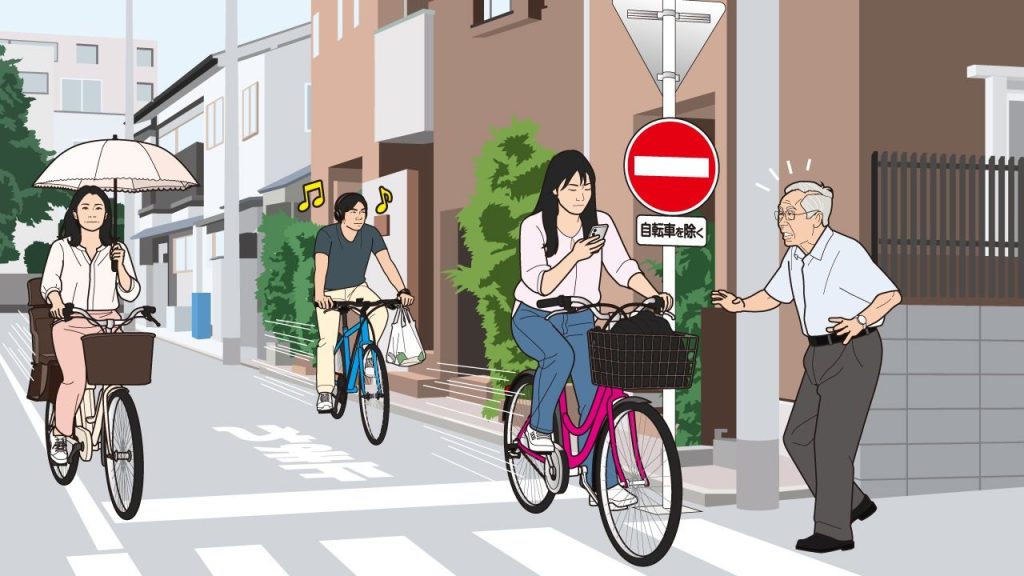
Japan tightened its rules for bicycles in April, adding some new regulations and introducing fines for infractions. A traffic expert takes a look at different traffic scenarios to clarify things and help cyclists safely navigate the roads.
Traffic Grey Zone
Japan is a bicycle nation. Ownership rates are high, at roughly one bike for every two people, and some 12% of the population rely on bicycles as their main mode of transportation, a rate on par with many cycling-friendly European countries.
At the same time, Japanese bicycle regulations can be downright ambiguous. For instance, cyclists regularly ride alongside pedestrians on sidewalks and weave among foot traffic in crosswalks. Attorney and avid cyclist Honda Satoshi attributes this hazardous state of affairs to the rapid motorization of Japanese society. “With more cars on the road in the postwar decades, accidents shot up,” says Honda. This pushed traffic fatalities to record levels. “The situation was compared to a war zone, so in 1970 authorities revised traffic laws to allow cyclists to ride on sidewalks in a bid to keep them out of harm’s way.”
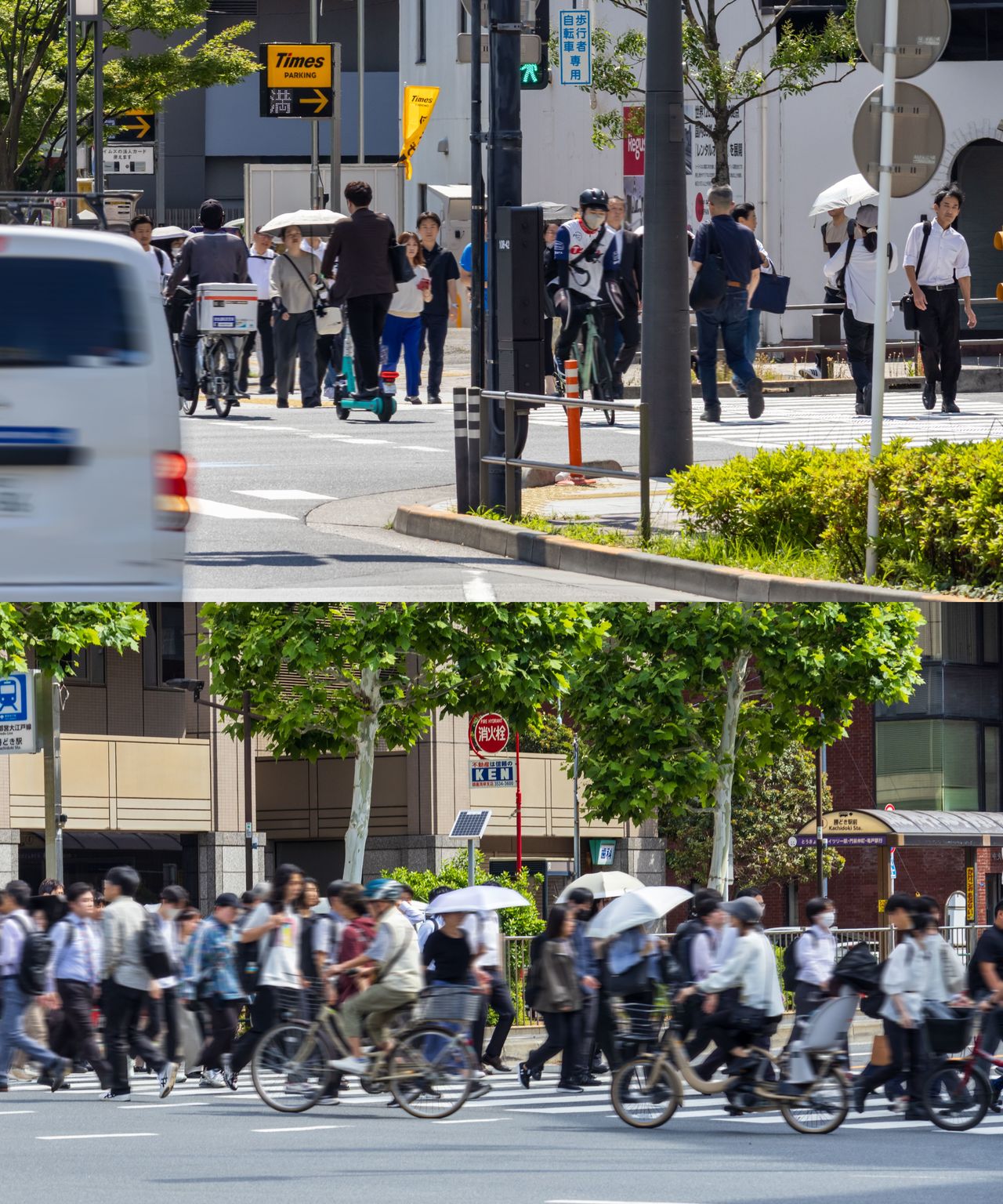
Cyclists and pedestrians mix during the morning rush in Tokyo. (© Nippon.com)
Traffic accidents and road deaths have come down significantly since then, and today, it is bicycles that pose a major risk on Japan’s roads. Bicycles account for almost a quarter of all traffic accidents, including a growing number involving pedestrians, with three out of four bicycle-related incidents that result in death or serious injury being caused by cyclists breaking traffic laws.
Up to now Japanese police wrote citations for the most egregious cycling offenses, requiring the perpetrator to go to court and the infraction potentially going on their permanent record if convicted. These were rare, with warnings for minor infractions being more typical.
In April 2026, though, Japan rolled out a new system of fines for minor traffic offenses applicable to all riders over the age of 16. Police issue these “blue tickets,” named for the color of the paper they are printed on, in lieu of formal citations requiring an offender to appear in court. (More serious violations receive “red tickets,” which involve criminal charges and may require court appearances.)
Main Blue Ticket Violations and Fines
- Using or holding mobile phone while riding: ¥12,000
- Entering rail crossing while barrier is down: ¥7,000
- Failing to proceed safely through intersection: ¥6,000
- Ignoring traffic signal: ¥6,000
- Failing to stop at stop sign: ¥5,000
- Riding bicycle with defective brakes: ¥5,000
- Improper loading (e.g. riding with shopping bags hanging from handlebars): ¥5,000–¥6,000
- Holding umbrella while riding: ¥5,000
- Wearing headphones/earphones while riding: ¥5,000
- Failing to slow down on sidewalk (or other zones where pedestrians have right of way): ¥3,000
There are a total of 113 different bicycle violations under Japanese traffic law. These range from obviously dangerous behavior—like going through a rail crossing while the barrier is down, which triggers a fine of ¥7,000; running a red light (¥6,000); and riding a bicycle that is not road-worthy (¥5,000)—to commonplace infractions, such as hanging shopping bags on handlebars, cycling while holding an umbrella, and wearing headphones or earphones (all ¥5,000).
The blue ticket system applies to anyone residing in Japan, but Honda points out that some situations may confuse foreign residents, as Japan, which is not a party to the Vienna Convention on Road Signs and Signals, uses a number of signs that are different from international standards. Take, for instance, the use of triangular stop signs. There is also the fact that many auxiliary signs are only labeled in Japanese text. Below are some important points to keep in mind to help avoid unknowingly breaking traffic rules.
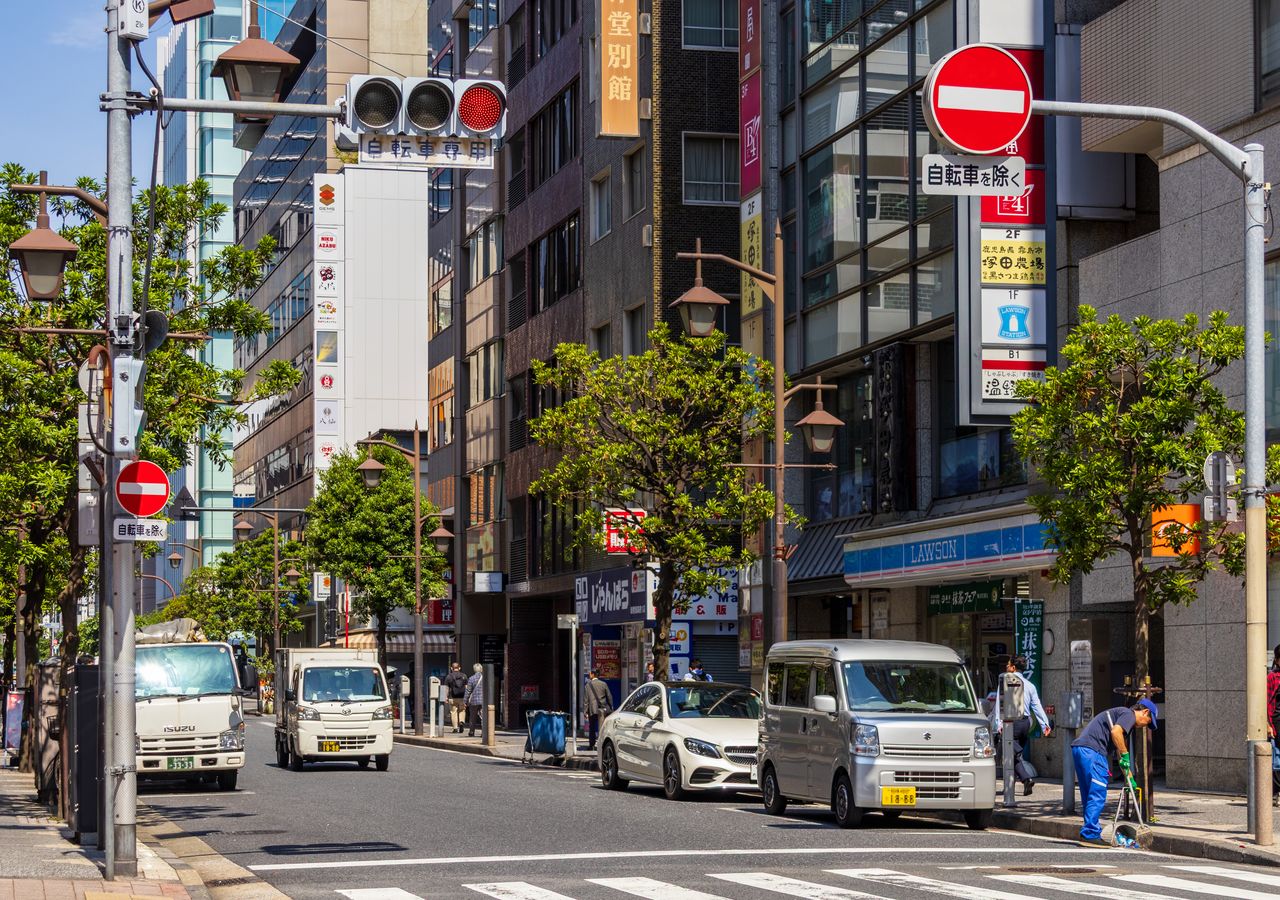
The lack of pictographs and Japanese-only text can make “no vehicular entry” signs (the red circle with the white bar at top right) difficult for non-Japanese speakers to understand. (© Nippon.com)
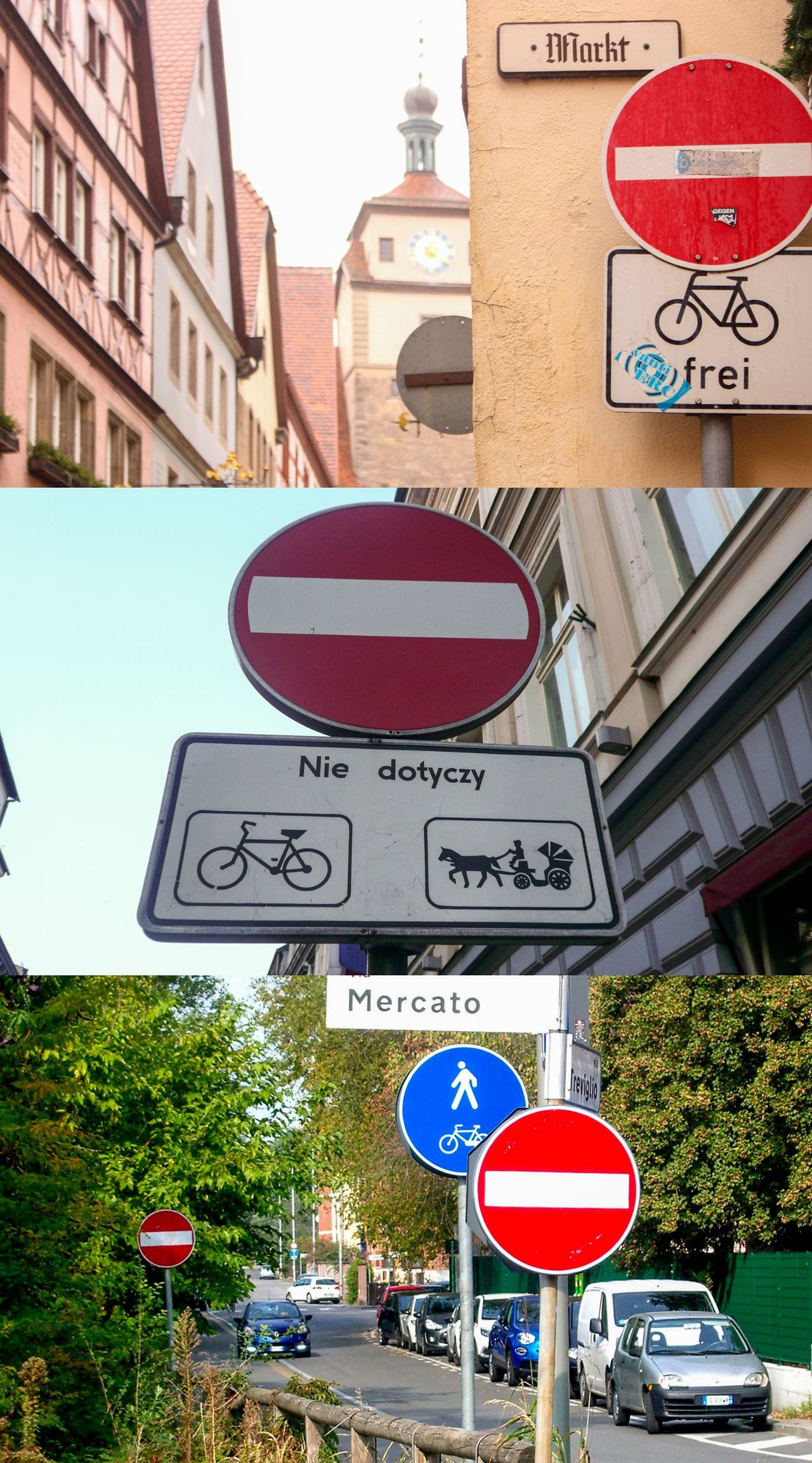
Many signs in other countries have additional plates that give vital information, such as these “do not enter” warnings that allow bicycles to enter against the flow of vehicular traffic. From top: “Do not enter” signs in Germany, Poland, and Italy with easy-to-understand supplemental signs for cyclists. (© PhotoAC)
Crosswalks and Sidewalks
In general, bicycles must ride on the left side of the road, the same as cars, and can only ride on sidewalks if traffic signs indicate it is permitted, or if it is unsafe to ride on the road. Even then, cyclists must ride slowly (8 kilometers an hour or slower) on the road side of the sidewalk. Keep in mind that pedestrians always have right-of-way. Failing to yield, such as by ringing a bicycle bell to get a person to move out of the way, is against the law and subject to a ¥3,000 fine. The same rule applies for crosswalks, and bicyclists are advised to play it safe by getting off and walking their bike across intersections.
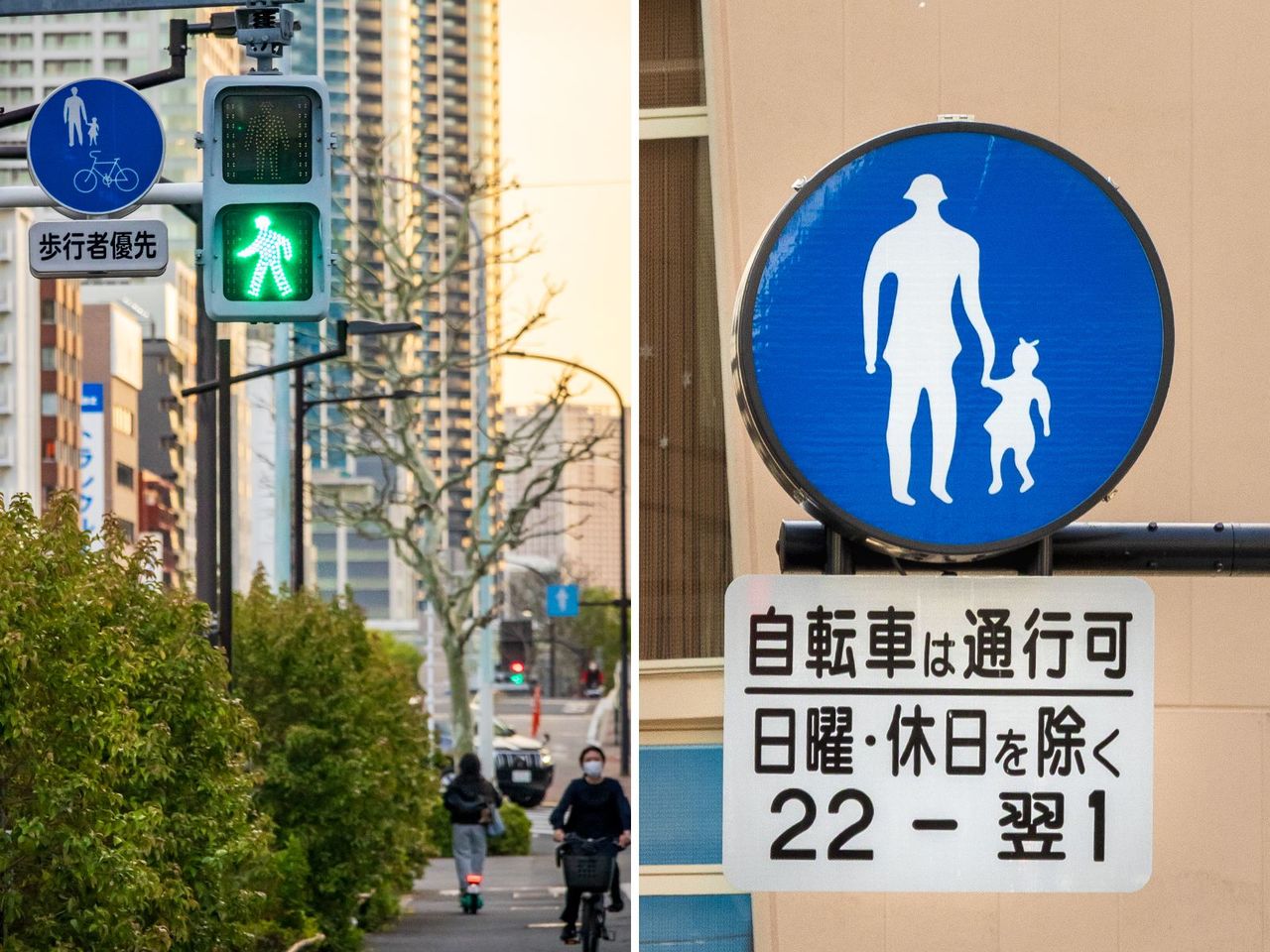
A blue and white “pedestrians only” sign with a supplemental sign allowing bicycles to use the walkway. Similar signs showing a bicycle mark on a blue background also indicated bicycles may pass. (© Nippon.com)
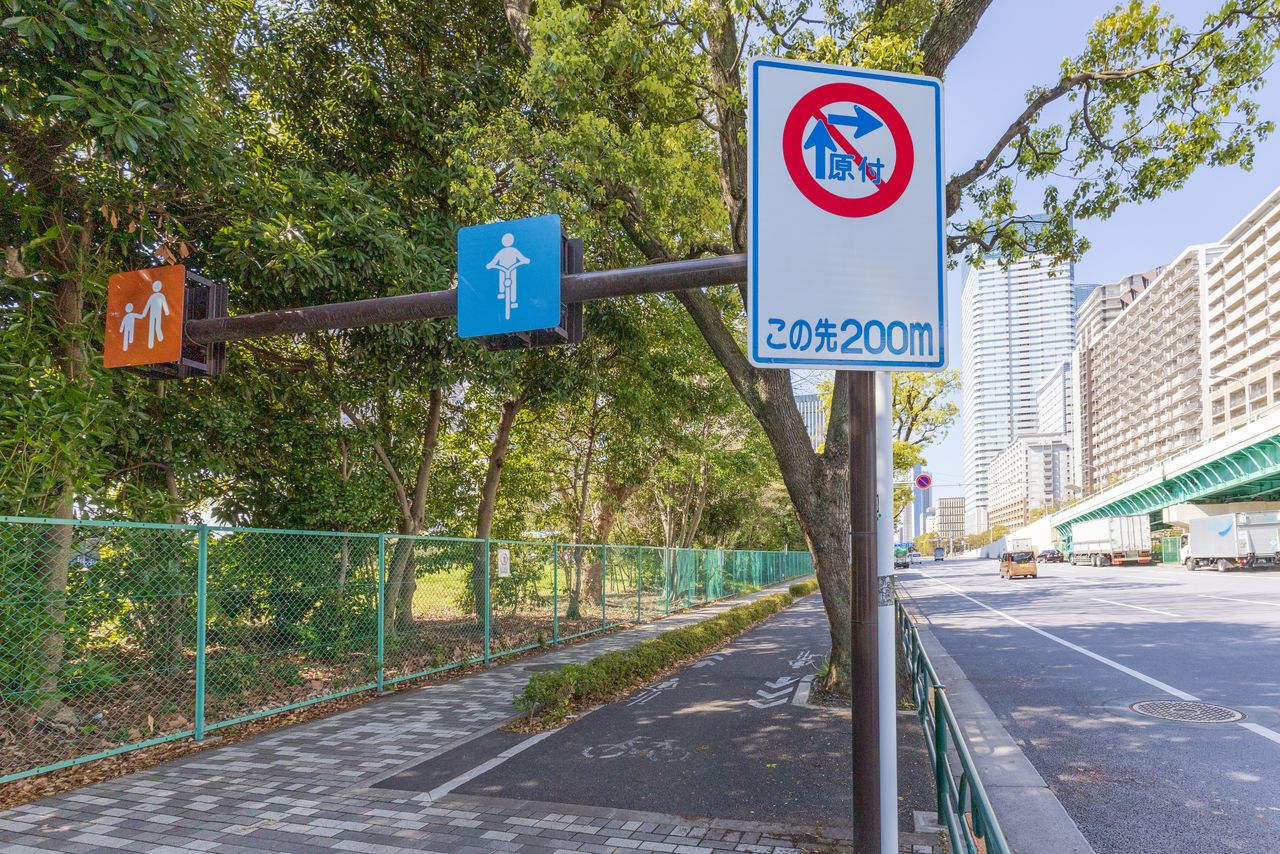
Signs indicate separate pedestrian and bicycle paths on some sidewalks along major thoroughfares. (© Nippon.com)
Some countries allow cyclists in certain situations to pass through an intersection without stopping. However, as intersections have a high rate of accidents, Japan requires bicyclists to come to a complete stop at all stop signs. Failing to do so will result in a ¥5,000 fine.
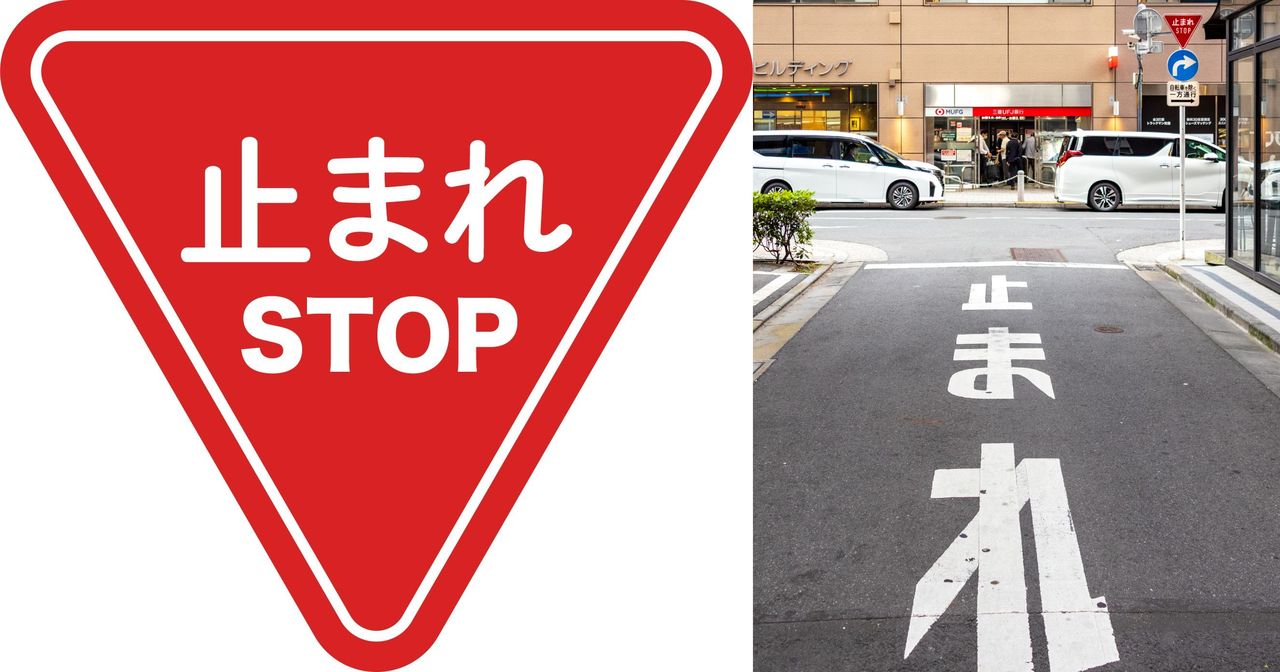
Left: Newer versions of Japan’s triangular stop signs have English (© IllustAC); right: a white stop line painted on the road indicates where cars and bicycles must stop. (© Nippon.com)
Many intersections have separate timing allowing either vehicle traffic to pass or pedestrians to cross. At such intersections, all vehicle traffic in every direction is stopped when the crossing signal turns green, giving pedestrians a dedicated light to cross. Bicyclists follow the crossing signal when riding on the sidewalk and the traffic signal when riding on the road. This means that when riding on the road, crossing with pedestrians (unless dismounted) counts as running a red light.
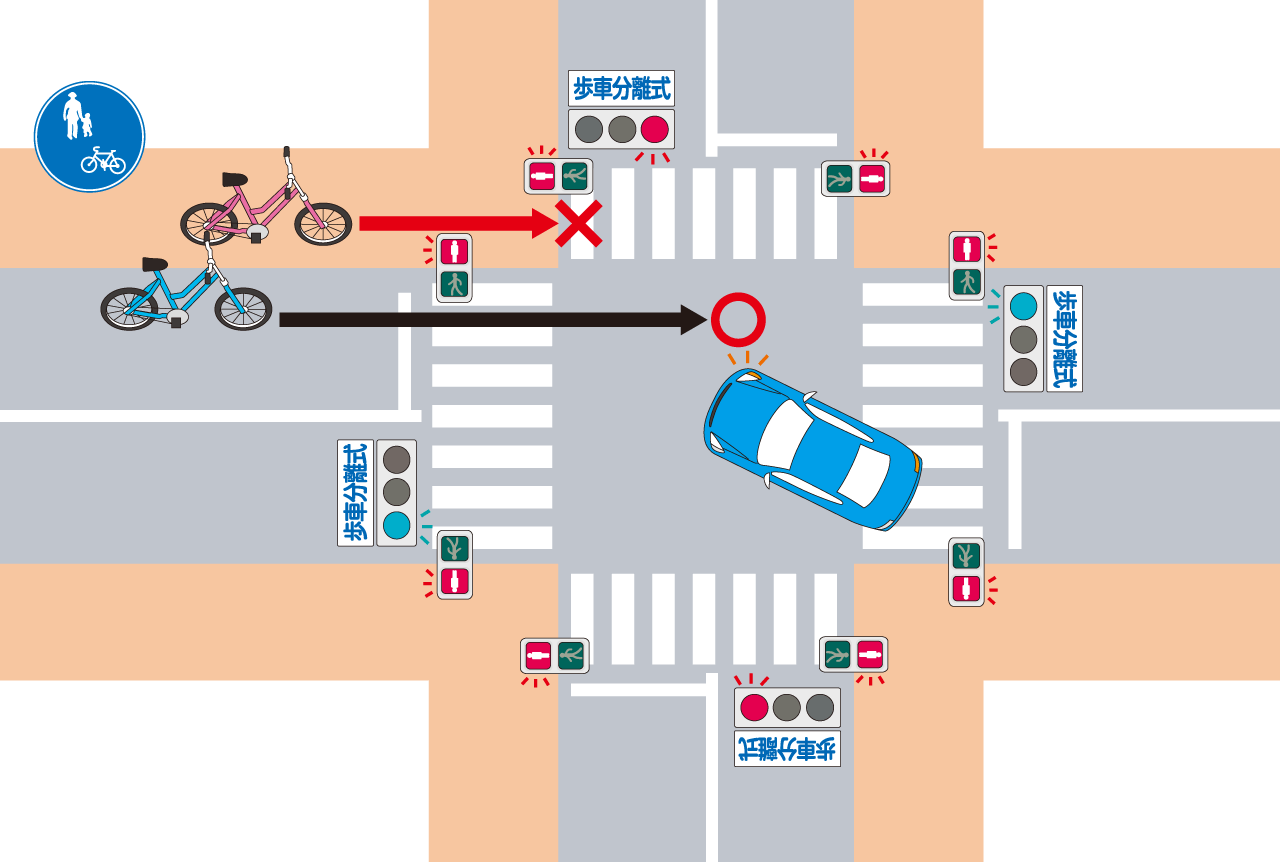
Bicyclists follow pedestrian crossing signals when on sidewalks and traffic signals when on the road. Cyclists riding on the road need to keep an eye out for turning vehicles when passing through an intersection. (© Satō Tadashi)
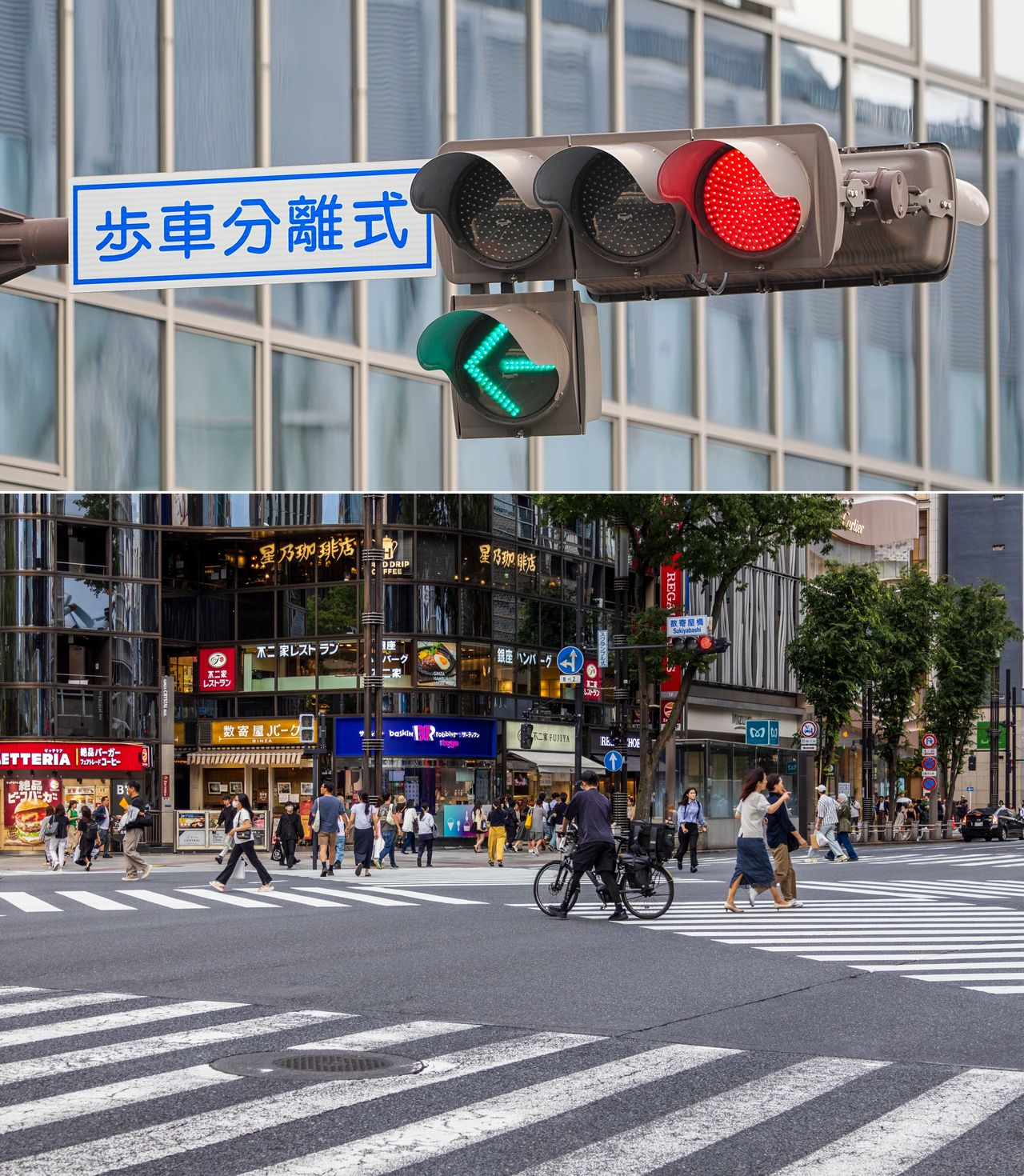
Top: Around 5% of intersections in Japan have separately timed signals for vehicles and pedestrian traffic. (© PhotoAC); at scramble-style crossings, which allow pedestrians to cross in any direction, cyclists crossing diagonally must dismount and walk their bikes across. (© Nippon.com)
When making a right turn at an intersection with a traffic light, bicyclists must make a two-stage right turn. To perform this maneuver, stay to the extreme left while crossing to the other side of the intersection, corner and turn the bicycle to the right, and cross the intersection when the traffic light turns green. Cutting across traffic or turning diagonally is illegal and comes with a fine of ¥6,000.
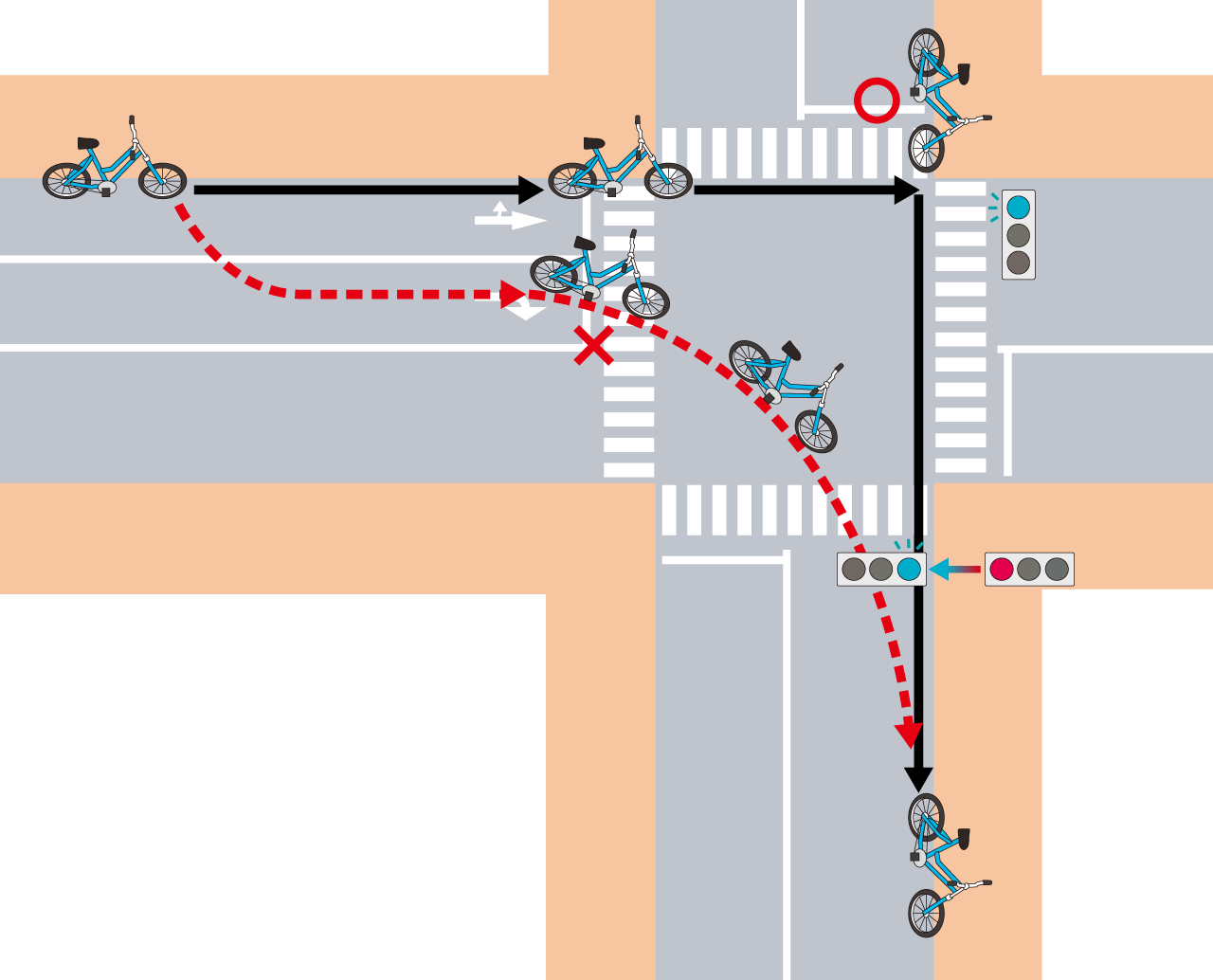
A diagram of a two-stage right turn (black arrows) and an illegal right turn (the red course). (©︎ Satō Tadashi)
Using a mobile phone, either talking on the phone or looking at the screen, while cycling is deemed a dangerous activity and can result in a fine of up to ¥12,000, the highest fine on the list. If phone use results in an accident, a cyclist could face criminal charges. When they need to use a phone, such as to make a call or check a map app for directions, cyclists should always pull over to a safe spot first.
Cycling while under the influence of alcohol is strictly prohibited and will result in criminal charges. Penalties are as severe as those for drunk driving, as are those for refusing a police sobriety test.
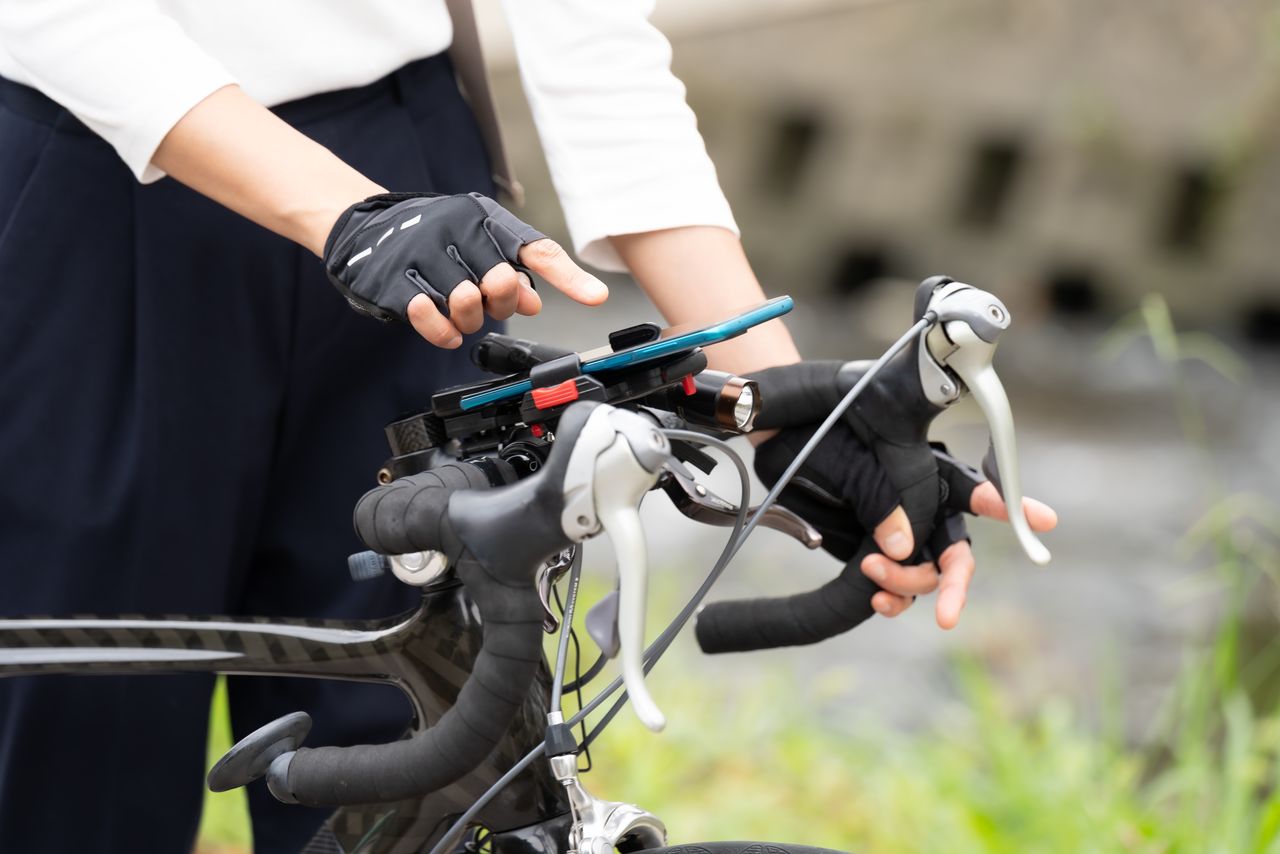
Using a smartphone while cycling, even if the device is in a holder, could lead to a steep fine. (© Pixta)
Blue Ticket Impact
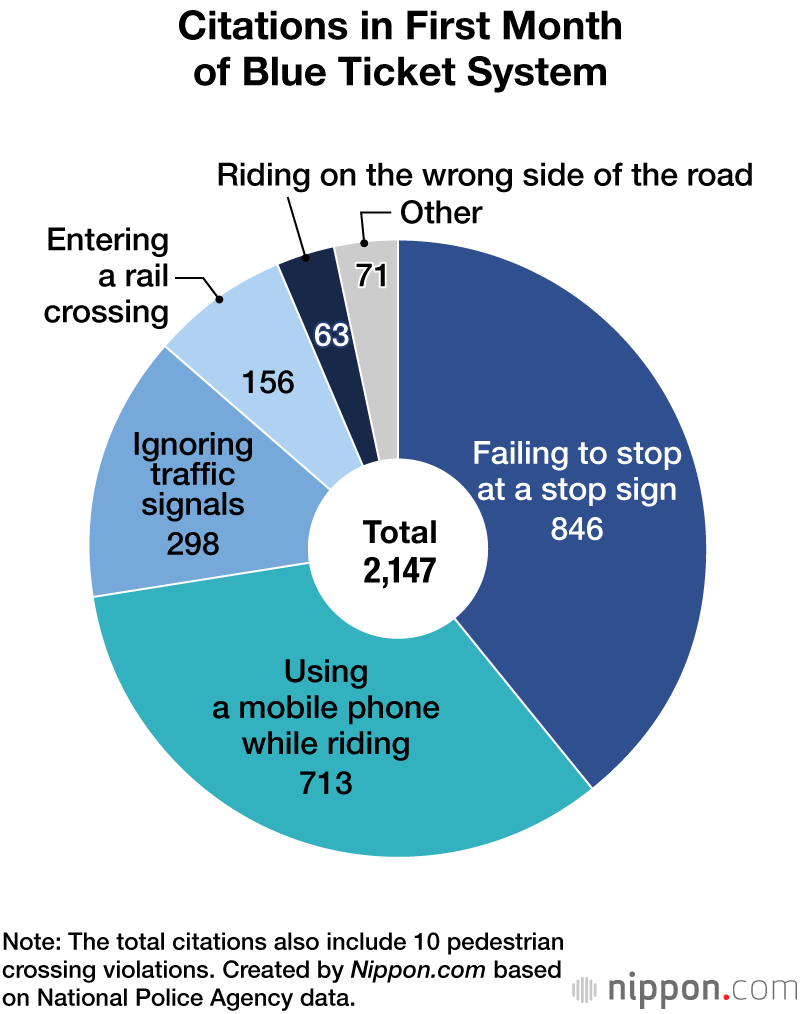
Is the new system making a difference? National Police Agency data shows that in April 2026, the first month of the “blue ticket” system, police issued 2,147 blue tickets and 833 red tickets to cyclists across the country. Traffic-related arrests fell 41% compared to the same month the previous year. At the same time, warnings increased by about 35%, to 135,855 cases. This indicates that police are focusing on violations that could lead to serious accidents, while also putting greater effort into informing people of tightened rules.
Cyclists need to be aware that fines are not paid immediately. There have been cases of so-called blue ticket scams where scammers posing as police dupe people into paying fake fines on the spot in cash. In reality, people have up to seven days to pay fines at a bank or other financial institution. Also, police typically ask for ID cards or contact family members to verify the identity of the person they are stopping. Foreign visitors to Japan are required to carry their passport or residence card at all times.
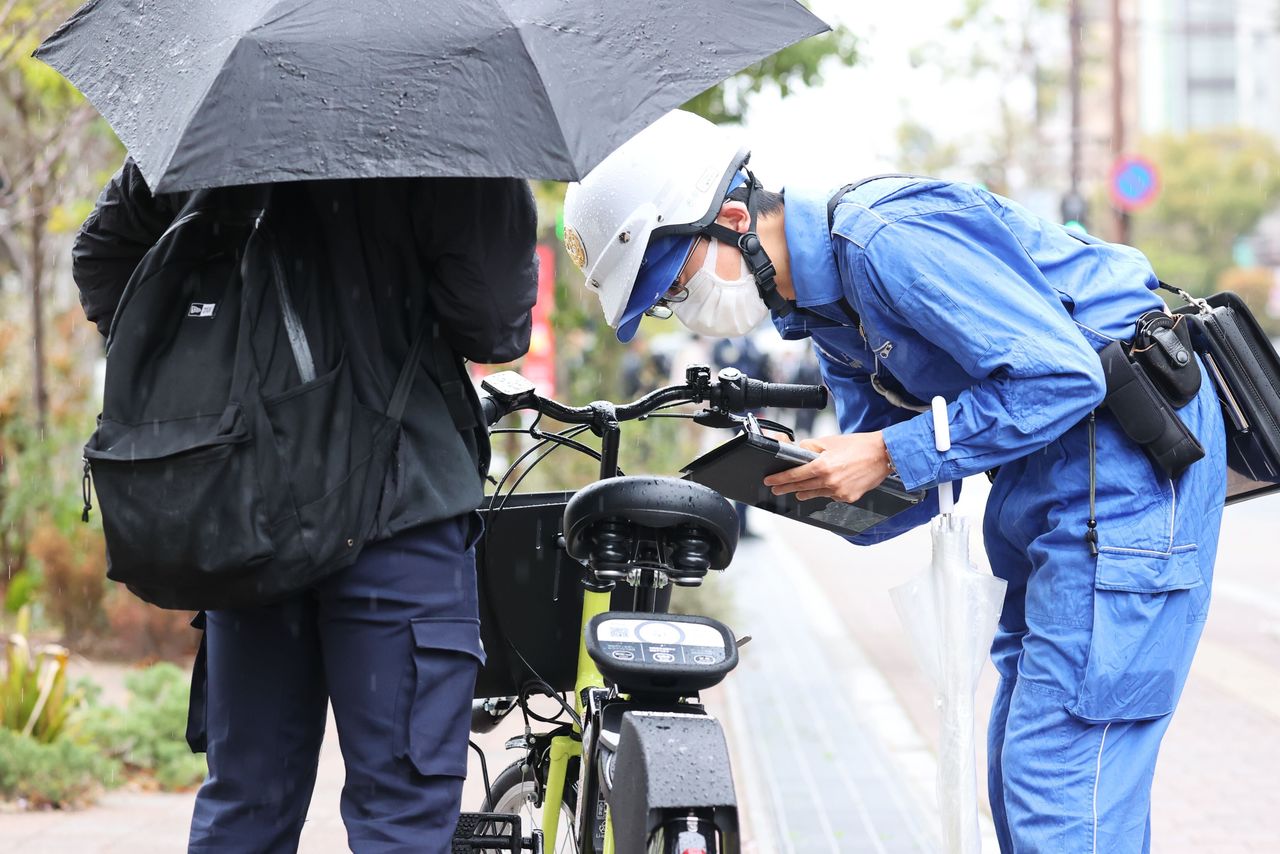
A police officer in Okayama stops a cyclist for holding an umbrella on April 1, 2026. (©︎ San’yō Shimbun/Kyōdō)
Tokyo is seeing increased use of e-scooters, which fall under the category of “specified small motorized bicycles” and do not require a license to operate, although the rider must be at least 16 years old. Some bicycle sharing services also offer e-bikes that can be operated on sidewalks. While these e-vehicles are popular for their convenience, the uptick in traffic violations involving them poses a serious problem. In 2024, over 40,000 violations were recorded, which works out to be 1.8 violations per vehicle, a far higher rate than for bicycles.
Japanese authorities have worked hard over the last 50 years to reduce the number of traffic accidents. Central to this ongoing effort is educating the public on traffic rules for bicycles so residents can better protect themselves and others on the road.
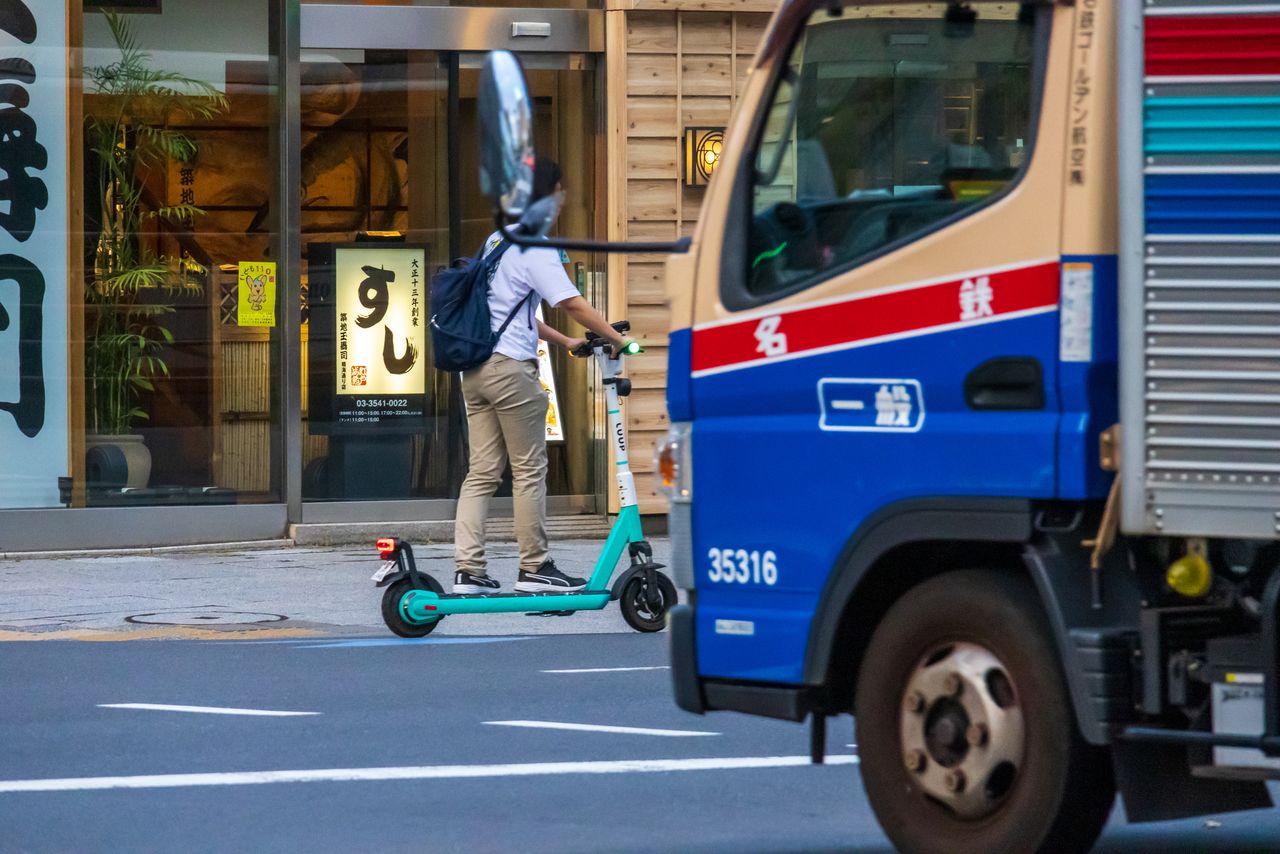
E-scooters have a maximum speed of 20 kilometers an hour, but riders can toggle to a lower top speed of 6 km/h, which allows them to be operated on sidewalks. (© Nippon.com)
(Originally published in Japanese. Reporting and text by Nippon.com. Banner image © Satō Tadashi.)