
Close Menu
Simply Invest Asia
  • Home
  • About us
  • Explore industries/sectors
    • Automobile
    • Aviation
    • Banking
    • Biotechnology
    • Chemical & Fertilizer
    • Entertainment and Media
    • Food Processing
    • Healthcare
    • Iron and Steel
    • Leather
    • Mining
    • Oil and Gas
    • Pharmaceutical
  • Explore by countries
    • China
    • Dubai / UAE
    • Hong Kong
    • India
    • Indonesia
    • Japan
    • Malaysia
  • Explore cities
    • Bangkok
    • Beijing
    • Chongqing
    • Delhi
    • Dubai
    • Guangzhou
    • Jakarta
    • Kuala Lumpur
  • Why Asia
Facebook X (Twitter) Instagram Threads
Trending:
  • India needs to understand conditions better: Kishan
  • PCR Food Testing Systems Market in the world | Report – IndexBox
  • Indonesia looks beyond UPI, eyes India’s digital blueprint | India News
  • Dubai logistics bridge keeps trade flowing as air cargo volumes surge
  • Why is Delhi not getting heavy rain despite monsoon's arrival? | IMD predicted rise in rainfall in coming days | Inshorts – Inshorts
  • Dollar Tree Just Brought Back the $1.25 Treat We Buy 10 at a Time
  • Delta Flight 1076 Incident Highlights Rare Aviation Hazard From Fourth of July Fireworks
  • Unveiling Egypt in Hong Kong
  • Bangkok Post – Upbeat outlook for tourism-related stocks
  • China Releases House Church Leader After 9 Months
  • From Moscow to Jakarta and Yangon: How President Opened New Doors for Belarusian Economy in a Week — News.by
  • Asia-Pacific banking fees fall 3% as Singapore gains 3.1%
  • Biotechnology: Revolutionising life, but what about ethics?
  • India’s fossil fuel consumption flatlines as renewables surge
  • Beijing Gourmet and Chesham Tandoori get low hygiene score
  • The Era of Cheap U.S. Natural Gas May Be Coming to an End
  • It Might Be Cheaper To Buy A Nintendo Switch 2 In Japan, But There’s Just One Problem
  • 🇺🇸🇦🇪 Historic moment: UAE’s “Knights of the Emirates” aerobatic team makes its FIRST EVER appearance in US skies! Precision flyovers over New York & the Statue of Liberty for America’s 250th Birthday. A powerful display of friendship & aviation excellenc – x.com
Sunday, July 5
Facebook X (Twitter) Instagram
Simply Invest Asia
  • Home
  • About us
  • Explore industries/sectors
    • Automobile
    • Aviation
    • Banking
    • Biotechnology
    • Chemical & Fertilizer
    • Entertainment and Media
    • Food Processing
    • Healthcare
    • Iron and Steel
    • Leather
    • Mining
    • Oil and Gas
    • Pharmaceutical
  • Explore by countries
    • China
    • Dubai / UAE
    • Hong Kong
    • India
    • Indonesia
    • Japan
    • Malaysia
  • Explore cities
    • Bangkok
    • Beijing
    • Chongqing
    • Delhi
    • Dubai
    • Guangzhou
    • Jakarta
    • Kuala Lumpur
  • Why Asia
Simply Invest Asia
Home»Explore by countries»India»Hormuz to home, India’s resilience in uncertain times
India

Hormuz to home, India’s resilience in uncertain times

By IslaJuly 5, 20265 Mins Read
Share
Facebook Twitter Pinterest Threads Bluesky Copy Link


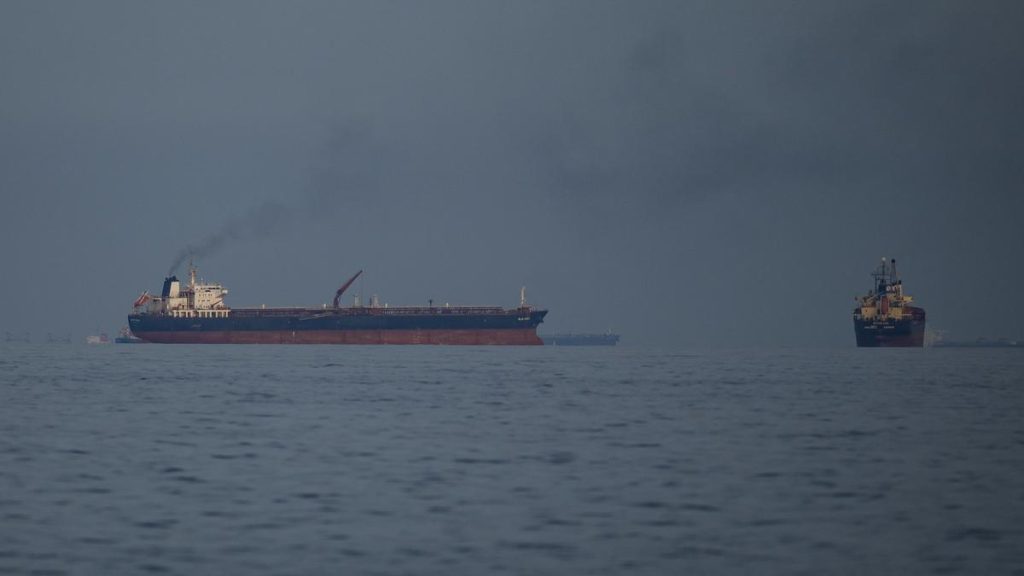
The Strait of Hormuz has long been recognised as one of the world’s most critical maritime routes. Nearly a fifth of global oil consumption passes through this narrow waterway, making it indispensable to global energy security and international trade. Any disruption here immediately reverberates across shipping, freight, insurance and commodity markets.

As someone closely associated with the shipping industry, I witnessed this uncertainty first-hand. One of our company’s vessels was among those caught amid heightened tensions in West Asia. We were confronted with an evolving security situation, uncertainty over navigation, and delays that disrupted commercial operations.

Yet, what stood out during this difficult period was the speed and coordination of the Indian government’s response. Through continuous engagement with shipping companies, diplomatic channels, maritime authorities and international partners, Indian authorities ensured the safe movement of Indian-flagged vessels. That timely intervention inspired confidence at a time when uncertainty was at its peak. Equally reassuring was the government’s unwavering focus on Indian crew and seafarers, ensuring that they remained protected amid one of the world’s most challenging shipping environments.

This experience is just one example of India’s growing ability to respond swiftly and decisively to external shocks. Whether during the COVID-19 pandemic, global supply chain disruptions, or recent geopolitical tensions in West Asia, India’s institutional response has increasingly been characterised by coordination, agility, and strategic foresight.

Economic stability under pressure

India imports nearly 90% of its crude oil requirements, making it particularly vulnerable to disruptions in energy-producing regions. Rising crude prices, elevated freight costs and shipping delays could easily have translated into widespread inflationary pressures and economic uncertainty. Despite these headwinds, India’s macroeconomic fundamentals have remained remarkably resilient. Inflation has broadly remained within the Reserve Bank of India (RBI)’s target band despite global commodity volatility, while India continues to be the fastest-growing major economy, supported by strong domestic demand, public investment and expanding manufacturing.

What deserves particular recognition is the manner in which the government has managed the energy challenge. Unlike in several countries where consumers experienced sharp increases in fuel prices or even supply shortages, India adopted a calibrated approach aimed at protecting households while maintaining macroeconomic stability. The government relied on a combination of supply diversification, diplomatic engagement, inventory management and coordinated action with public sector energy companies to ensure uninterrupted availability of petroleum products. Retail fuel prices have been managed prudently, helping to moderate inflationary pressures.

Energy management strategy

The government’s strategy has been built around a whole-of-government approach under the leadership and guidance of the Prime Minister, with Ministries, State governments, municipal authorities, oil marketing companies and industry associations working in close coordination to ensure uninterrupted supplies of oil and gas while minimising disruptions to economic activity. In the case of natural gas, the government encouraged the use of piped natural gas (PNG) wherever existing infrastructure permitted. This flexibility was made possible because of sustained investments over the past decade. India’s City Gas Distribution network has expanded from just 55 geographical areas in 2014 to over 300 today.

Similarly, exporters navigating rising freight charges, insurance premiums and shipping delays received targeted support. Measures aimed at strengthening export resilience, including liquidity support, logistics facilitation and simplified customs procedures, helped businesses continue servicing international markets despite disruptions to maritime trade. India’s strong merchandise exports growth of 16% during April-May FY27 is a clear reflection of this.

The RBI has also complemented government efforts by maintaining financial stability. Despite elevated global uncertainty, liquidity conditions have remained comfortable, financial markets continued to function smoothly, and the banking system remained well-capitalised. The RBI’s steady communication and measures such as forex swap facilities, scheme for raising foreign currency deposits from non-resident Indians as well as rationalisation of taxes on foreign portfolio investors (FPI) have been critical in strengthening India’s external sector resilience.

India was among the economies most vulnerable to this crisis, yet its policy response has been among the most effective. Across the world, governments grappled with surging fuel prices, elevated inflation and supply shortages. India’s strategic response has ensured preserving macroeconomic stability and maintaining growth momentum.

India’s preparedness

No economy today can completely insulate itself from geopolitical uncertainty. Commodity markets react instantly to conflict, shipping disruptions ripple across continents and supply chains remain deeply interconnected. A key learning from the Hormuz episode is that resilience is no longer built through emergency response alone. It is created through years of investment in infrastructure, diversified supply chains, institutional coordination and policy preparedness.

Over the past decade, India has steadily expanded refining capacity, diversified crude sourcing, strengthened strategic petroleum reserves, built gas infrastructure, modernised logistics networks and accelerated the transition toward cleaner energy. These investments become invaluable when external shocks test the economy. As India advances towards its vision of Viksit Bharat by 2047, it is institutional capability that will become an increasingly important competitive advantage.

Vijay Sankar is Senior Vice President, Federation of Indian Chambers of Commerce and Industry (FICCI) and Chairman, The Sanmar Group

Published – July 06, 2026 12:08 am IST


Source link

Related Posts

India needs to understand conditions better: Kishan

July 5, 2026

India’s fossil fuel consumption flatlines as renewables surge

July 5, 2026

Diljit Dosanjh’s Controversial Film Pulled From India After One Day

July 5, 2026
Add A Comment
Leave A Reply Cancel Reply

Top Posts

China Scraps 12,000 Degrees in Biggest Academic Overhaul in Years

June 14, 2026

Chinese Wall may stem India tech flows for electronics and automobile

June 1, 2026

Abandoned malls, whispers of nuclear war and young foreigners detained. This is what’s REALLY going on in Dubai… and the chilling warning one taxi driver gave to the Mail’s IAN BIRRELL

April 11, 2026
Don't Miss

India needs to understand conditions better: Kishan

By IslaJuly 5, 2026

India’s Ishan Kishan. File | Photo Credit: AP Following India’s loss to England in the…

PCR Food Testing Systems Market in the world | Report – IndexBox

July 5, 2026

Indonesia looks beyond UPI, eyes India’s digital blueprint | India News

July 5, 2026

Dubai logistics bridge keeps trade flowing as air cargo volumes surge

July 5, 2026
SUBSCRIBE TO OUR NEWSLETTER

Get our latest downloads and information first. Complete the form below to subscribe to our weekly newsletter.


I consent to being contacted via telephone and/or email and I consent to my data being stored in accordance with European GDPR regulations and agree to the terms of use and privacy policy.

Stay In Touch
  • Facebook
  • YouTube
  • TikTok
  • WhatsApp
  • Twitter
  • Instagram
Top Trending

Biotechnology: Revolutionising life, but what about ethics?

By IslaJuly 5, 2026

India’s fossil fuel consumption flatlines as renewables surge

By IslaJuly 5, 2026

Beijing Gourmet and Chesham Tandoori get low hygiene score

By IslaJuly 5, 2026
Most Popular

Vision and Colour Festival, Hong Kong Sevens and more

April 13, 2026

Eid Al Adha 2026: UAE leaders receive Eid greetings from Arab, Islamic counterparts

May 27, 2026

City Hall cracks down on illegal street photographers, seizes 32 pieces of equipment in KL hotspots | Malaysia

June 21, 2026
Our Picks

Vertical expansion ahead: Chennai Port to soon build a multi-level car parking facility

June 11, 2026

Abu Dhabi considers China investment consolidation

April 20, 2026

Chongqing Tonglianglong vs Qingdao West Coast: Chinese Super League stats & head-to-head

April 26, 2026
SUBSCRIBE TO OUR NEWSLETTER

Get our latest downloads and information first. Complete the form below to subscribe to our weekly newsletter.


I consent to being contacted via telephone and/or email and I consent to my data being stored in accordance with European GDPR regulations and agree to the terms of use and privacy policy.

© 2026 Simply Invest Asia.
  • Get In Touch
  • Cookie Policy
  • Privacy policy
  • Terms & Conditions

Type above and press Enter to search. Press Esc to cancel.

SUBSCRIBE TO OUR NEWSLETTER

Get our latest downloads and information first.

Complete the form below to subscribe to our weekly newsletter.


I consent to being contacted via telephone and/or email and I consent to my data being stored in accordance with European GDPR regulations and agree to the terms of use and privacy policy.