
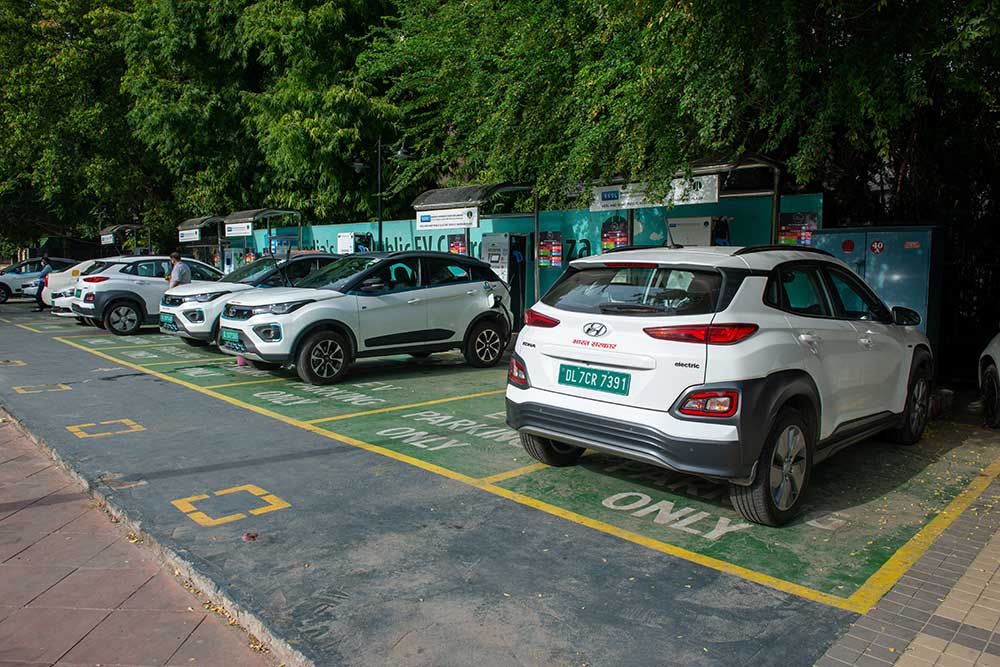
New Delhi authorities announced a new policy Monday aimed at curbing pollution in the city, including incentives to get residents to scrap old vehicles for electric ones.
New Delhi and its sprawling metropolitan region of 30 million residents is regularly ranked among the world’s most polluted capitals due to a mix of emissions from power plants, heavy traffic and the burning of rubbish and crops.
“This is a historic step towards effectively controlling vehicular pollution in the capital and promoting clean transportation,” said Delhi Chief Minister Rekha Gupta.
The new EV policy would start July 1 and remain in place until March 31, 2030, she said.
Gupta announced a slew of measures as part of the plan, including an incentive of “5,000 rupees ($53) to 100,000 rupees ($1,050) on scrapping old vehicles.”
Buyers of new electric two-wheelers and three-wheelers will also get incentives of 30,000 rupees ($320) and 50,000 rupees ($530) respectively.
Starting January 2027, the government will only register electric three-wheelers and small trucks, the chief minister said. And from April 2028, only new electric two-wheeler vehicles will be registered, she added.
A study in The Lancet Planetary Health last year estimated that 3.8 million deaths in India between 2009 and 2019 were linked to air pollution.
Levels of cancer-causing PM 2.5 microparticles have hit more than 300 micrograms per cubic metre in the city, 20 times the World Health Organization’s recommended daily maximum.
Government-led initiatives such as partial restrictions on fossil fuel-powered transport and water trucks spraying mist to clear the air have failed to make a noticeable impact.
According to an analysis by the Centre for Science and Environment from last year, vehicular emissions contributed a little over half to the city’s pollution levels.