
Petrochemical, Battery Casualty Direct Hit
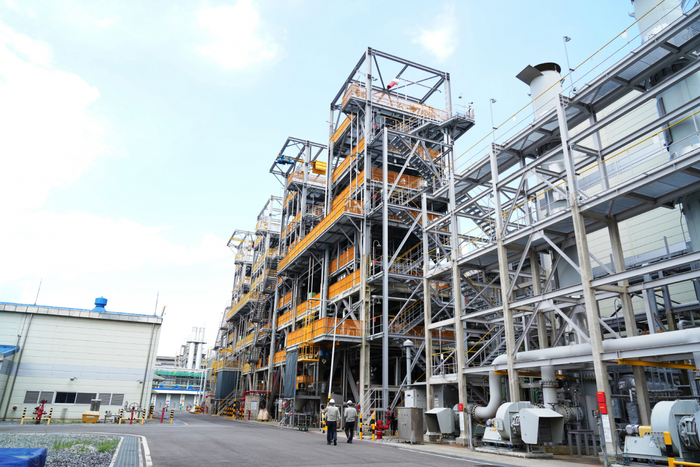
![View of LG Chem Yeosu Naphtha Decomposition Facility (NCC). [Picture = LG Chem]](https://wimg.mk.co.kr/news/cms/202606/29/news-p.v1.20260323.94fa26388ed34d658397b65fe86a8cef_P1.jpg)
As the oil refining and chemical industry faces a combination of slowing global electric vehicle demand (casm) and geopolitical risks in the Middle East, the target stock prices of major companies are being lowered one after another.
LG Chem and SK Innovation, which made large-scale investments in the secondary battery (battery) sector, turned on warning lights to secure profitability due to unexpected prolonged sluggish demand for electric vehicles and worsening business conditions in the petrochemical main industry.
On the 29th, LS Securities and NH Investment & Securities all lowered their target stock prices of major chemical stocks such as LG Chem and SK Innovation. LS Securities presented its investment opinion on LG Chem as “maintained” and adjusted its target stock price to 249,000 won, down from the previous one. LS Securities suggested SK Innovation’s target stock price at 91,000 won, lower than before.
NH Investment & Securities also lowered LG Chem’s target stock price from 500,000 won to 470,000 won, but it is still high compared to LS Securities’ target stock price (249,000 won) and the closing price (271,000 won) on the 26th.
For LG Chem and SK Innovation, the booming profits of the economy-sensitive industry over the past few years have been invested in expanding batteries and general-purpose chemical products, but the return on investment (ROIC) remains below or below the weighted average capital cost (WACC) at this point when the investment is completed. It is explained that large-scale investments in the past have not led to full cash generation.
Jung Kyung-hee, a researcher at LS Securities, said, “LG Energy Solution’s operating profit, which has the highest proportion of consolidated sales in 2026, is expected to decline significantly compared to the previous year, and concerns continue to be raised about shrinking the pouch and cylindrical markets among global electric vehicle battery markets.”
Researcher Chung predicted that the petrochemical sector will also see the weakness of general-purpose chemicals from the second half of the year after a temporary rebound due to the Middle East crisis, which will put pressure on margins again.
In particular, if the Shaheen project goes into full operation after a pilot operation in the second half of the year, the oversupply of petrochemicals in Korea could increase.
However, Choi Young-kwang, a researcher at NH Investment & Securities, said of LG Chem, “It is positive that the positive electrode price and sales volume are continuing a gentle turnaround every quarter out of the worst section, and the gradual recovery of the high-tech materials business will support the bottom of the stock price.”
The management situation of SK Innovation is also not easy. Researcher Chung Kyung-hee pointed out, “Although we have made accumulated facility investment of about 42.9 trillion won focusing on batteries over the past 10 years, profitability improvement has been delayed due to a decrease in pouch battery market share and intensifying competition.” Accordingly, it is analyzed that ROIC will enter a negative spread section below capital costs in the mid to long term.
In the short term, good performance is expected in the second quarter due to soaring oil prices and rising refining margins due to the Middle East crisis, but profit declines are inevitable in the second half of the year. In addition, rising incidental costs related to crude oil procurement, such as difficulties in the supply and demand of heavy crude oil and increased transportation costs due to instability in the Strait of Hormuz, were also cited as potential risk factors.
On the other hand, S-Oil raised a positive outlook, adding to expectations for increased shareholder returns based on the structural strength of the oil refining industry.
Choi Young-kwang, a researcher at S-Oil, said, “International oil prices have fallen to pre-Middle East war levels, but refining margins continue to be strong at a high level amid limited new expansion.”
Researcher Choi predicted that S-Oil, whose large-scale facility investment cycle has ended, will generate operating profit of more than KRW 2 trillion over the next few years, and that it will be able to expand its dividend payout ratio, which is currently around 20%, to 30% in 2027.