
Published on
June 13, 2026

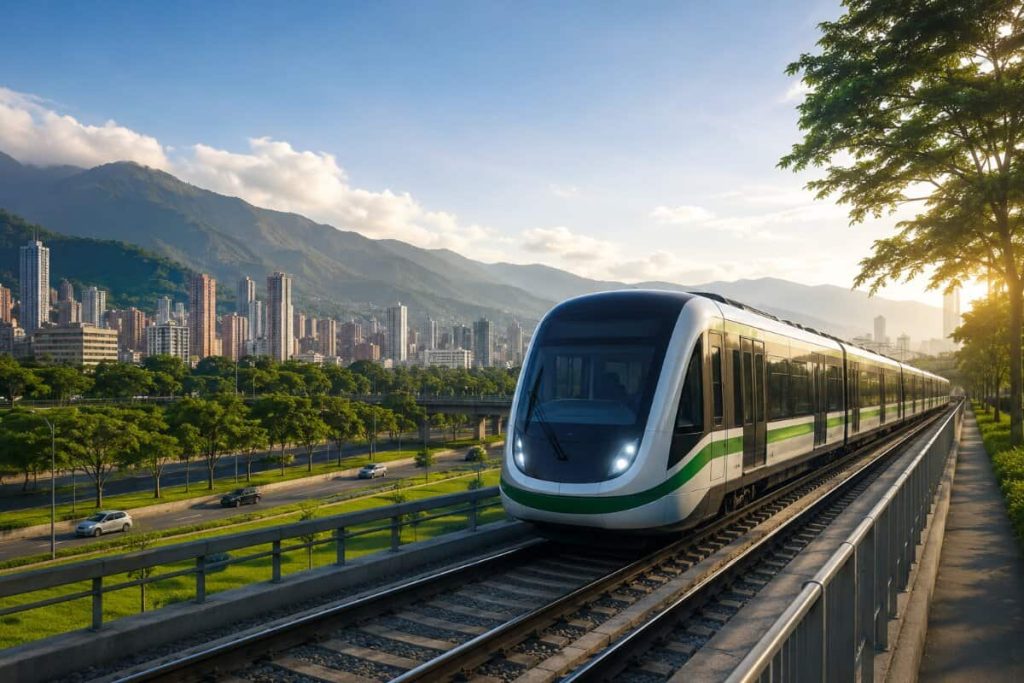
Image generated with Ai
Colombia’s RegioTram de Occidente has moved into a more decisive operating phase after Guangzhou Metro Group was positioned as the future operator of the electric rail corridor linking Bogotá with Cundinamarca. The project is designed to connect Bogotá with Funza, Mosquera, Madrid and Facatativá through an approximately 40 km regional passenger rail system. For travel, tourism, meetings, commuting and regional business mobility, the development marks a strategic shift. It moves the Bogotá region closer to a cleaner, faster and more integrated rail network, with partial operation targeted for the second half of 2027.
Colombia’s RegioTram de Occidente Gains a Major Operating Partner
Colombia’s regional mobility landscape is entering a new phase as Guangzhou Metro Group steps into the future operation framework of RegioTram de Occidente.
The project is one of the most important rail mobility schemes in the Bogotá region. It is designed to reconnect the Colombian capital with key municipalities in Cundinamarca through a modern electric train-tram system.
The main focus is Colombia. The secondary international dimension is China, through Guangzhou Metro Group and the wider Chinese participation already linked to the project.
Advertisement
Advertisement
For the travel industry, this is not only a transport story. It is a destination access story. It affects how workers, visitors, event delegates, students, domestic travellers and regional tourists will move between Bogotá and the western Sabana corridor.
The development also strengthens the Bogotá–Cundinamarca metropolitan travel zone. That matters because large urban destinations increasingly compete on integrated mobility, not only on hotels, airports and attractions.
Advertisement
Advertisement
Why Guangzhou Metro’s Role Matters for Colombia
Guangzhou Metro Group brings large-scale urban rail operating experience into a Colombian project that is moving from construction planning into future service readiness.
This is important because rail infrastructure does not succeed through tracks alone. It needs operations, control systems, safety procedures, passenger management, staff training, maintenance discipline and reliable service culture.
Colombia’s RegioTram de Occidente will serve a complex mixed corridor. Part of the route runs through Bogotá. Another part moves through suburban and regional territory. This means the future operator must manage urban rail conditions and commuter-style regional demand.
Guangzhou Metro’s involvement therefore gives the project an operational reference point from one of Asia’s most developed metro environments.
For B2B travel stakeholders, this reduces uncertainty. Hotels, event venues, corporate travel planners, real estate investors and destination marketers need predictable transport links. A clear operating partner improves confidence that the line is not only being built, but also being prepared for service delivery.
The Project at a Glance
| Key Area | RegioTram de Occidente Detail | B2B Travel Relevance |
|---|---|---|
| Main country focus | Colombia | Strengthens domestic and regional travel mobility |
| International partner | Guangzhou Metro Group, China | Adds global rail operations expertise |
| Main corridor | Bogotá to Cundinamarca | Improves capital-region access |
| Municipalities served | Funza, Mosquera, Madrid and Facatativá | Supports commuter, business and visitor flows |
| Approximate length | 40 km | Creates a major regional rail spine |
| Stations | 17 | Expands access points across the corridor |
| System type | Electric regional train-tram | Supports cleaner urban mobility |
| Estimated weekday demand | Around 130,000 passengers | Indicates strong mass-transit potential |
| Target operating phase | Second half of 2027 for partial operation | Gives travel businesses a planning horizon |
Bogotá and Cundinamarca Stand to Gain from Faster Regional Access
RegioTram de Occidente is expected to connect Bogotá with the western municipalities of Cundinamarca more efficiently than current road-based travel patterns.
Advertisement
Advertisement
This is central to the project’s business value.
The Bogotá region has long faced pressure from road congestion, commuter flows and uneven transport integration between the capital and surrounding municipalities. A functioning electric rail line can help ease that pressure by shifting part of the movement from roads to rail.
For travel and tourism, this opens new possibilities.
A visitor staying in Bogotá could access parts of Cundinamarca with greater ease. A business traveller attending meetings across the capital region could move with more predictable journey times. Local residents could reach jobs, education and services with less dependence on private vehicles or road congestion.
This creates a wider travel economy. It allows Bogotá and Cundinamarca to behave more like one connected destination system.
Why This Is a Strategic Mobility Story for Colombia
Colombia has framed RegioTram de Occidente as a rail project of national and regional significance.
Advertisement
Advertisement
The Ministry of Transport has described the project as an electric passenger rail system for regional movement. It links Bogotá with Funza, Mosquera, Madrid and Facatativá, using much of the existing railway corridor.
That detail matters.
Reusing a rail corridor can reduce the need for entirely new transport corridors. It can also revive railway geography that had lost its modern passenger role. In practical terms, this makes RegioTram de Occidente both a mobility upgrade and a rail restoration project.
The scheme also forms part of a wider shift towards cleaner public transport in Colombia. It sits beside other electric mobility investments, including Bogotá’s metro development and electric bus systems.
For transport planners, this signals a broader policy direction. Colombia is trying to build a cleaner, more integrated and more rail-oriented urban mobility network.
RegioTram’s Route Could Reshape the Visitor Economy
| Location | Role in the Corridor | Possible Travel and Tourism Impact |
| Bogotá | Capital city and main demand centre | Stronger access for business travellers, events and urban tourism |
| Fontibón | Western Bogotá gateway | Better connection near key mobility corridors |
| Funza | Cundinamarca municipality | Improved commuter and visitor access |
| Mosquera | Industrial and residential growth area | Better regional workforce movement |
| Madrid | Western Sabana municipality | Stronger link to Bogotá’s service economy |
| Facatativá | Western endpoint and regional node | Better day-trip, domestic travel and commuter potential |
The travel impact should not be overstated as a tourism boom before operations begin. Yet the direction is clear. Reliable rail creates new movement patterns.
Advertisement
Advertisement
When a transport system cuts friction, destinations become easier to package, sell and serve.
This can help Cundinamarca build stronger links with Bogotá’s hospitality base. It can also support regional events, business parks, education travel and domestic leisure movement.
The 2027 Target Gives the Industry a Planning Window
The project’s partial operation target in the second half of 2027 gives businesses a useful timeline.
Hotel operators can evaluate future demand around stations. Event planners can assess delegate mobility. Local governments can improve pedestrian access, signage and station-area services. Tour operators can start studying regional products that become easier once rail service begins.
For airlines and airport-linked travel, the project may also support broader movement across western Bogotá and Cundinamarca. The route’s urban section and its links with Bogotá’s transport system could make the wider region more navigable.
Still, the strongest near-term impact is not aviation. It is ground mobility.
Advertisement
Advertisement
Colombia’s capital region needs better last-mile and regional transport. RegioTram de Occidente directly addresses that gap.
How the Project Fits into Bogotá’s Larger Mobility System
RegioTram de Occidente is not designed to operate in isolation.
Official transport planning links it with Bogotá’s wider mass-transit ecosystem. Its alignment is expected to support connections with the Bogotá Metro and other public transport systems.
This is crucial.
Modern travellers do not judge a city only by one rail line. They judge the whole journey. They want to move from station to hotel, from airport to meeting, from business district to event venue, and from city centre to regional attraction without confusion.
If RegioTram is well integrated, it can create a stronger Bogotá mobility chain.
Advertisement
Advertisement
That would benefit tourism, corporate travel and daily commuting at the same time. It could also reduce road pressure on some of the busiest western access corridors.
Operational Readiness Is Now the Critical Test
The announcement of Guangzhou Metro’s future operating role should be viewed as an operational milestone.
Construction progress is one layer. Train manufacturing is another. But service delivery is the final test.
The future system must offer punctuality, safety, clean stations, easy transfers, clear passenger information and reliable peak-hour capacity. These factors will decide whether the rail line becomes a daily transport habit or only a symbolic infrastructure project.
For Colombia, the stakes are high.
RegioTram de Occidente is being watched as a model for regional rail. If it works well, it could strengthen confidence in future rail projects around Bogotá and other Colombian urban regions.
Advertisement
Advertisement
B2B Travel Impact Analysis
| Stakeholder | Expected Benefit | Strategic Watchpoint |
| Hotels in Bogotá | Better access for regional guests and workers | Need station-linked mobility information |
| Cundinamarca municipalities | Stronger link with the capital | Need local access, safety and signage |
| Event organisers | Wider catchment area for delegates | Need predictable timetables |
| Corporate travel managers | Easier movement across Bogotá region | Need integration with business districts |
| Tour operators | Potential new regional itineraries | Need service reliability before packaging |
| Real estate developers | Higher interest around station areas | Need transit-oriented planning |
| Public agencies | Cleaner mass transport capacity | Need long-term maintenance discipline |
A Cleaner Mobility Shift with Economic Meaning
RegioTram de Occidente’s 100% electric design gives the project an environmental dimension.
Transport emissions and road congestion remain major concerns in fast-growing metropolitan regions. Electric rail does not solve every mobility problem. Yet it can reduce dependence on road vehicles along a high-demand corridor.
For B2B travel, sustainability is now a commercial issue. Corporate clients, event organisers and international visitors increasingly pay attention to greener mobility. A region with electric rail can promote stronger low-emission access credentials.
This gives Bogotá and Cundinamarca a future positioning advantage.
A cleaner rail connection can become part of the destination’s business travel story. It can also support Colombia’s broader transition towards sustainable urban transport.
What Makes This News Different from a Standard Contract Story
This is not only about a company signing onto a project.
Advertisement
Advertisement
The bigger story is that Colombia is moving closer to a functioning regional electric rail model around its capital. Guangzhou Metro’s role adds operational depth to a project already structured through public investment, concession planning and international construction participation.
The project connects several strategic layers.
It supports cleaner transport. It strengthens regional integration. It improves future access between Bogotá and Cundinamarca. It gives the travel sector a new mobility asset. It also places Colombia within a wider Latin American trend where large cities are rethinking mass transport through rail, metro and electric systems.
Outlook for Colombia’s Travel and Transport Market
Colombia’s RegioTram de Occidente is now moving from promise to execution pressure.
The industry will watch three questions. Will partial operations begin as targeted in 2027. Will the system integrate smoothly with Bogotá’s wider transport network. Will passenger service quality match the scale of the investment.
If those questions are answered well, the project can become a defining mobility upgrade for Colombia’s capital region.
Advertisement
Advertisement
For travel businesses, the message is clear. Bogotá and Cundinamarca are preparing for a more connected future. Guangzhou Metro’s future operating role strengthens that transition and gives RegioTram de Occidente a sharper operational identity.
The result could be a cleaner, faster and more competitive regional travel corridor for Colombia.

Advertisement
Advertisement
