
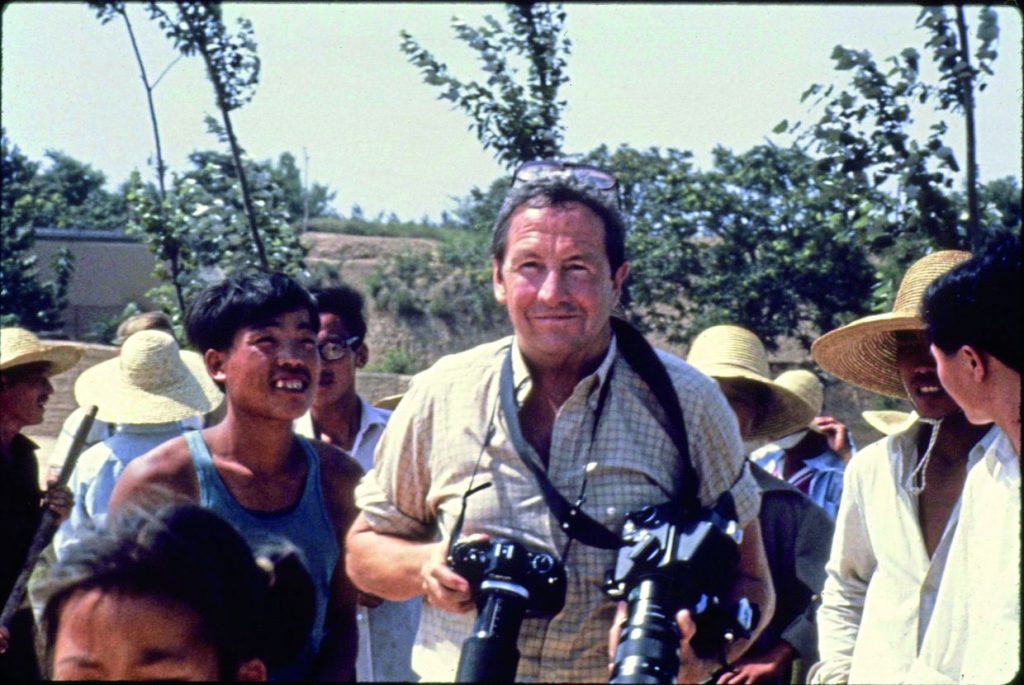
There are many layers to the career of legendary American artist Robert Rauschenberg (1925–2008), from his pivotal role in shaping Neo-Dada, Pop Art and Conceptual Art to his far-reaching artistic collaborations across the world.
Among them was an overlooked chapter in Malaysian art history, emerging from his travels through Asia, which will soon gain wider attention through a new exhibition in Kuala Lumpur next month.
In one of its highest-profile exhibitions to date, Ilham Gallery will present Robert Rauschenberg And Asia from June 16 to Nov 1.
Organised by Hong Kong contemporary art museum M+ in collaboration with Ilham Gallery, the exhibition marks the first comprehensive survey of Rauschenberg’s creative explorations in Asia.
Following a successful run at M+ from last November to April, the exhibition travels to the Malaysian capital through a collaboration between the two institutions, with support from the Robert Rauschenberg Foundation.
Robert Rauschenberg And Asia brings together a selection of over 40 works the artist produced during and in response to his time in Asia between 1964 and 1990.
An enthusiastic traveller from his youth, Rauschenberg was deeply impacted by the cultures with which he came into contact.
His engagement with Japan began in the mid-1960s, and his residency in India in 1975 inspired new approaches to working with materials and colour. After his first trip to China in 1982, he developed the Rauschenberg Overseas Culture Interchange (ROCI, 1984–1991), a global programme of travelling exhibitions and cultural dialogues.
Between the 1960s and 1990s, he visited numerous locations across the continent for exhibitions, collaborations, research and research, gathering images and materials that he incorporated into his artworks until his death in May 2008 at the age of 82.
These Asia-inspired works span assemblage, sculpture, printmaking, textiles, photography and drawing, reflecting Rauschenberg’s expansive approach to media, content and technique.
The clearest expression of his engagement with the ROCI series, a self-funded travelling exhibition to foster cross-cultural dialogue. The multi-venue project included exhibitions in five Asian cities, including Kuala Lumpur, and saw Rauschenberg become the first Western contemporary artist to stage major solo exhibitions in China, the Soviet Union and Malaysia during a period of global transformation.
The final international stop of ROCI before its return to Washington opened at the National Art Gallery in Kuala Lumpur in May 1990. Rauschenberg travelled to Malaysia at the invitation of National Art Laureate Datuk Syed Ahmad Jamal (1929-2011), then director of the National Art Gallery.
ROCI Malaysia also received support from the Ministry of Culture, Arts and Tourism as part of Visit Malaysia Year 1990, the country’s inaugural tourism campaign.
“We are pleased to present this exhibition featuring the work of Robert Rauschenberg, one of the pioneers of contemporary art, to audiences in Kuala Lumpur. It is especially meaningful that the exhibition includes works from ROCI Malaysia, the first major exhibition by an internationally acclaimed artist at the National Art Gallery, offering an opportunity to reflect on his influence on a generation of Malaysian artists,” said Rahel Joseph, gallery director of Ilham, and the exhibition’s co-curator in Kuala Lumpur.
“We are also delighted that this marks our first partnership with M+ in Hong Kong, which we hope will further strengthen connections between the Malaysian and international art scenes,” she adds.
In Hong Kong, the exhibition formed part of “Rauschenberg 100”, a year-long global programme marking the centenary of Rauschenberg’s birth.
Kuala Lumpur is next to join the celebration, with a presentation featuring minor adjustments, providing local audiences with a similarly expansive view of the artist’s colourful adventures in Asia.
Through the Robert Rauschenberg Foundation, several works from ROCI Malaysia are also set to be shown again in Kuala Lumpur, 36 years after their original exhibition in the city, to inspire a new generation of art lovers.
“This exhibition traces Robert Rauschenberg’s extensive engagement with Asia across multiple collaborations and projects, exploring both its influence on his own work and his impact on the artists he encountered,” says Russell Storer, senior curator and associate director of curatorial affairs, M+ and exhibition curator.
“In many ways, he foregrounded the globalisation of contemporary art by responding to new contexts, incorporating local materials and images, and promoting intercultural dialogue and understanding. We are delighted to collaborate with Ilham to bring Rauschenberg’s work back to Malaysia and continue his legacy of connection and exchange,” he adds.