
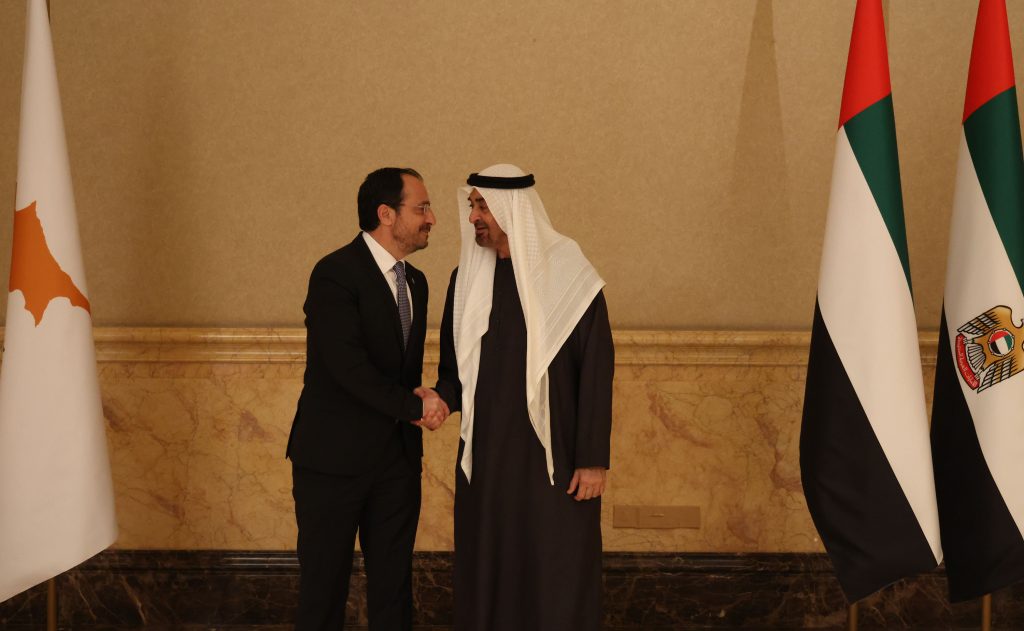
The visit of President Nikos Christodoulides to the United Arab Emirates has reaffirmed and further strengthened strategic ties between the two countries, the government said on Thursday.
Government spokesman Konstantinos Letymbiotis said the president’s meeting with UAE President Mohamed bin Zayed Al Nahyan took place at a critical time for regional security and stability.
The visit, he said, was a “tangible expression of solidarity” by Cyprus towards the UAE following what he described as unjustified attacks, while also reaffirming Nicosia’s support for the sovereignty and stability of a key strategic partner.
Letymbiotis noted that there has been close coordination between the two countries since the onset of the crisis, highlighted by recent high – level exchanges, including visits by the foreign ministers of both nations in March.
He added that relations between Cyprus and the UAE have gained “real strategic depth” in recent years, built on mutual trust, consistent political coordination and shared interests.
During the meeting, the two leaders discussed regional developments, the need for de-escalation, and the importance of maritime security.
Cyprus reiterated its support for international initiatives aimed at safeguarding navigation and maintaining regional stability, stressing that security in the Gulf is directly linked to that of Europe.
The visit also carries added significance in light of Cyprus’ role within the European Union, with the country positioning itself as a bridge between Europe, the Eastern Mediterranean and the Gulf.
Letymbiotis pointed to recent cooperation between the two countries as evidence of the strength of bilateral ties, including joint efforts on the ‘Amalthea’ humanitarian corridor, UAE support in providing mobile desalination units to Cyprus, and the signing of a strategic agreement.
Discussions also focused on future cooperation through a joint Cyprus – UAE action plan for 2026 – 2030, covering sectors such as trade, investment, energy, defence, shipping, infrastructure, tourism, culture and education.
Particular emphasis was placed on energy cooperation and collaboration in defence and security, while the two sides also exchanged views on connectivity initiatives linking India, the Middle East and Europe under the IMEC framework.
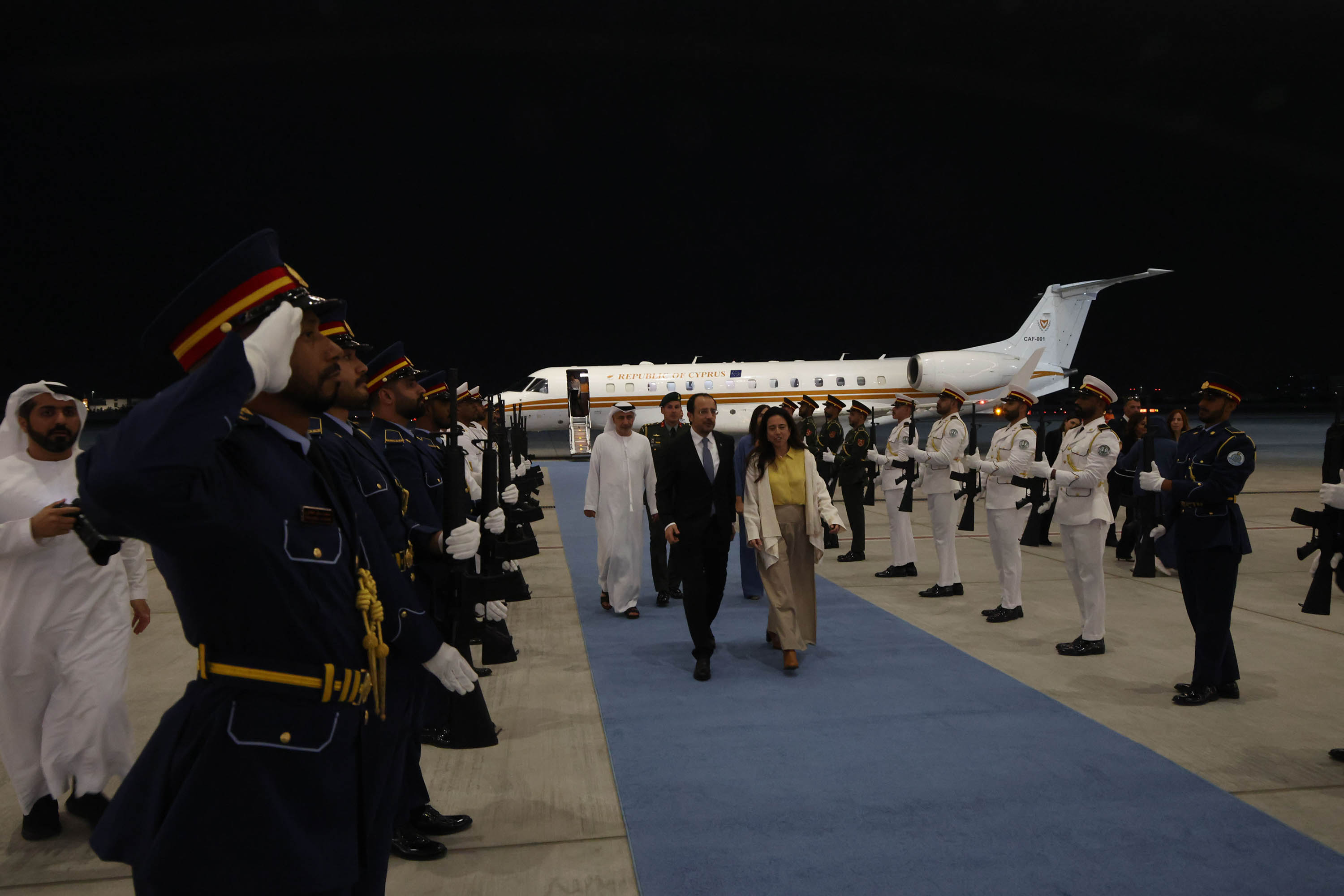
Letymbiotis said the visit confirms that bilateral relations are entering a new phase, with a stronger focus on concrete outcomes, joint initiatives and broader regional objectives.
“In times of crisis, the quality of bilateral relations is judged not only by declarations, but by consistency, immediacy and reliability of actions,” he said.
He added that Cyprus will continue efforts to strengthen ties with the UAE, deepen cooperation between the EU and countries in the region, and promote stability, security and peace.
Meanwhile, Cyprus, Greece and Jordan on Wednesday reaffirmed their commitment to deepening cooperation and addressing regional challenges, following the conclusion of their fifth trilateral summit in Amman.
In a joint declaration issued after the meeting, President Nikos Christodoulides, King Abdullah II and Prime Minister Kyriakos Mitsotakis highlighted the need to strengthen coordination in the face of what they described as a rapidly evolving international and regional landscape.