
This shift towards plant-based additives and health-focused positioning benefits local brands and international firms targeting China’s wellness-driven market, where food additive firms like Hubei-based Zixin Biological Technology are innovating with natural food ingredients under the Znatural brand. It targets health-conscious consumers and aligns with Healthy China 2030 – a government initiative that emphasises wellness and sustainability.
Health-focused and sustainable
Znatural is focusing on a circular production model and upcycling processes to align with sustainability trends and evolving consumer health needs.
One of its flagship offerings includes functional ingredients from black rice – also known as “forbidden rice” or “emperor’s rice”, historically reserved for Chinese royalty due to its perceived health benefits and rarity.
The firm also produces black rice juice concentrate for beverages through processes such as soaking, refining and enzymatic breakdown to release fermentable sugars.
Byproducts from this process are upcycled through fermentation to produce alcoholic beverages such as black rice wine.
Znatural ferments black rice over 28 days at low temperatures to preserve flavour. This results in a clear red liquid with an alcohol content of 4–14% and a distinctive floral and fruity aroma, suitable for applications in products such as wines and craft beers.
The firm also upcycles grape pomace into red and purple colourants for applications in frozen desserts, jams, candies and baked goods.
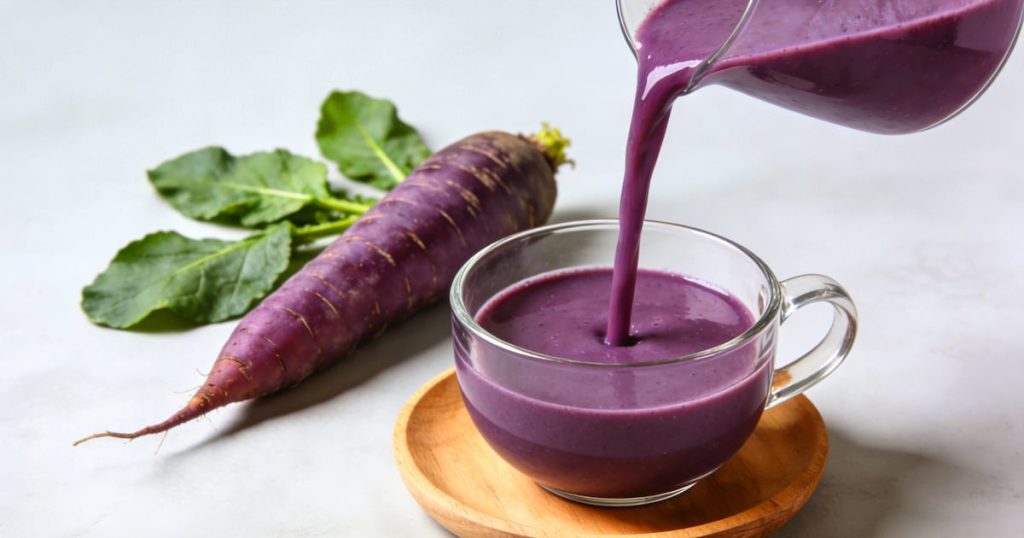
Nutrient-rich ingredients such as mulberries, purple carrots, and safflower are also part of its portfolio.
While much of the focus has been on natural colourants, natural ingredients are also dominant in gut health-focused products and as alternative sweeteners.

Gut health trend fuels demand for natural ingredients
Chicory root, for instance, is increasingly popular as a low-calorie sugar substitute.
Vilof, a chicory ingredient supplier based in Hebei, states that chicory root contains 15–20% inulin, a plant-based fibre also found in foods such as asparagus, bananas and onions.
The firm adds that chicory-derived ingredients can support prebiotic claims and be used for fibre fortification, while also mimicking fat in certain formulations.
Similarly, monk fruit has been touted as a natural sweetener that can support gut health, according to MonkFruit Corp, a sweetener firm based in Guilin.
The firm offers monk fruit juice concentrate and extracts that enhance flavour and can be used in fibre-fortified formulations. It also claims to provide prebiotic fortification across various popular food formats like sparkling drinks, yoghurts, wines, milk, and frozen desserts.
These claims are based on recent research published in Current Research in Nutrition and Food Science, which focuses on natural sweeteners.
The researchers found that the extract Mogroside V, a compound in monk fruit, may have prebiotic potential and hence may promote the growth and activity of beneficial bacteria in the digestive tract.
Health-focused claims a key marketing strategy
Research has also shown that marketing messages that promote prevention of diseases and avoiding health risks are more persuasive in Chinese societies.
Even artificial additive firms are making health-focused claims for their products. Nantong Changhai, based in Jiangsu Province, highlights innovative formats like flashing light candy made from sugar substitute isomalt, which it claims also contains prebiotic benefits.
The firm also offers resistant dextrin, which it promotes as a dietary fibre that promotes gut health and does not cause blood sugar spikes. It also increases satiety and helps with diet and weight management.
Allulose is another artificial sweetener that is gaining traction. Firms like So True Biotech position it as a low-calorie sweetener with a sugar-like taste and potential gut health benefits.
“Allulose delivers sweetness like sugar at one-tenth of the calories compared to table sugar, and it can regulate intestinal microecology,” said So True’s Sales Manager Jiang Lin.
The firm’s claims are based on recent research into the health benefits of allulose. Researchers from Korea found that allulose could help improve gut health and reduce inflammation, making it a promising ingredient for functional foods or drinks aimed at supporting digestive health.
However, the researchers cautioned that these findings are based on lab studies. Further animal and human trials are needed to confirm effective dosages and real-world benefits.