
China exported a record amount of solar components and photovoltaic panels last month, signalling that manufacturers are benefiting from stronger demand for clean energy technologies as the Iran war has caused oil and gas prices to soar and threatens supply shortages.
The world’s second largest economy exported solar panels, cells and wafers capable of generating 68 gigawatts (GW) in March – the equivalent of Spain’s entire solar capacity, according to analysis of data from Chinese customs authority by global energy think-tank Ember.
March’s volume was more than double exports in February and 49% more than the previous record set in August 2025. Three-quarters of the increase came from exports to Asia and Africa.
As well as the Middle East conflict, a rush by Chinese manufacturers to export solar modules and cells before an export tax rebate ended on April 1 – adding 9% to solar panel costs – was a major driver of the export spike.
“The volumes exported are absolutely gigantic,” Euan Graham, senior analyst at Ember, told Climate Home News.
“We will see over the coming months how much of that was linked to the tax rebate and how much of that is additional demand – that might vary by region. But certainly a big part of this is the response to the energy crisis,” he said.
China ends tax rebate on solar exports
For Qi Qin, China analyst at the Centre for Research on Energy and Clean Air, March’s export surge was most likely driven by the end of the tax rebate, which brought forward demand, with high energy prices bolstering the trend.
“Policy deadlines can create a sharp one-month jump in export, while by comparison, higher oil and gas prices caused by the war are… more likely to support demand over the medium term rather than explain such a strong spike in one single month,” she told Climate Home News.
Earlier this year, the Chinese government announced that the solar export tax discount was coming to an end in an effort to prevent trade disputes and cut-throat competition for low-price exports among Chinese manufacturers.
In a note at the time, Trivium China, an analysis firm that specialises in monitoring Chinese government policy, said Beijing had become frustrated with state tax resources being used to subsidise overseas consumers. “The rebate end date is all but certain to trigger one of the largest module production booms in history” to beat the April export price hike, it said.
Solar manufacturing booms outside China
Across the world, 50 countries set records for Chinese solar imports in March, while a further 60 saw the highest import levels in six months. Chinese solar exports to Africa reached 10GW last month, a 176% increase compared with the previous month while exports to Asia doubled to 39GW.
The increase is partly driven by growing solar manufacturing and assembly capacity outside China, as countries seek to produce more of their own solar capacity as well as export panels to other markets. In October last year, Chinese exports of solar cells and wafers overtook already assembled solar panels. In March alone, Chinese solar panel exports reached 32 GW while cells and wafers exports amounted to 36 GW.
India, which is rapidly building out a solar manufacturing industry, is increasingly importing wafers from China, which can be manufactured domestically into solar cells and assembled into panels. Chinese solar exports to India were up 141% in March compared to February.
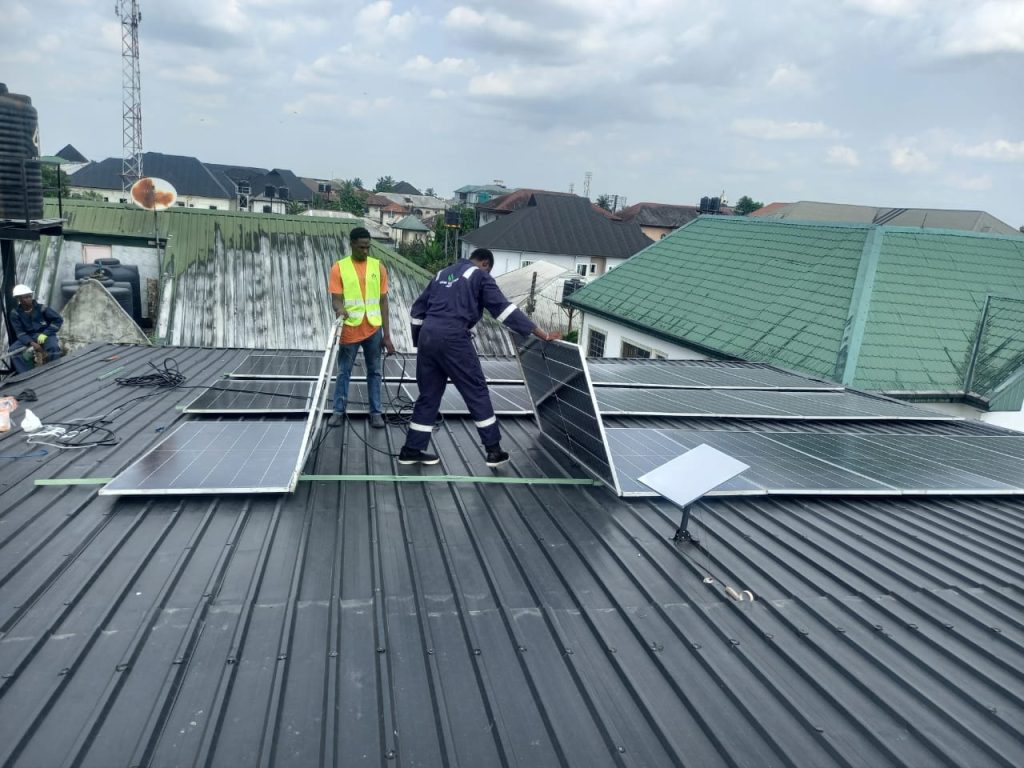
In Africa, Nigeria, Kenya and Ethiopia all imported over 1GW of solar for the first time in a single month, predominantly in the form of solar cells that are then assembled into panels. Exports to Nigeria, which is seeking to significantly ramp up its solar assembly capacity, rocketed 519% – the largest percentage increase.
“We’ve eagerly awaited the first signs of how countries around the world are responding to the energy crisis and this is just the first piece of evidence we have. The full effects of it will be revealing themselves for months to come, both in terms of the immediate consumer response and also more structural government policy changes,” said Graham of Ember.