
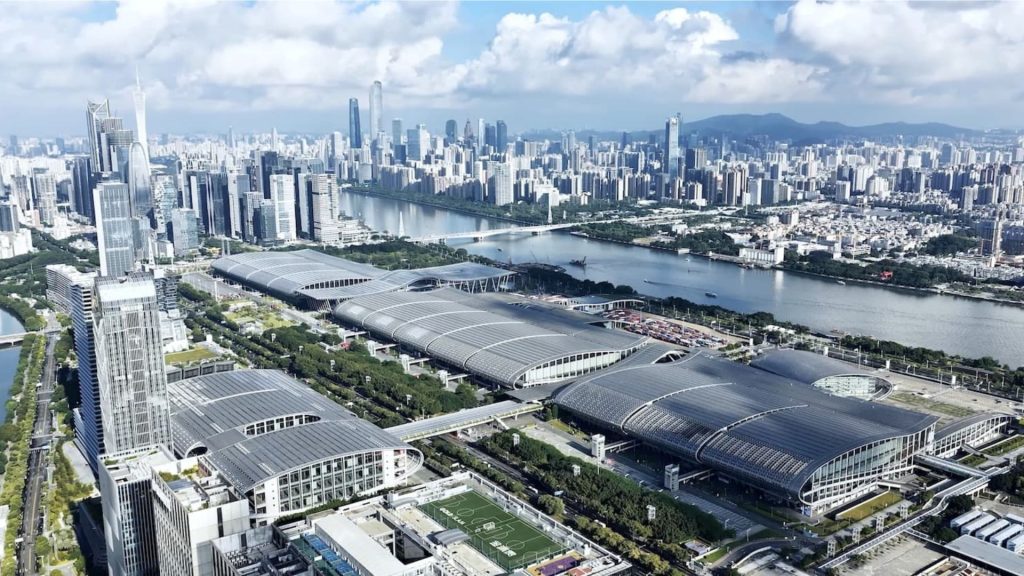
If you want to understand where the built environment is heading — not in five years, but now, at the level of materials, manufacturing, smart systems, and spatial design — CBD Guangzhou is one of the most useful places on earth to spend four days.
The China (Guangzhou) International Building Decoration Fair, now in its 28th edition, takes place July 8–11, 2026 at the Canton Fair Complex in Guangzhou Pazhou, and its scale and structural ambition make it a genuinely different proposition from the European trade fairs most of our community will be more familiar with.
©CBD Guangzhou fair
©CBD Guangzhou fair
©CBD Guangzhou fair
©CBD Guangzhou fair
©CBD Guangzhou fair
©CBD Guangzhou fair
©CBD Guangzhou fair
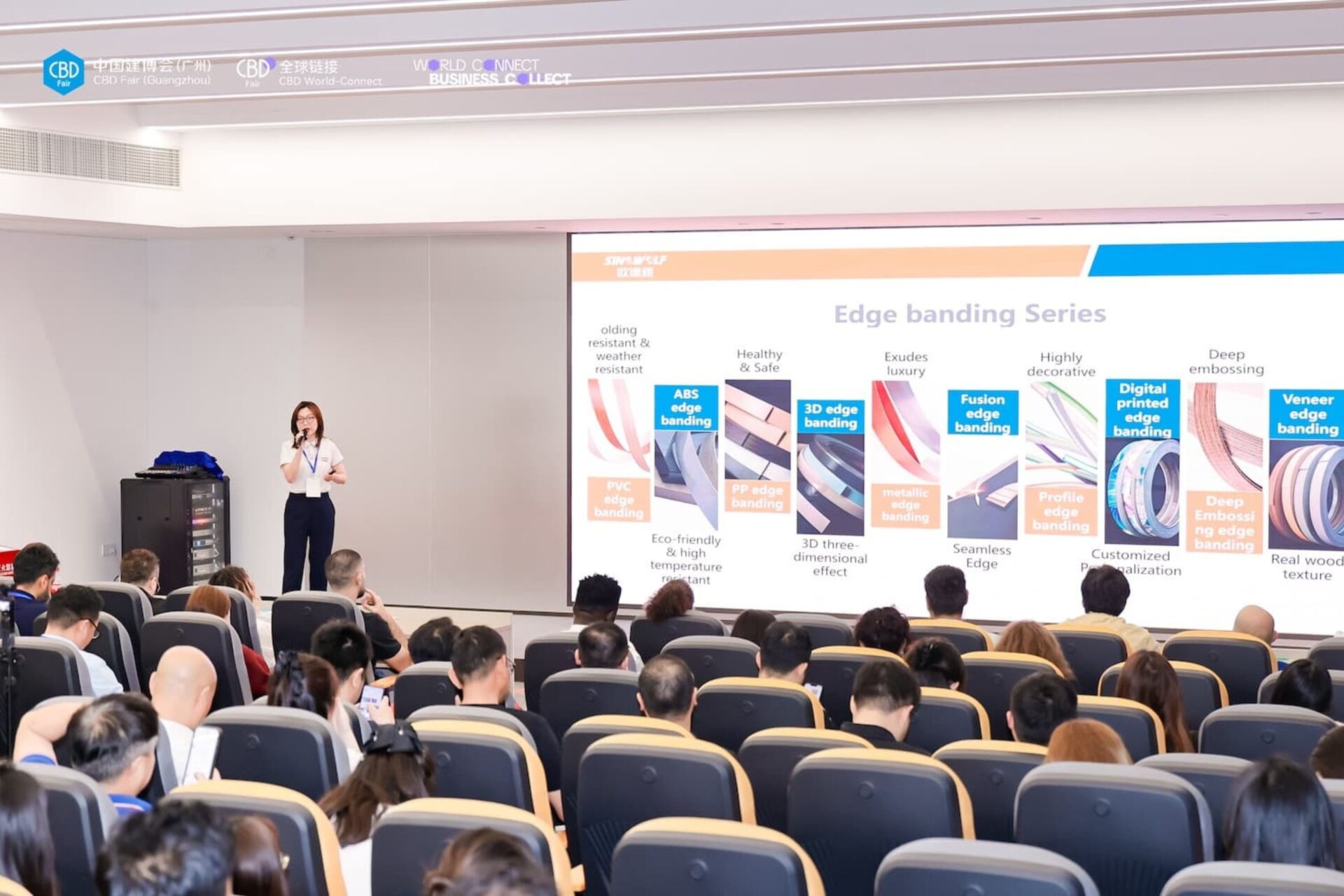
©CBD Guangzhou fair

©CBD Guangzhou fair
©CBD Guangzhou fair
This is not a curated showcase of finished interiors. It is something closer to a live cross-section of an entire industry — from the ceramics and sanitary ware that define a bathroom, to the façade systems and sunshading technologies that shape a building’s relationship with climate and light, all the way down to the automation systems and intelligent manufacturing technologies that determine how all of it gets made. For designers, architects, contractors, and anyone working at the intersection of interior design and construction, the density of what CBD Guangzhou puts in one place is, simply, hard to find elsewhere.
Three ecosystems, one coherent vision
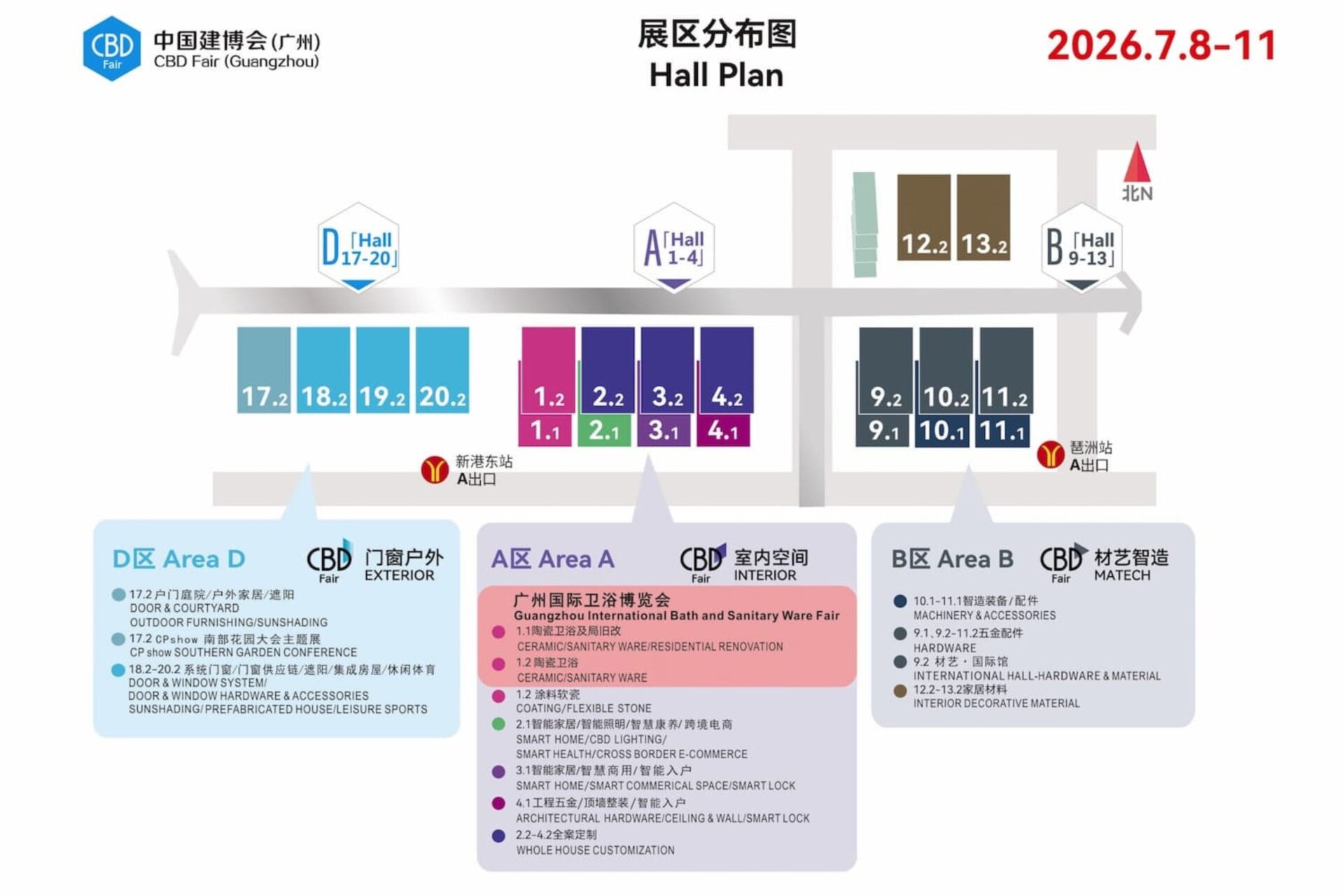
The 2026 edition is organised around three distinct but interconnected industry ecosystems — INTERIOR, EXTERIOR, and MATECH — each addressing a specific layer of the building and living environment, and together forming a complete picture of where the industry is moving.
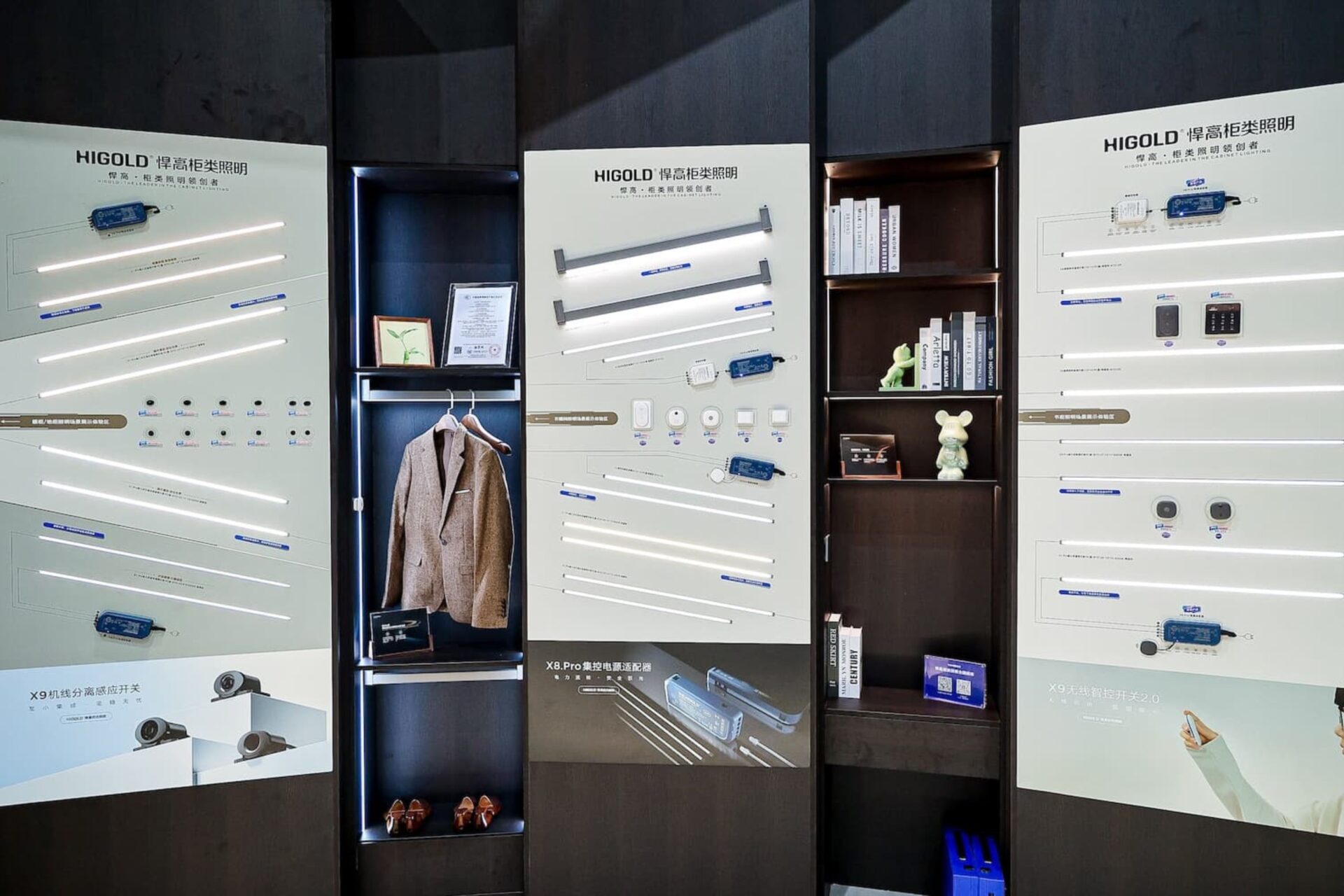
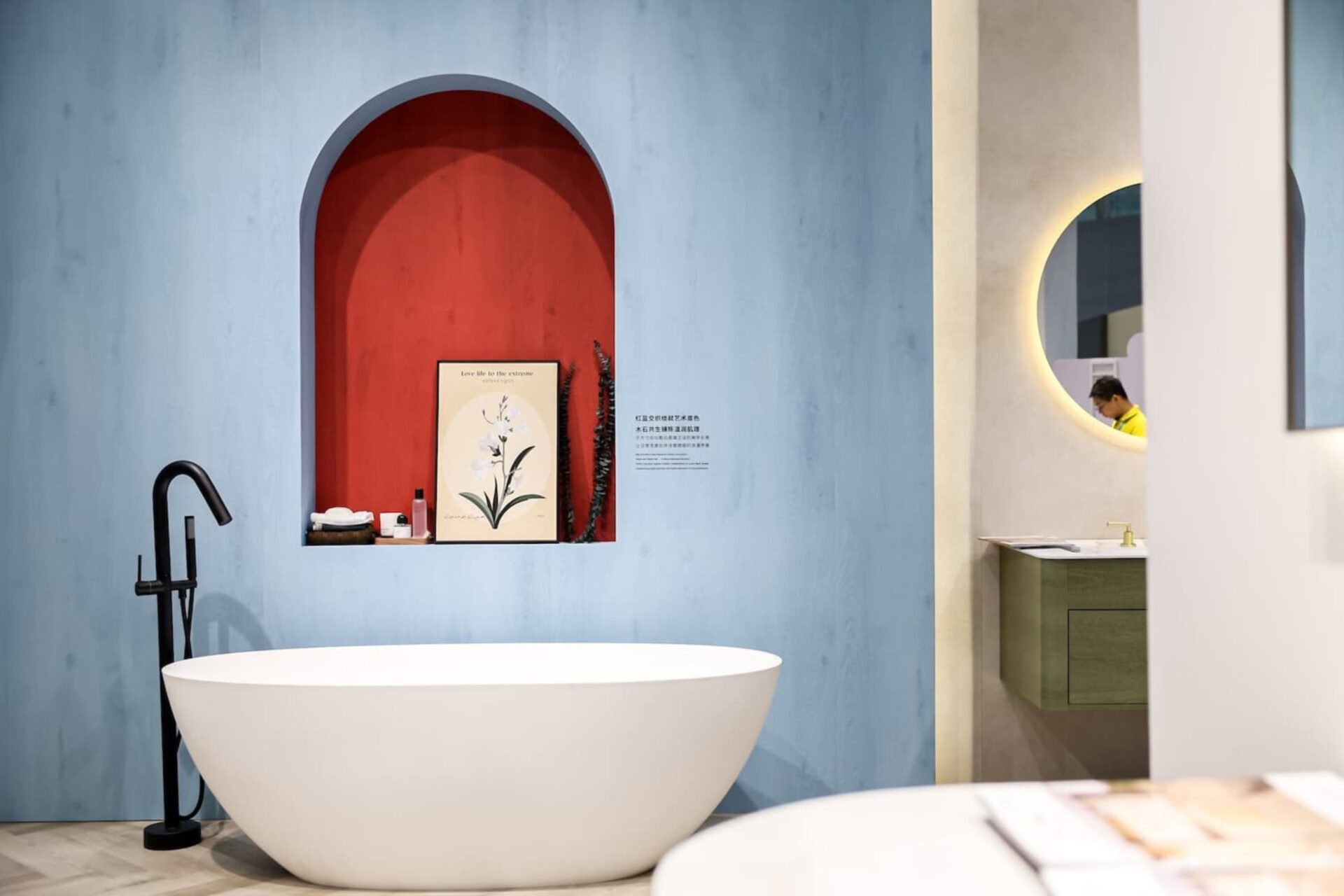
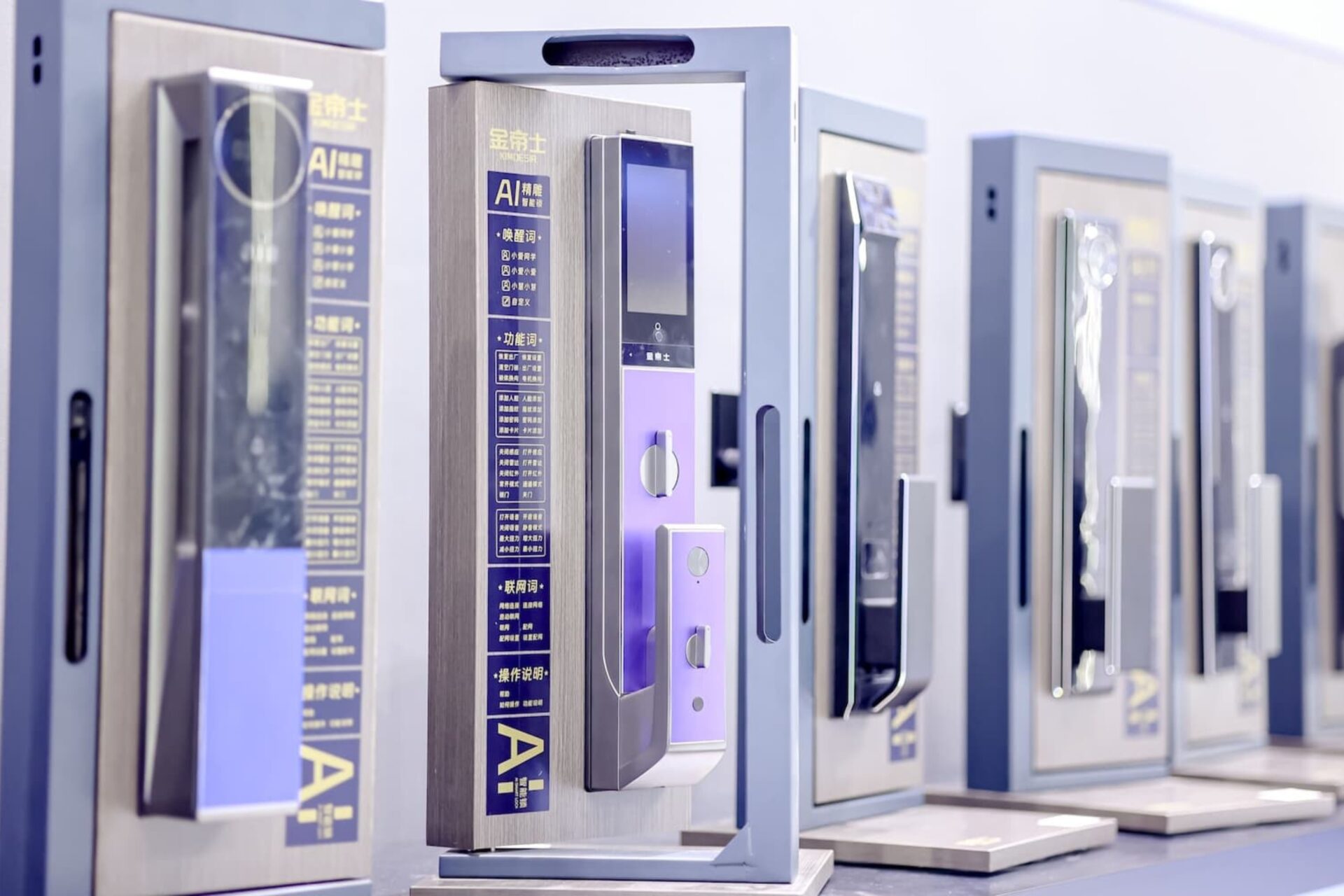
INTERIOR (Area A) is the creative and lifestyle-driven core of the fair. It covers smart home technologies — connected lighting, intelligent security, home automation, AI-driven systems, and integrated whole-home solutions — alongside whole-house customisation, decorative surfaces, advanced coatings, and a dedicated section for ceramics, sanitary ware, and residential renovation technologies developed in partnership with the China Chamber of Commerce of Metals, Minerals & Chemicals Importers & Exporters. For a design audience, this is the area that most directly maps onto the questions we deal with daily: how materials perform, how spaces are personalised, and how technology is being absorbed into domestic life without announcing itself.
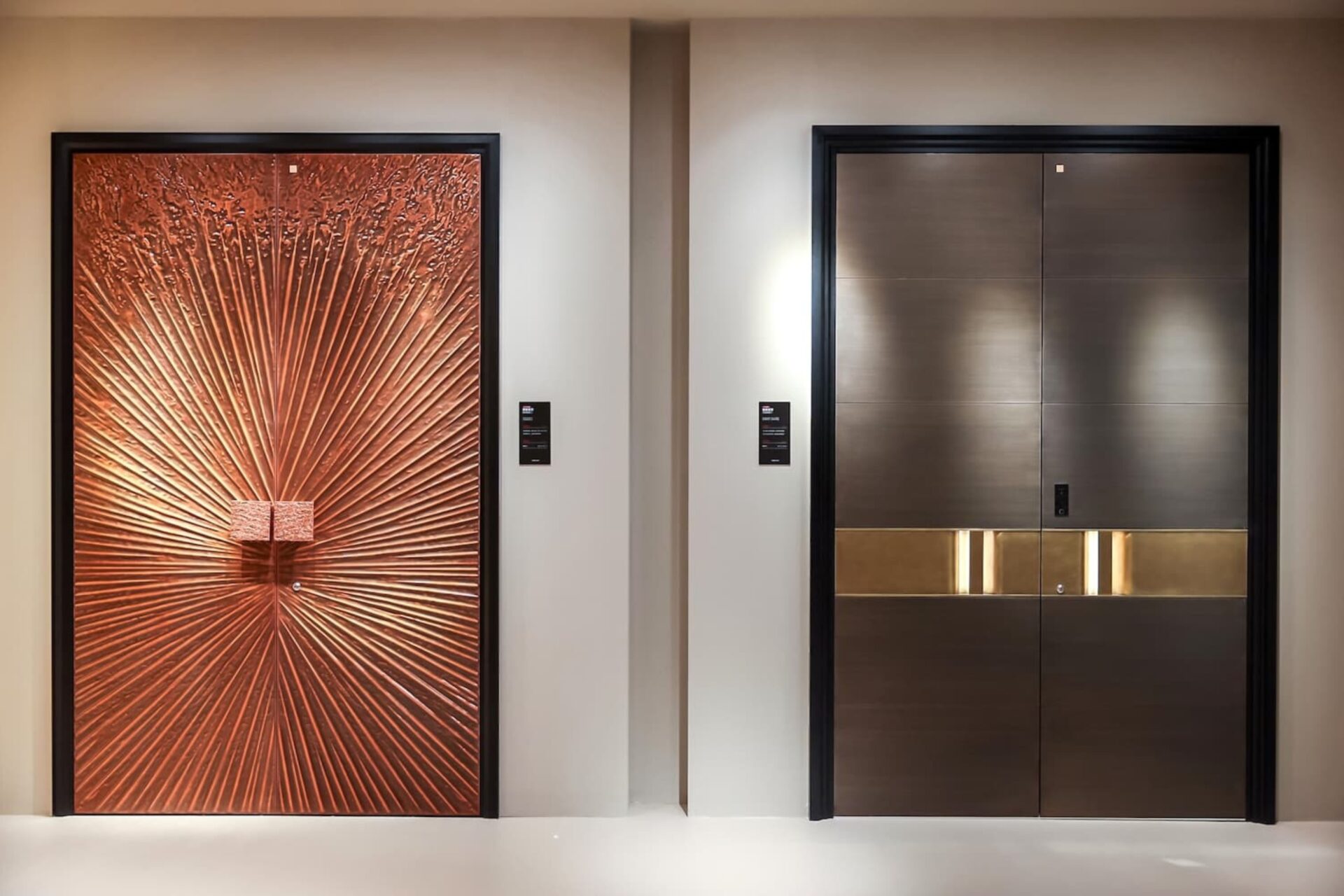
EXTERIOR (Area D) addresses the architectural envelope — doors, windows, façade systems, sunshading, aluminium solutions, and outdoor applications. It is a sector that has moved significantly in recent years, as the boundary between interior and exterior becomes increasingly fluid in contemporary architecture, and as energy efficiency requirements reshape what a façade is expected to do. What CBD Guangzhou offers here is not trend forecasting but sourcing reality: the manufacturers and systems that are actually building the next generation of buildings, at scale.
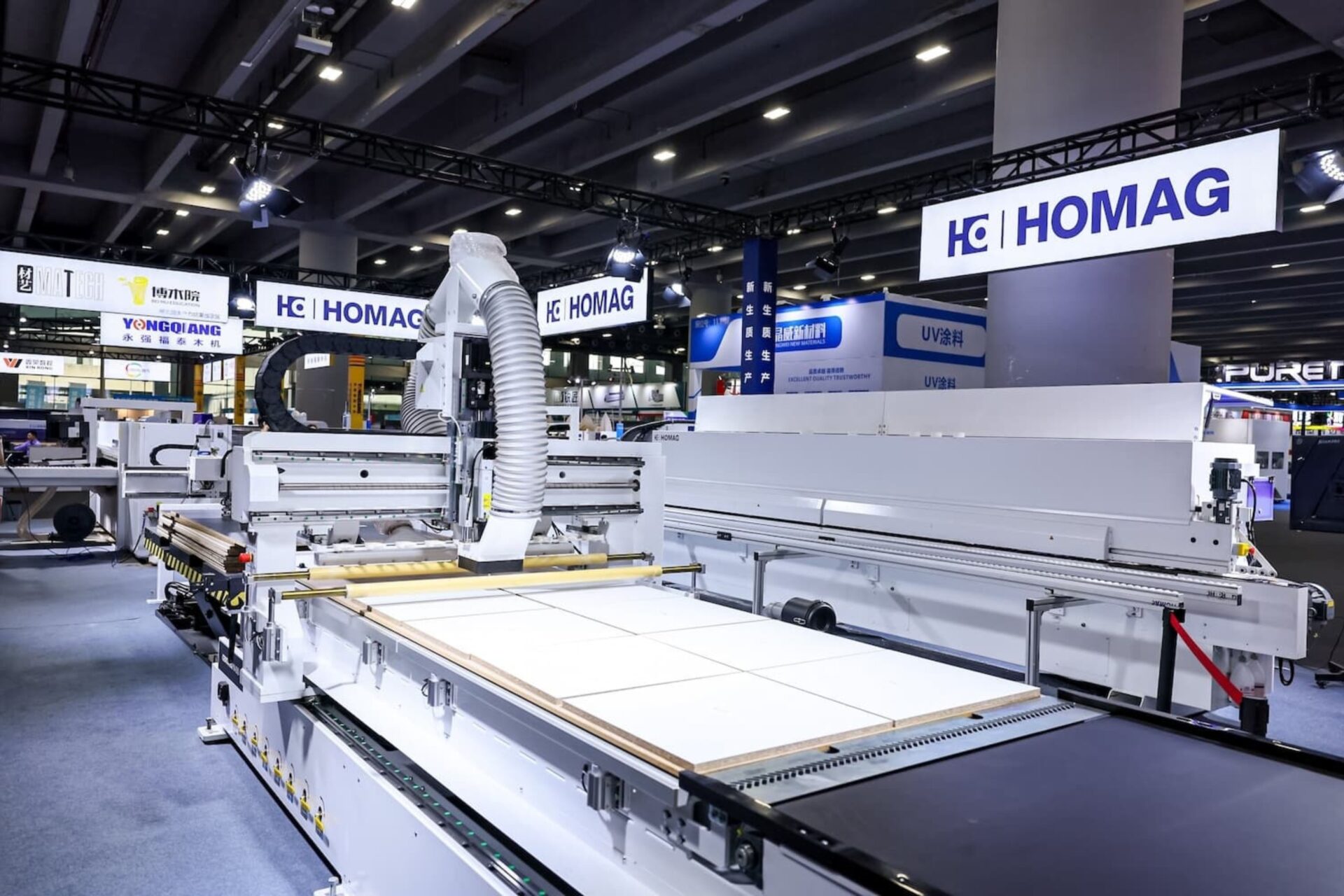
MATECH (Area B) is arguably the most under-discussed part of the fair from a design perspective, and the most instructive. Dedicated to the supply chain behind whole-home furnishing and building decoration — advanced materials, engineering hardware, automation systems, intelligent manufacturing, next-generation machinery — it maps the industrial transformation that makes everything else possible. Digitalization and smart production systems are reshaping how objects are made, at what cost, and with what environmental footprint. MATECH puts that transformation on the floor.
A platform built for global business
What gives CBD Guangzhou particular relevance for an international design and architecture community is the deliberate structure it has built around cross-border professional exchange. The 2026 edition will host buyer delegations from more than 30 countries and regions, alongside procurement matchmaking sessions, international media tours, global industry forums, and the CBD World-Connect International Night networking event. Architects, designers, contractors, developers, distributors, and buyers from Europe, the Middle East, Southeast Asia, and the Americas are all expected to attend.
Six professional channels — Dealers, Designers, Decorators, Foreign Traders, Public Architectural Institutions, and New Media — structure how the fair connects its exhibitors with their most relevant audiences. For a designer or architect looking to source materials, understand manufacturing capabilities, or identify partners in the Chinese market, this level of structural organisation is what separates a productive visit from an overwhelming one.
Why it matters for our community
The conversation around smart living, sustainable materials, and the future of the built environment tends to happen, in our world, at the level of concepts and case studies. CBD Guangzhou happens at the level of production — of the companies, materials, and technologies that will actually deliver the next decade of interiors and architecture at global scale.
For anyone whose practice intersects with sourcing, specification, or the broader question of where design and manufacturing meet, it is a rare opportunity to see that ecosystem in full, and to engage with it directly. The 28th edition, with its expanded international programming and three-ecosystem structure, makes that opportunity more accessible than ever.