

Effective contamination investigations are rarely defined by a single action or tool. Instead, they depend on how well multiple interrelated aspects are considered and integrated under pressure.
When investigations fail, it is often because one or more of these elements is overlooked or oversimplified.
To read part I of this article, where the term “crisis” is discussed and the growing emphasis on recovery readiness is explored, please click here.
Anchoring the investigation in strategy
One of the clearest indicators of a superficial investigation is a rapid increase in sporicidal disinfection frequency without a clear rationale for the change.
Although such actions can create the appearance of control, they often address symptoms rather than underlying causes and may introduce secondary risks, including chemical residues and operator fatigue.
Effective investigations are anchored in what the organisation already knows about its risks. They
- start from an established contamination control strategy
- revisit existing risk assessments rather than discarding them
- focus on identifying what has changed procedurally, operationally or behaviourally.
This approach provides context and prevents investigations from becoming unfocused exercises in damage control.
It also allows teams to distinguish between genuine loss of control and deviations that reflect gaps in execution rather than system failure.
Verifying reality through direct observation
No investigation is complete without validating how work is done. Desk-based reviews alone rarely uncover the true contributors to contamination events.
Direct observation, often derived from Gemba walks, consistently reveals discrepancies between written procedures and real-world execution.
Standard operating procedures (SOPs) may describe workflows that are impractical given available tools, as well as space and time pressures.
Operators, left to reconcile these gaps, often develop informal workarounds that introduce unintended risk.
These findings can be uncomfortable, particularly when they challenge long-held assumptions. However, they are frequently the turning point in an investigation.
They shift the focus from procedural compliance to operational feasibility and enable corrective actions that address true root causes rather than enforce impractical controls.
Applying risk management when time is limited

Investigations rarely occur under ideal conditions. Patient needs and tight production schedules compress timelines, often leaving quality and microbiology teams with the least flexibility to act.
In this environment, structured risk management is essential. Tools such as failure modes and effects analysis (FMEA) or hazard analysis help teams to
- prioritise corrective actions based on potential impact
- focus resources on high-risk failure points
- avoid dispersing effort across low-value activities.
Without this discipline, organisations face an untenable choice between prolonged downtime and unquantified risk.
Investigations that incorporate risk-based prioritisation are better positioned to support recovery strategies that deliver validated, repeatable outcomes within defined timeframes, allowing decisions to be made with confidence rather than urgency alone.
Using data and digital tools to sharpen insight
The effectiveness of an investigation is also shaped by how quickly and clearly data can be interpreted.
Although adoption remains uneven across the industry, digital tools are increasingly influencing the quality and speed of investigations. When implemented effectively, digital systems
- make trends visible earlier
- reduce time spent reconstructing events
- flag deviations before they escalate into non-conformances.
Electronic logbooks, for example, can identify missed disinfectant rotations or procedural lapses in near real-time.
Centralised digital records enable investigators to identify patterns that would be nearly impossible to discern in paper-based systems.
Digitisation does not eliminate the need for expert judgment, but it significantly enhances an organisation’s ability to move from data collection to actionable insight during an investigation.
Integrating sustainability into investigative decisions
Sustainability considerations are increasingly inseparable from investigation and recovery planning.
Traditional remediation approaches, particularly those involving repeated manual cleaning cycles, can drive substantial chemical use, water consumption and waste generation.
Effective investigations take a broader view, considering whether corrective actions restore control and, if so, how.
Strategies that minimise residues and limit resource intensity support both operational efficiency and corporate sustainability goals.
In some regions, local infrastructure constraints, such as municipal wastewater treatment capacity, further influence which remediation options are viable.
Sustainable recovery is a defining element of responsible and forward-looking investigation outcomes.
Accounting for complexity in multiproduct environments
Finally, the structural complexity of modern facilities must be explicitly considered during investigations.
Multiproduct and flexible manufacturing environments introduce additional contamination pathways as a result of frequent changeovers and personnel movement across areas.
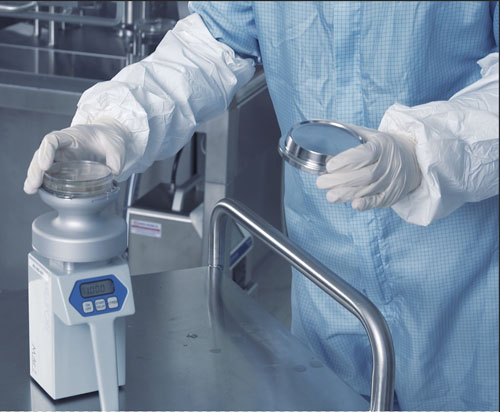
In these settings, investigations cannot focus on a single product or process in isolation. Even minor breakdowns, such as shared cleaning tools or ambiguous line-clearance practices, can propagate rapidly across operations.
Effective investigations assess interconnected risks across products, processes and people, ensuring that corrective actions restore control holistically rather than temporarily or locally.
Together, these aspects define whether an investigation leads to durable improvement or merely documents a deviation.
When addressed collectively, they transform investigations from reactive exercises into powerful tools to strengthen contamination control and operational resilience.
Advice for building resilience
Organisations that consistently recover well share common traits: a strong quality culture, a well-defined contamination control strategy and leadership engagement across functions.
They invest in training and seek input from those closest to the work. Perhaps most importantly, they acknowledge reality.
Leaders who actively solicit feedback from operators and quality professionals gain a more accurate picture of how processes function in practice.
This alignment between intent and execution is a powerful driver of resilience.
If there is one lesson that emerges repeatedly, it is this: resilience is not built in a vacuum. Pharmaceutical leaders must bridge the gap between those who design processes and those who execute them.
Contamination control strategies and SOPs must reflect real-world conditions.
By bringing diverse perspectives together and grounding decisions in actual practice, organisations can move beyond crisis response toward true operational resilience … wherein recovery is a capability by design.

- Companies:
- Ecolab Life Sciences