
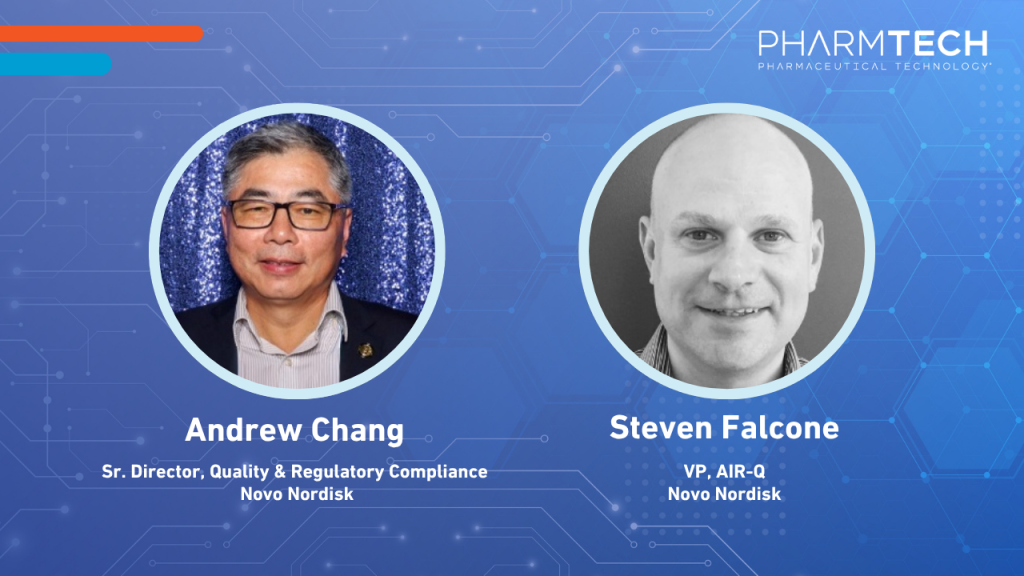
Andrew Chang, senior director for Quality and Regulatory Affairs in Science, Policy, and Intelligence under Global Regulatory Affairs, Novo Nordisk, and Steven Falcone, head of AIR-Q, Novo Nordisk, sat down with PharmTech to discuss how the company is navigating GMP mutual recognition, real-time digital monitoring, and the future of pharmaceutical quality management systems.
PharmTech: What Does the FDA-EU GMP Mutual Recognition Framework Mean for Novo?
Chang: A few years back, the FDA worked with the EU to establish GMP mutual recognition. This framework covers GMP inspections and is largely used for surveillance inspections, though it’s occasionally applied to pre-license and pre-approval inspections as well.
Falcone: Because Novo Nordisk has a large global footprint, especially significant manufacturing operations in Denmark, there are quite a few European inspections that take place there that the FDA then leverages under mutual recognition conditions. It’s a very practical arrangement given the scale of our operations.
How Do You Stay Ahead of Regulatory Signals Across a Global Network?
Falcone: We have a very robust signal process. That process tracks changes in regulation, changes across the industry, guidance documents, FDA 483 observations, and any other findings that occur within our own network. From there, we conduct gap assessments in collaboration with our process owners, and we also convene focus groups to evaluate whether a regulatory finding at one site might point to gaps at other sites across the network. Actions are then taken where appropriate. It’s a comprehensive, proactive approach.
How Is Your Quality Management System Structured?
Chang: One of the key cornerstones of our QMS is the concept of process owners. These are individuals and teams who take ownership of specific areas, drug product sterility, for example, and work with cross-functional groups to ensure a consistent approach across our entire manufacturing network. They’re responsible for how things operate today and for setting the ambition for where we’re going.
What Does Real-Time Monitoring Look Like on the Manufacturing Floor?
Falcone: Many of our drug product fill-finish sites already have automated visual inspection systems that examine every unit coming off the line. Beyond that, there’s an incredible amount of sensor technology monitoring the filling operation in real-time digitally. We also have what the industry would call tag rooms — spaces with highly visible HMI screens that give teams in different locations a live view of how the process is performing. And we use closed-circuit TV as well, because with so many moving parts, that visibility is essential to our overall monitoring.
Where Is Novo Headed with Digital Manufacturing and Quality Systems?
Chang: We have big ambitions to establish a globally interconnected digital network to support our manufacturing. We believe that is the future, digital monitoring across the many functions that fall under the pharmaceutical quality system, all happening in real-time. We’re actively moving in that direction.
How Are You Staying on the Cutting Edge of Software Validation and AI in Manufacturing?
Chang: This is a fast-evolving field. There is draft guidance from both the FDA and the EMA that we can reference regarding software validation, but those documents are still in draft form. That’s why PDA is taking a leadership role in building a dialogue with regulatory agencies, to work through what the requirements should be for software used in manufacturing processes and quality management, and to bring some critical thinking to those questions. It’s truly an industry-wide effort, and one that Novo Nordisk is actively engaged in.