
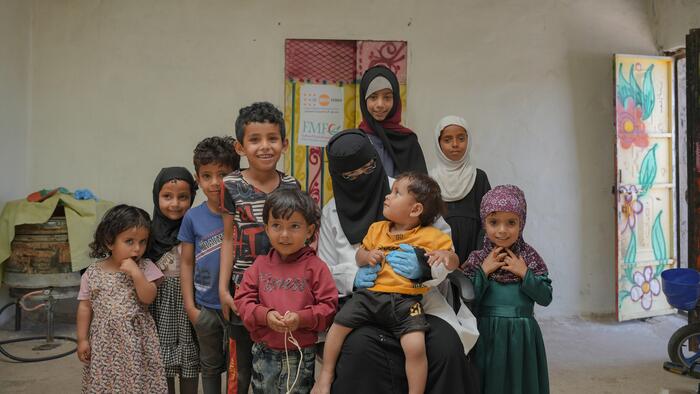
Al Dhale’e – In Al Sha’ab village in Al Dhale’e Governorate, community midwife, Saba Saleh, serves as the only trained healthcare provider in her village.
Saba’s journey began with a dream of becoming a doctor. When that dream proved out of reach, she found another way to serve. Recognizing the urgent need for maternal and newborn care in her community, she transformed part of her home into a small clinic with the support of UNFPA, the United Nations Population Fund and local partner Field Medication Foundation.
With hospitals far away and transportation limited, her decision filled a critical gap. Today, her home-based clinic provides essential maternal and child health services — from antenatal checkups and safe deliveries to postnatal care and health education.
“Women here used to give birth at home without skilled care,” Saba explains. “Now, they come to me. They trust that they will be safe.”
Balancing Family and Service
Saba’s clinic is also a reflection of her own reality as a mother of two children. With her husband often away for work, she built a model that allows her to care for her children while serving her community.
Her work has no fixed hours. Emergencies can come at any time, and she responds — day or night. When patients travel long distances and cannot return home the same day, Saba welcomes them into her home, offering food, rest, and reassurance.
She recalls a night when a woman in labour collapsed from severe hypoglycemia. Saba acted immediately, providing emergency care and staying with her until she recovered.
In another instance, when a child with cholera needed more care than she could provide, Saba personally accompanied him to a health centre and stayed for three days until he was well.
Bridging the Gaps
In Yemen, reproductive health services remain severely limited, with many women and girls lacking access to maternal care and family planning resources. Only three out of five births take place with a skilled birth attendant, and one in three women do not receive antenatal care from a skilled provider.
Through UNFPA’s support, midwives like Saba are trained, equipped, and supported to establish clinics within their homes, helping to bridge a critical gap in access to maternal health — bringing safety, dignity, and hope to families who might otherwise go without care.
UNFPA currently supports 50 home-based midwifery clinics. In addition, 70 frontline community midwives have been mobilized to underserved and conflict-affected areas with limited access to health services and clinics. UNFPA also supports 100 students enrolled in a three-year midwifery diploma.
Investing in Midwives
In Al Sha’ab village, Saba is more than a midwife — she is a trusted neighbor, a counselor, and a friend. Families call her when fear arrives before help does. The children she once delivered now return to her with their own pregnancies, continuing a cycle of trust and care.
As the world marks the International Day of the Midwife on 5 May, Saba’s story shines a light on the vital role midwives play in saving lives and strengthening communities.
More financial support would allow UNFPA to invest in midwifes and scale up home-based clinics in Yemen. Investing in midwives offers the single most effective way to save the lives of mothers and their newborns by extending access to antenatal care, safe childbirth and postnatal support and thereby help transform healthcare – and survival – for women and babies.