
Close Menu
Simply Invest Asia
  • Home
  • About us
  • Explore industries/sectors
    • Automobile
    • Aviation
    • Banking
    • Biotechnology
    • Chemical & Fertilizer
    • Entertainment and Media
    • Food Processing
    • Healthcare
    • Iron and Steel
    • Leather
    • Mining
    • Oil and Gas
    • Pharmaceutical
  • Explore by countries
    • China
    • Dubai / UAE
    • Hong Kong
    • India
    • Indonesia
    • Japan
    • Malaysia
  • Explore cities
    • Bangkok
    • Beijing
    • Chongqing
    • Delhi
    • Dubai
    • Guangzhou
    • Jakarta
    • Kuala Lumpur
  • Why Asia
Facebook X (Twitter) Instagram Threads
Trending:
  • Jakarta Allocates Rp100bn for LPDP Scholarships
  • AIIB plans Jakarta branch after committing US$17 billion for Indonesia projects
  • Mirae Asset Securities opens global investment platform MAPS in Hong Kong
  • China’s iron and steel sector records a %37.4 decrease in profit in january–may period
  • “Race to Dubai” Golf.. Spaniard Chakara advances to third place
  • Yash Raj Films Backs Rusk Media To Expand Into Vertical Entertainment
  • 10 Best Italian Leather Flats at Quince
  • China commits additional 100m yuan in emergency aid to Venezuela
  • Tata Motors-Iveco deal to create 600,000-vehicle business with million-plus ambition, says Chandrasekaran – Moneycontrol.com
  • Head coach Malan leaves Ireland after India win
  • Tourism Markets Surge as Bangkok Airways Injects Massive Capital into U-Tapao Airport City Driving Thailand’s Eastern Economic Corridor Aviation Expansion, Infrastructure Growth, and Long-Term Regional Connectivity Strategy
  • The Nose Knows: Electric Schnoz Can Smell When Your Food’s Gone Bad
  • China grounds light aircraft after Beijing tower crash – Financial Times
  • European Investment Bank Commits €3 Billion to Airbus for Innovation
  • China ‘emerging a global leader’ in biotech business
  • Electric Metals USA Targets Chinese Manganese Dominance With Vertically Integrated Mine-to-Chemical Strategy – Article
  • Hong Kong physiotherapist loses HK$5m in scam involving ‘beautiful assistant’
  • Tadej Pogačar Headlines a Scary Strong Tour de France Team
Monday, June 29
Facebook X (Twitter) Instagram
Simply Invest Asia
  • Home
  • About us
  • Explore industries/sectors
    • Automobile
    • Aviation
    • Banking
    • Biotechnology
    • Chemical & Fertilizer
    • Entertainment and Media
    • Food Processing
    • Healthcare
    • Iron and Steel
    • Leather
    • Mining
    • Oil and Gas
    • Pharmaceutical
  • Explore by countries
    • China
    • Dubai / UAE
    • Hong Kong
    • India
    • Indonesia
    • Japan
    • Malaysia
  • Explore cities
    • Bangkok
    • Beijing
    • Chongqing
    • Delhi
    • Dubai
    • Guangzhou
    • Jakarta
    • Kuala Lumpur
  • Why Asia
Simply Invest Asia
Home»Explore industries/sectors»Food Processing»The Nose Knows: Electric Schnoz Can Smell When Your Food’s Gone Bad
Food Processing

The Nose Knows: Electric Schnoz Can Smell When Your Food’s Gone Bad

By IslaJune 29, 20264 Mins Read
Share
Facebook Twitter Pinterest Threads Bluesky Copy Link


BERKELEY, Calif. — Most of us have used the sniff test to decide whether a slightly expired bottle of milk or a week-old box of takeout is still good to eat. But while the human nose can be quite astute, it doesn’t always catch everything. Each year, millions of people in the U.S. are sickened by food-borne pathogens that thrive in undercooked or spoiled food.

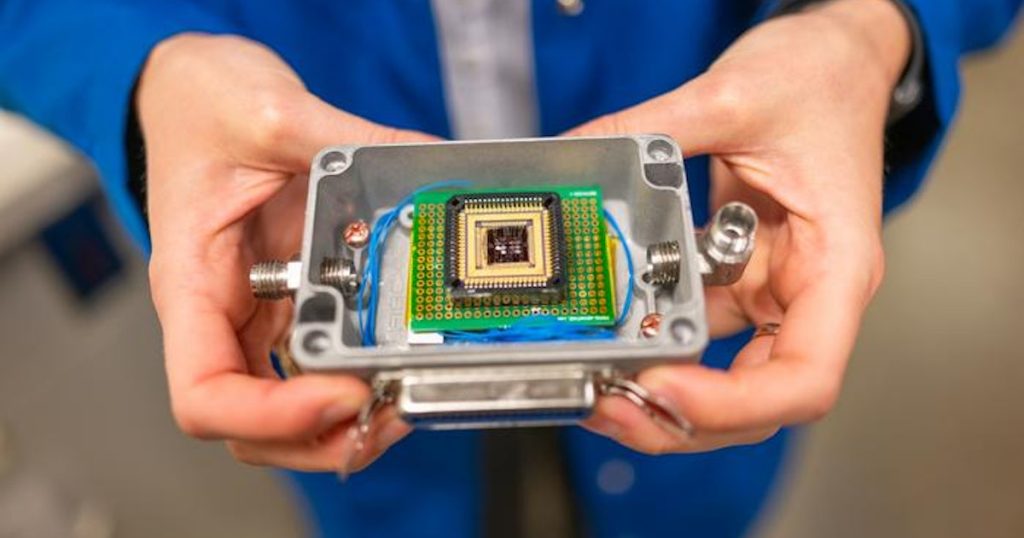
Luckily for our collective stomachs, a new “electronic nose” developed at UC Berkeley can detect the scents associated with spoiled food much more accurately than the human nose. It can also sniff out the presence of common food allergens, like walnuts and peanuts, which can be deadly for those with sensitivities. The nose is described in a new study published today (June 17) in the journal Science Advances. 

“I think ‘smart’ fridges — which come with sensors that you can control on your phone — would be a great application for this kind of technology,” said study lead author Carla Bassil, a Ph.D. student in electrical engineering and computer sciences at Berkeley. “How great would it be if your fridge could tell you, ‘Hey, your broccoli’s going to go bad soon, so you should probably eat that’? Or, ‘Your chicken is on its last day’?”

The new artificial schnoz nose is made up of an array of 16 tiny gas sensors, each of which is sensitive to a slightly different combination of gaseous compounds. 

“You can think of it like a set of digital taste buds, where each sensor on this chip responds uniquely to the various gas molecules presented to it,” Bassil said in a UC Grad Slam talk about her research. “Each of these 16 sensors has a different sensing film on it, and it works by converting chemical reactions between the sensor surface and the gas molecule into electrical signals.”

Using machine learning, Bassil trained a model to recognize the sensor response profiles associated with seven different foods: strawberry, blueberry, banana, walnut, hazelnut, cashew and peanut. She also trained it to recognize the scent of raw chicken, milk and eggs when they were fresh and when they had been left out at room temperature for 24 hours and 48 hours. 

Bassil found that the nose was sensitive enough to smell 0.05 grams of isolated walnut, which is about one hundredth of an average shelled walnut. However, she has yet to test the sensitivity of the device in environments where other gases are present, such as when walnuts are in a salad or a cake, or when spoiled food is in a refrigerator with other foods. 

“The idea is that we can use the relative selectivity of the gas sensors, paired with the pattern recognition abilities of machine learning, to sort out which gas fingerprint is associated with each food,” Bassil said. “The result is a sensor chip that is far more sensitive and far more objective than any human nose can be.”

While the concept of the electronic nose has been around since the 1980s, bringing the technology to life has been tricky. Single gas sensors, like those found in the carbon monoxide detectors in your home, are relatively straightforward to manufacture. But integrating an array of different sensing films onto a single chip is a lot more difficult. 

Bassil overcame many of these challenges by using carbon nanotubes as the conducting material, rather than metal oxides. Carbon nanotubes can form layers that are only around a few nanometers thick, which is the same as just a few atoms, or one one hundredth of a human hair. Their large surface area gives them many special qualities, including being highly sensitive at room temperature. 

Using a device structure that works at room temperature — rather than needing to be hot — gave Bassil the ability to choose a wider variety of different gas-sensitive materials, including those that might degrade at high temperatures such as polymers. It also allowed her to fabricate the sensing chip using a simple process called drop casting, rather than requiring more complicated technique.

“The truly scalable aspect of my electronic nose is that we can use all these different types of sensing materials while depositing them all in a single step,” Bassil said. 

Though not included in the new study, Bassil has now created a portable version of the e-nose that can be operated with an iPhone app. She plans to test the next generation of the device in a wider variety of environments while continuing to improve its sensitivity and reliability. 

Ali Javey, the Lam Research Distinguished Chair in Semiconductor Processing at Berkeley, is the senior author of the study. Additional authors include Kichul Lee, Xun Liao, Divya Krishnan, Yifei Zhan, Theodorus Jonathan Wijaya and Edward Hester of Berkeley; and Minhyun Kim, Il-Doo Kim and Inkyu Park of KAIST. 


Source link

Related Posts

Oil-Resistant Conveyor Rubber Belts Market Demand to Accelerate by 2035 Amid Semiconductor and Automation Expansion – News and Statistics

June 29, 2026

Jiexun’s AI food sorter draws crowds at China Intl Supply Chain Expo

June 28, 2026

Why Smoked Fish Is Like Printing Money For Investors

June 28, 2026
Add A Comment
Leave A Reply Cancel Reply

Top Posts

China Scraps 12,000 Degrees in Biggest Academic Overhaul in Years

June 14, 2026

Chinese Wall may stem India tech flows for electronics and automobile

June 1, 2026

Abandoned malls, whispers of nuclear war and young foreigners detained. This is what’s REALLY going on in Dubai… and the chilling warning one taxi driver gave to the Mail’s IAN BIRRELL

April 11, 2026
Don't Miss

Jakarta Allocates Rp100bn for LPDP Scholarships

By IslaJune 29, 2026

TEMPO.CO, Jakarta – The Jakarta Provincial Government has allocated a budget of approximately Rp100 billion…

AIIB plans Jakarta branch after committing US$17 billion for Indonesia projects

June 29, 2026

Mirae Asset Securities opens global investment platform MAPS in Hong Kong

June 29, 2026

China’s iron and steel sector records a %37.4 decrease in profit in january–may period

June 29, 2026
SUBSCRIBE TO OUR NEWSLETTER

Get our latest downloads and information first. Complete the form below to subscribe to our weekly newsletter.


I consent to being contacted via telephone and/or email and I consent to my data being stored in accordance with European GDPR regulations and agree to the terms of use and privacy policy.

Stay In Touch
  • Facebook
  • YouTube
  • TikTok
  • WhatsApp
  • Twitter
  • Instagram
Top Trending

China grounds light aircraft after Beijing tower crash – Financial Times

By IslaJune 29, 2026

European Investment Bank Commits €3 Billion to Airbus for Innovation

By IslaJune 29, 2026

China ‘emerging a global leader’ in biotech business

By IslaJune 29, 2026
Most Popular

Japan-Indonesia Relations: Analyst: Japan seeks to adjust regional security strategy – news.cgtn.com

May 6, 2026

Your browser is not supported

April 26, 2026

SEC Form DEFA14A filed by PDS Biotechnology Corporation

June 27, 2026
Our Picks

Hong Kong CE John Lee wraps up successful five-day Central Asia mission

June 8, 2026

Editorial | Hong Kong and Shanghai extend the yuan’s international reach

June 21, 2026

Indonesia eyes e-commerce ban for under-16s: minister to AFP

May 6, 2026
SUBSCRIBE TO OUR NEWSLETTER

Get our latest downloads and information first. Complete the form below to subscribe to our weekly newsletter.


I consent to being contacted via telephone and/or email and I consent to my data being stored in accordance with European GDPR regulations and agree to the terms of use and privacy policy.

© 2026 Simply Invest Asia.
  • Get In Touch
  • Cookie Policy
  • Privacy policy
  • Terms & Conditions

Type above and press Enter to search. Press Esc to cancel.

SUBSCRIBE TO OUR NEWSLETTER

Get our latest downloads and information first.

Complete the form below to subscribe to our weekly newsletter.


I consent to being contacted via telephone and/or email and I consent to my data being stored in accordance with European GDPR regulations and agree to the terms of use and privacy policy.