
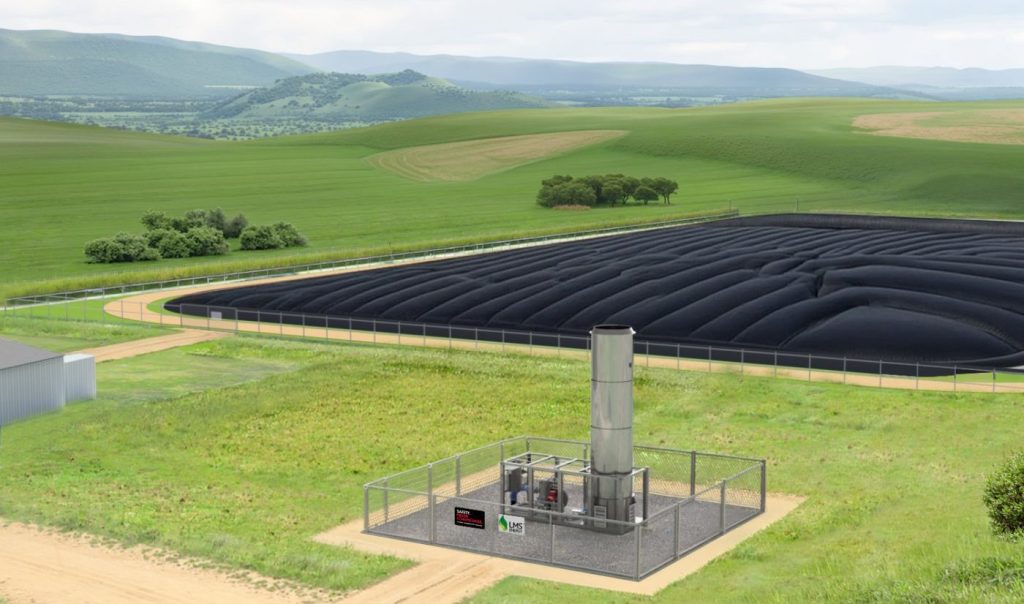
Artist’s impression of how the biohub covered anaerobic lagoon on CFC’s San Marla farm will look, reducing emissions by an anticipated 35,000t of carbon equivalent
A NEW environmental infrastructure project in northern New South Wales is set to significantly reduce greenhouse gas emissions from one of the state’s key beef processing facilities, marking a major step forward for sustainable food production.
Casino Food Co, in partnership with LMS Energy, will soon start construction on the Casino Biohub, an advanced wastewater treatment facility at CFC’s livestock processing operations near Casino.
The project will use anaerobic digestion to treat abattoir effluent, capturing methane-rich biogas that would otherwise be released into the atmosphere, and safely destroying it via flaring to reduce emissions.
A second project stage is planned to convert the captured biogas into electricity to power boilers and other on-site infrastructure, further advancing the site’s sustainability outcomes.
The Biohub will be constructed on CFC’s San Marla farm near Casino and will integrate with the facility’s existing wastewater treatment and irrigation systems.
The infrastructure includes a 50 million litre covered anaerobic lagoon and an industry-leading biogas flare, designed to safely destroy captured greenhouse gases while creating a controlled treatment environment.
Construction is due to start this week, with the Biohub expected to be operational by the first quarter of next year.
Casino Food Co chairman Lennard Blok said the Biohub would form a key part of the company’s sustainability strategy.
“This is a significant investment in reducing our environmental footprint and improving how we manage wastewater across our operations,” Mr Blok said.
“The project is expected to deliver a reduction of around 35,000t of carbon equivalent emissions each year, which is the same as removing around 11,200 cars from the road, or planting more than 476,000 trees.”
“By capturing and destroying the biogas, we can avoid more than 98 percent of Scope 1 emissions associated with effluent treatment at the facility.”
Mr Blok said the project reflected CFC’s commitment to sustainable and responsible production.
“As a regional business, we are committed to continuous improvement and ensuring the long-term sustainability of our operations,” he said.
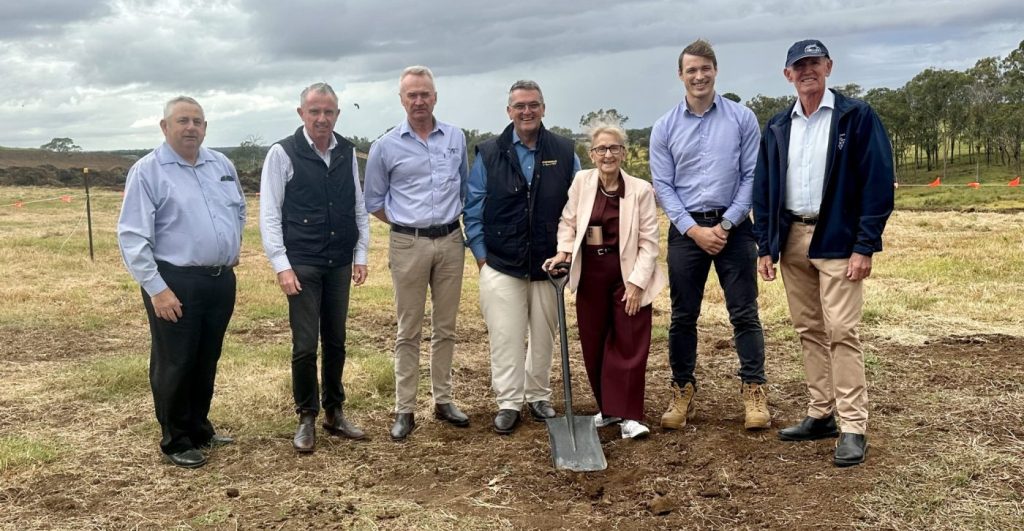
Breaking ground for the new project last week were State Member for Clarence Richie Williamson, State Member for Lismore & Minister for Small Business Janelle Saffin, CFC chair Lennard Blok, Jarrod Irving LMS Energy, RVC Deputy Mayor Steve Morrissey, Federal Member for Page Kevin Hogan and RVC Mayor Robert Mustow
Technology provider LMS Energy’s chief executive, Matthew Falzon, said methane was a highly potent greenhouse gas – up to 86 times more powerful than carbon dioxide over the short term – making its reduction the fastest way to slow global warming.
“Abattoir effluent is a substantial contributor to CFC’s carbon footprint, and this project is expected to reduce emissions by up to 35pc,” Mr Falzon said.
He said the project demonstrated how proven technology can deliver immediate and meaningful emissions reductions for Australian industry.
“This is a practical application of anaerobic digestion that delivers real outcomes – reducing emissions while improving environmental performance on site for CFC,” he said.
“Projects like this show how industry can take practical steps today to support Australia’s transition to a lower emissions future.”