
Mars has always looked like a harsh, lifeless place. Dust storms sweep across it, and radiation hits the surface with little protection.
However, that picture continues to change with each new discovery. NASA scientists announced that Mars Curiosity Rover found seven new organic, carbon-based molecules on Mars.

The discovery adds to a growing collection of evidence that the planet once had the right conditions for life – even though there is still no proof it ever existed.
Mars rock preserves organic clues
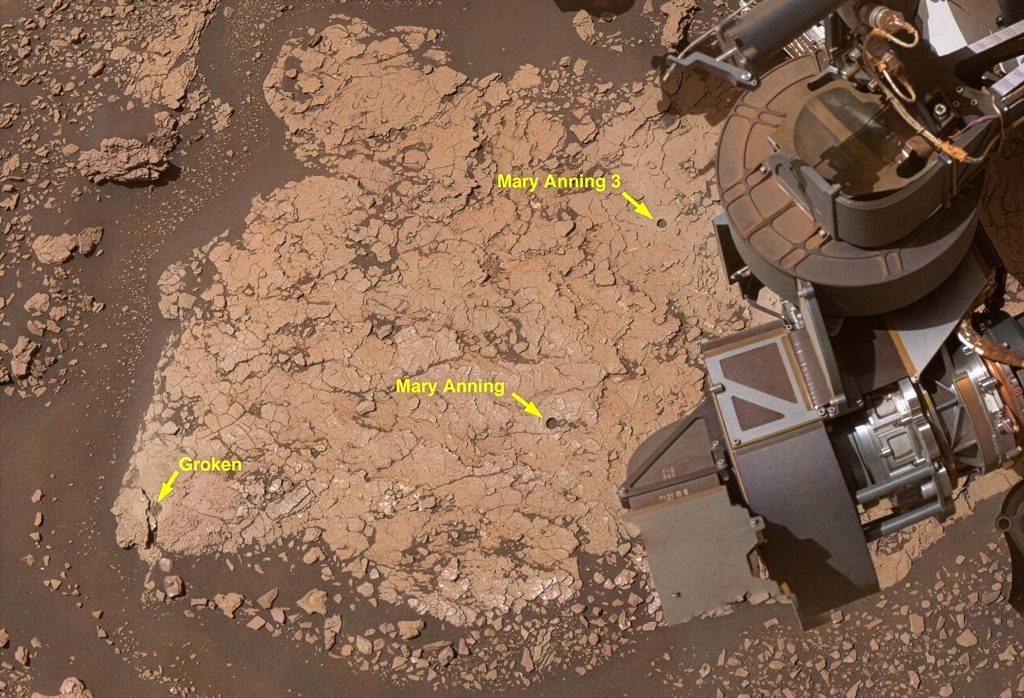
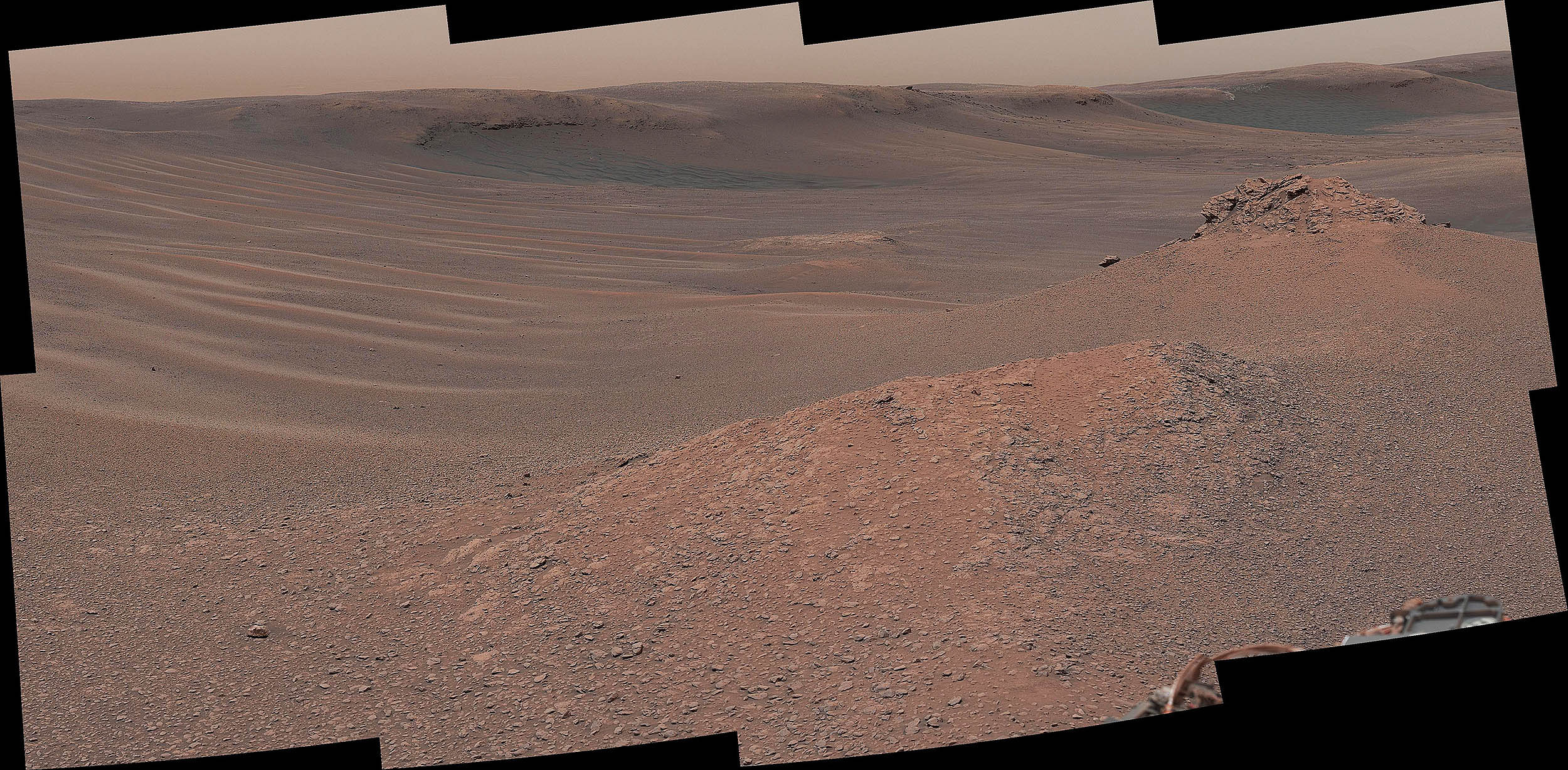
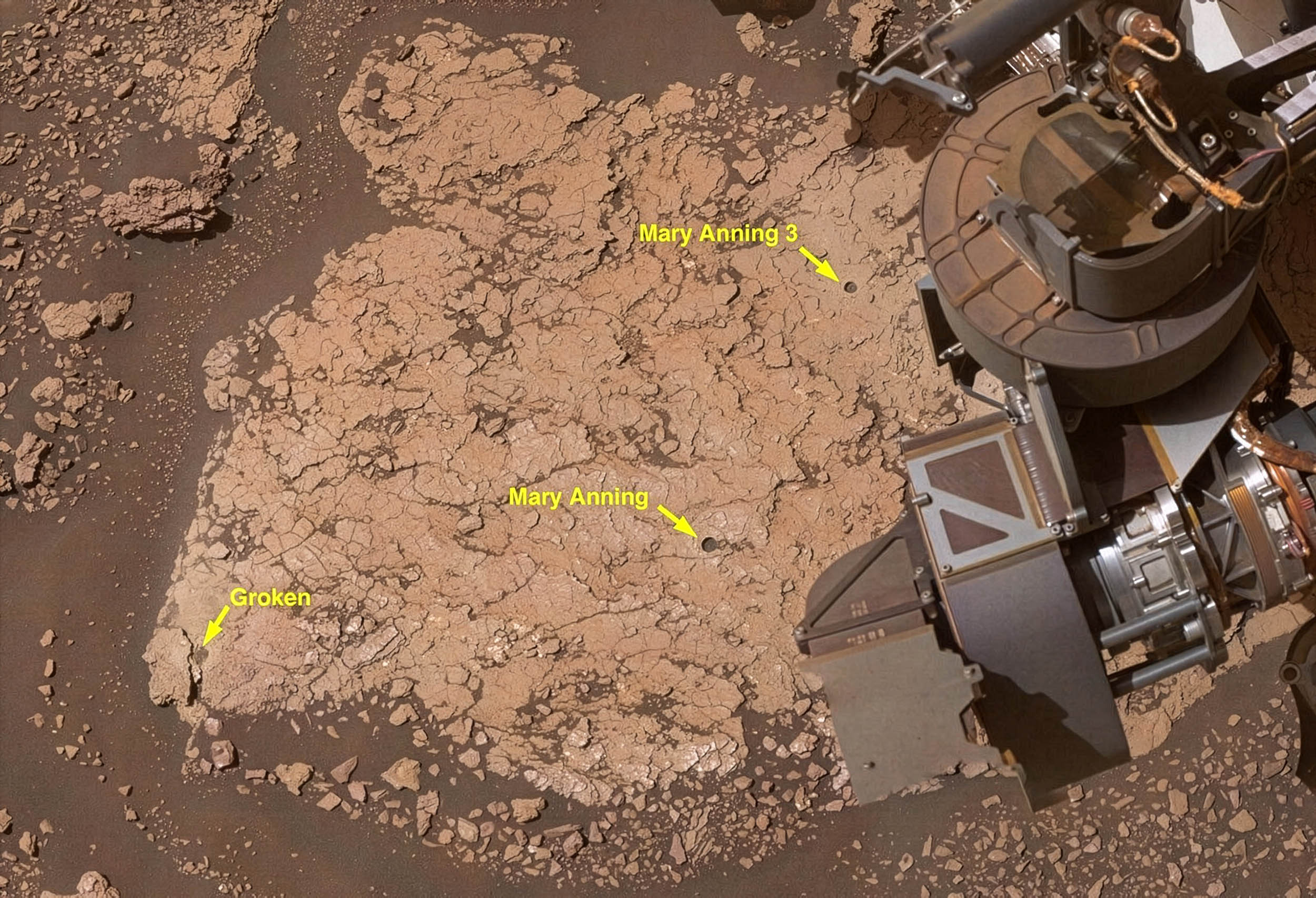
It started with a rock that Curiosity drilled in 2020. The sample, called “Mary Anning 3,” came from the lower slopes of Mount Sharp – a place that once held lakes and streams.
Water came and went over time, leaving its mark on the landscape. That cycle left behind clay-rich layers.
Clay has a special ability. It can trap and protect organic molecules, even under harsh conditions.
On Mars, that matters. The planet’s surface has been exposed to radiation for billions of years, which tends to break down complex molecules.
Despite that, this one rock on Mars held 21 different carbon-containing molecules. Seven of them had never been detected on Mars before.
Rare molecules found on Mars
Among the new molecules, one stood out. It is called a nitrogen heterocycle. This structure includes a ring of carbon atoms with nitrogen mixed in.
On Earth, similar structures play a role in forming RNA and DNA – the molecules that carry genetic information.
“That detection is pretty profound because these structures can be chemical precursors to more complex nitrogen-bearing molecules,” said the study’s lead author, Amy Williams, of the University of Florida.
“Nitrogen heterocycles have never been found before on the Martian surface or confirmed in Martian meteorites.”
Another molecule, benzothiophene, also caught attention. It contains both carbon and sulfur and has been found in meteorites.
Some scientists think meteorites like these may have helped spread the ingredients for early chemistry across the solar system.
Curiosity carries its own lab
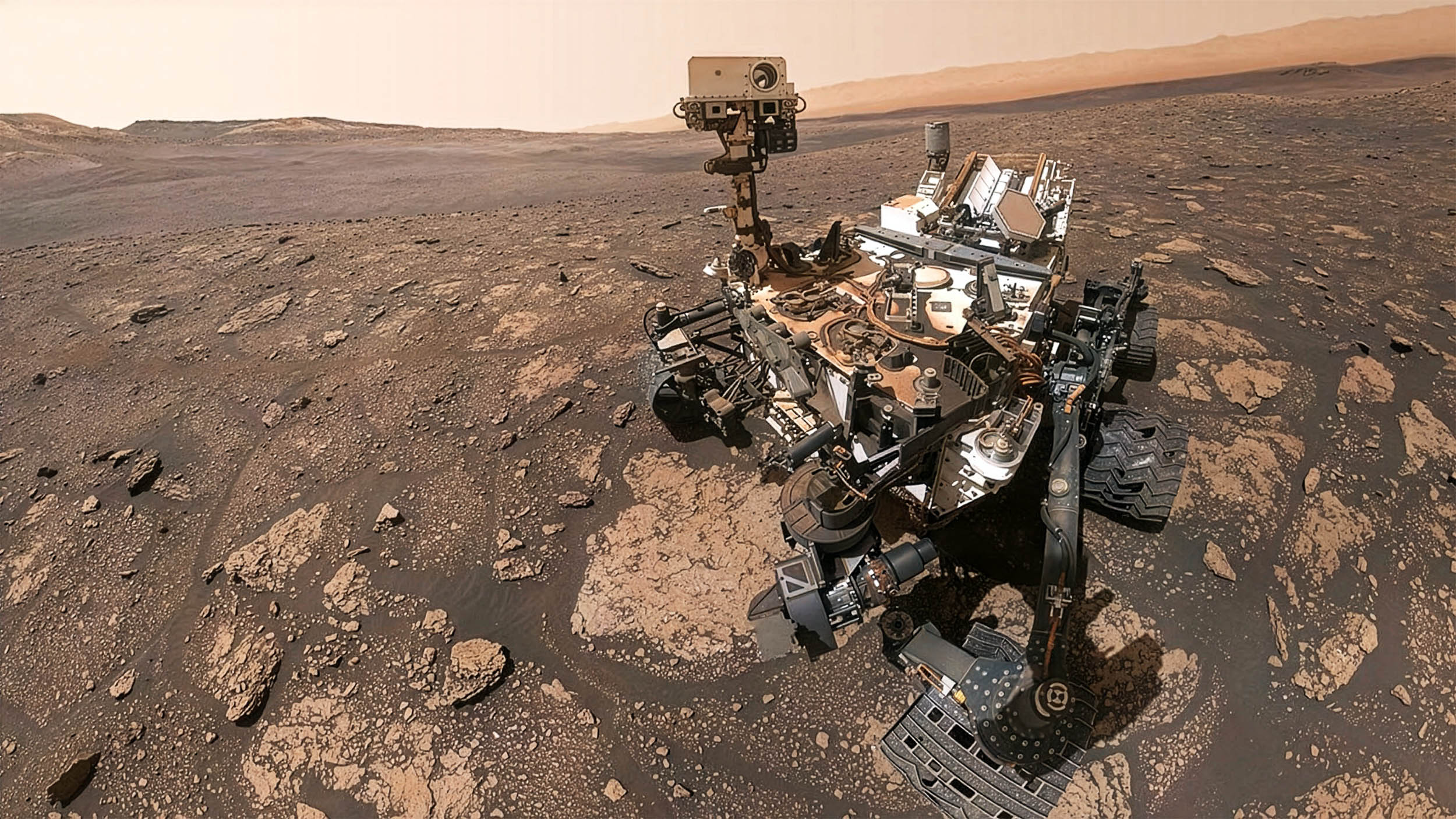
Curiosity isn’t just a rover. It carries a compact laboratory inside it, known as Sample Analysis at Mars, or SAM. This system can heat rock samples and study the gases they release.
The rover drills into a rock, turns it into powder, and feeds it into SAM. Inside, an oven heats the material.
As the sample warms up, it releases gases. Instruments then analyze those gases to figure out what molecules were present.
SAM can also run a more complex test called wet chemistry. In this case, the sample is mixed with a liquid solution.
For this study, scientists used a powerful chemical called tetramethylammonium hydroxide (TMAH).
It helps break apart larger molecules into smaller, easier-to-detect pieces. The Mary Anning 3 sample was the first on Mars to be tested this way.
Deeper chemical layers may be uncovered
To make sure the results made sense, researchers ran the same process on a well-known meteorite found on Earth.
This meteorite, called Murchison, is over 4 billion years old and packed with organic compounds.
When treated with TMAH, the meteorite released molecules similar to those seen in the Martian sample, including benzothiophene.
That result suggests something important. The molecules detected on Mars may have come from the breakdown of even larger, more complex compounds.
In other words, Mars might hold deeper chemical layers that scientists have not yet fully uncovered.
Potential for life in Mars’ ancient past
The discovery does not prove that life existed on Mars. Scientists are clear about that. These molecules can form through both biological and non-biological processes.
Still, the findings strengthen the case that ancient Mars had the right chemistry. Water was present. Organic molecules existed. Some of them survived for billions of years despite radiation exposure.
“This is Curiosity and our team at their best. It took dozens of scientists and engineers to locate this site, drill the sample, and make these discoveries with our awesome robot,” said Ashwin Vasavada of NASA’s Jet Propulsion Laboratory.
“This collection of organic molecules once again increases the prospect that Mars offered a home for life in the ancient past.”
Preparing for the next Mars tests
Getting this kind of data from Mars is not easy. Engineers had to shrink full lab systems into something small enough to fit inside a rover.
They also had to design it to run on limited power while handling complex chemistry.
“It was a feat just figuring out how to conduct this kind of chemistry for the first time on Mars,” said Charles Malespin of NASA’s Goddard Space Flight Center.
“But now that we’ve had some practice, we’re prepared to run similar experiments on future missions.”
That step is already underway. A next-generation version of SAM will fly on the European Space Agency’s Rosalind Franklin rover.
Another similar instrument will head to Saturn’s moon Titan aboard NASA’s Dragonfly mission.
Image Credit: NASA, ESA, and Z. Levay (STScI)
—–
Like what you read? Subscribe to our newsletter for engaging articles, exclusive content, and the latest updates.
Check us out on EarthSnap, a free app brought to you by Eric Ralls and Earth.com.
—–