
The oil price shock triggered by the 2026 US–Israeli war on Iran is hitting the Indonesian economy hard. The US dollar’s rebound is prompting Indonesia’s central bank to spend reserves and use unduly tight financial conditions to support the rupiah, while the Strait of Hormuz’s closure is reverberating through Indonesia’s budget, inflation and external accounts. And Jakarta has limited policy space to respond, making a significant slowdown likely.
Even before this shock, ratings agencies Moody’s and Fitch had assigned Indonesia’s sovereign rating a negative outlook. Public dissatisfaction with economic conditions was already high, which was encouraging disruptive political manoeuvring. Following the Iran crisis, policymakers are treading water by holding back on hiking fuel prices, perhaps hoping that the episode will pass. But with budget and monetary pressures mounting, politically painful policies cannot be deferred for long.
The Middle East conflict affects Indonesia through multiple channels.
The budget impact is significant. Jakarta uses energy subsidies to cushion households and industry from price pressures, with around 0.8 per cent of GDP allocated to these subsidies in 2026. The true cost is higher once compensation to state energy companies is included.
The 2026 budget’s projected deficit of 2.7 per cent of GDP assumes oil prices of US$70 per barrel and an exchange rate of Rp 16,500 per US dollar — assumptions that now appear unrealistic. If oil prices at US$100 per barrel persist, the deficit could increase by about 0.8 percentage points of GDP on a full year basis, pushing it well beyond the 3 per cent of GDP legal ceiling.
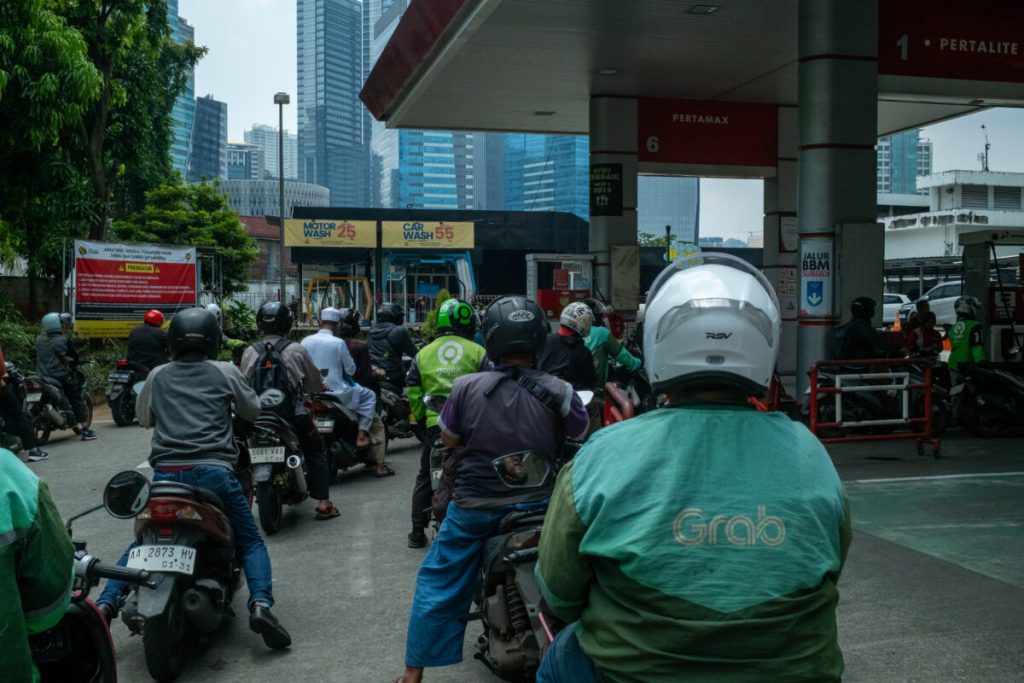
Despite this, the government is holding steady on all retail fuel prices — both those with budgeted subsidies and others. Indonesia’s national oil company Pertamina is absorbing the resulting unanticipated fuel subsidies, but the cost will ultimately hit the government purse.
The crisis in the Middle East also threatens food security as higher energy prices widen the gap between domestic and international prices for key inputs like fertiliser. And while the global price of liquefied petroleum gas — the main household cooking fuel — has risen sharply, the retail price in Indonesia remains unchanged.
Indonesia’s energy system adds to these vulnerabilities. With domestic oil production less than 40 per cent of consumption, Indonesia’s dependence on imports of crude and refined products leaves its economy exposed to supply shocks.
Gas markets present another tension. Higher global liquefied natural gas prices encourage exports even as demands for domestic energy security and industry needs rise. To manage this, the government has increasingly prioritised domestic supply through domestic market obligations and the diversion of export cargoes to local users, often at below-market prices. While this helps contain domestic energy costs, it can reduce export earnings and underscores the trade-off between fiscal returns and energy security.
Apart from the Iran war’s clear impacts on oil and liquefied natural gas, there are also less visible consequences. The Gulf is a major source of sulphur used in fertilisers and by industry. Indonesia’s high pressure acid leach nickel smelters, central to its downstream electric vehicle strategy, are sulphur-intensive and exposed to supply risks because a large portion of its needs come from the Gulf.
Despite these pressing vulnerabilities, the government maintains that holding fuel prices unchanged preserves household purchasing power and keeps growth targets within reach. This is politically understandable given that only around 42 per cent of Indonesia’s workforce is formally employed, with most workers in low-income informal activities. Lack of job growth was indeed an important driver of demonstrations in August 2025. But this adjustment cannot be avoided, as household real incomes will inevitably fall either through weak domestic demand or inflation.
Budget cuts are inevitable. By March 2026, Indonesia’s deficit had already reached close to 1 per cent of GDP, well above recent experience. Breaching the 3 per cent deficit ceiling would further hit investor confidence and raise borrowing costs. And unlike during the COVID-19 pandemic, when a temporary breach of the fiscal deficit rule was well managed, Indonesia’s policy credibility is now much weaker. Major spending programs are key candidates for adjustment, including the almost US$20 billion free school meals program, rapidly growing defence spending and ballooning fuel subsidies.
Bank Indonesia is torn between exchange rate stability, financial stability and growth, each requiring trade-offs. It is currently prioritising rupiah stability, but this requires higher interest rates which harms growth prospects. And foreign exchange market intervention to support the rupiah is reducing usable reserves — now about two-thirds of reported gross reserves.
Policy options may be few, but that does not mean that inaction is the best path. Jakarta would do better by getting on the front foot and proactively tackling the challenges it faces. Even if this episode were to pass, the same vulnerabilities will persist. A starting point is to respond to calls for policy coherence through a sequenced and measurable policy transition.
Fiscal adjustment, including fuel price adjustment, is essential. While structural reforms can expand policy space over time, they are contingent upon policy credibility, which requires a clear macroeconomic framework that defines a transparent fiscal stance. This framework should consolidate all aspects of government fiscal activities and recalibrate monetary policy towards a suitable inflation targeting regime. Steady implementation of such a framework from Jakarta will be essential to restore policy credibility.
David Nellor is a Southeast Asia-based consultant. He was based in Asia for the International Monetary Fund throughout the Asian financial crisis and has advised on regional arrangements as well as Indonesian economic policy.