
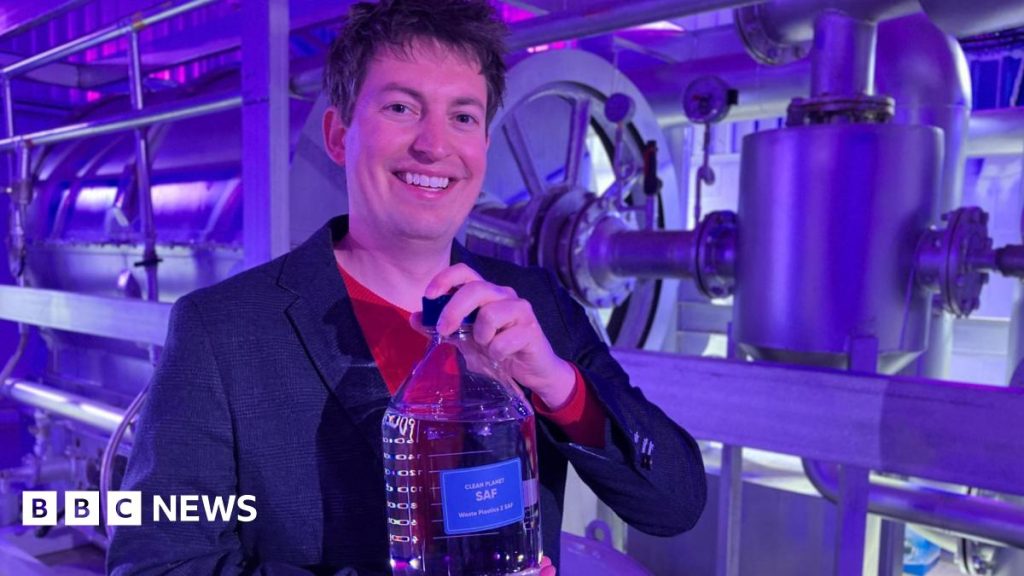
According to Stephens, each year the UK produces around two million tonnes of non-recyclable waste plastics which can only go to landfill, be exported, or incinerated.
This facility heats those plastics “to around 450 degrees in an anti-oxygen chamber”, a process which produces a heavy synthetic oil that can be used to fuel aeroplanes.
While there is a smaller carbon emission reduction when the plane is in flight, the emissions “created prior to actually being in that plane” are significantly smaller, he said.
Digging the oil from the ground, transporting it across to a refinery, the refining process, and transfer to the airport are all carbon-intensive steps which this process sidesteps.
This effort is part of a wider government aim to decarbonise aviation fuel by encouraging the supply of SAFs.
Last year, the SAF mandate outlined an expectation that 2% of total UK jet fuel demand would come from this source.
This will increase to 10% in 2030 and to 22% in 2040.
Stephens believes this facility represents a “great middle ground” in the ongoing effort to decarbonise the aviation industry.