

The latest P72 commission underscores a growing shift among elite collectors, who are increasingly seeking automobiles as personal expressions of artistry rather than mere performance machines.
There was a time when owning a limited-production supercar was enough to distinguish a collector from the crowd.
Today, even rarity has become commonplace.
The world’s most desirable marques routinely produce ultra-exclusive models in small numbers, each promising extraordinary performance and coveted scarcity. Yet among the most discerning enthusiasts, a new benchmark has emerged—one defined not by allocation lists or production caps, but by personal authorship.
That philosophy is embodied in De Tomaso‘s latest bespoke commission: the striking P72 known as Aurelian Night.
Hand-built, individually tailored, and unmistakably sculptural, the commission represents far more than another limited-production exotic. It serves as a reminder that, in an increasingly digital world, true luxury remains rooted in craftsmanship, individuality, and human creativity.
The significance of Aurelian Night extends beyond its exclusivity. It arrives at a moment when the automotive industry is racing toward electrification, automation, and software-defined experiences. Against that backdrop, the De Tomaso P72 feels almost rebellious.
Long before hypercars became showcases for screens and algorithms, they were celebrated as mechanical works of art. The P72 was conceived in that spirit.
Drawing inspiration from the legendary De Tomaso P70 race car of the 1960s, the modern P72 embraces flowing bodywork, dramatic proportions, and an emotional design language that recalls motorsport’s most romantic era. Every curve appears sculpted rather than engineered, creating a silhouette that feels timeless in a market often obsessed with the next technological breakthrough.
Unlike many contemporary hypercars, the P72 does not overwhelm the driver with digital interfaces and electronic complexity.
Instead, it invites engagement.
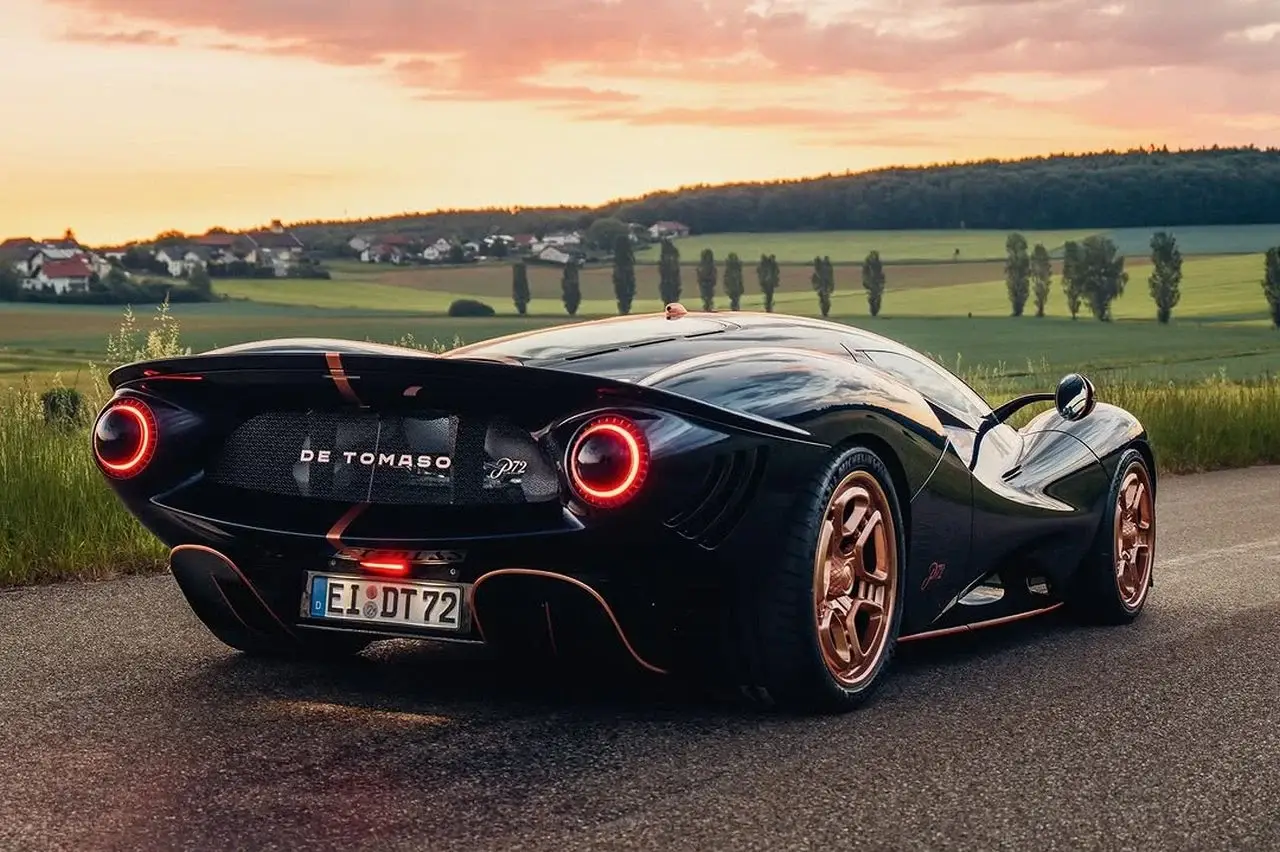
At its heart sits a supercharged V8 selected as much for character as performance. The engine delivers the visceral soundtrack, immediacy, and mechanical drama that many enthusiasts fear may become increasingly rare in the decades ahead.
The result is a machine designed to stir emotions rather than merely post impressive numbers.
Yet what makes Aurelian Night particularly compelling is not simply the automobile itself. It is the process behind its creation.
Commissioned automobiles occupy a rarefied space within the luxury world. They transform buyers into collaborators. Every decision, from finishes and materials to the smallest design accents, becomes an opportunity to shape something deeply personal.
The distinction is significant.
A limited-production vehicle may be rare.
A commissioned vehicle is singular.

For collectors whose garages already contain some of the world’s most coveted automobiles, personalization has become the next frontier. The appeal lies not only in ownership but in participation. The automobile becomes a reflection of taste, vision, and identity.
This movement mirrors what is occurring across the broader luxury landscape. Bespoke residences, custom yachts, and tailored private aircraft have become the ultimate expressions of exclusivity. Increasingly, automobiles are joining that conversation.
The resurgence of coachbuilt and highly personalized automobiles reflects a deeper shift in collector culture.
Performance figures continue to climb across the industry, yet many enthusiasts have begun searching for something less measurable and ultimately more meaningful: emotion.
While brands such as Bugatti, Koenigsegg, and Pagani continue pushing the boundaries of engineering, De Tomaso has pursued a different objective. The company has focused on creating a machine that celebrates tactile engagement, visual beauty, and craftsmanship.
The P72’s interior exemplifies that philosophy. Rather than relying on expansive digital displays, the cabin places artistry at the forefront through exposed mechanical details, precision-machined switchgear, and instrumentation that feels more akin to fine watchmaking than modern automotive design.
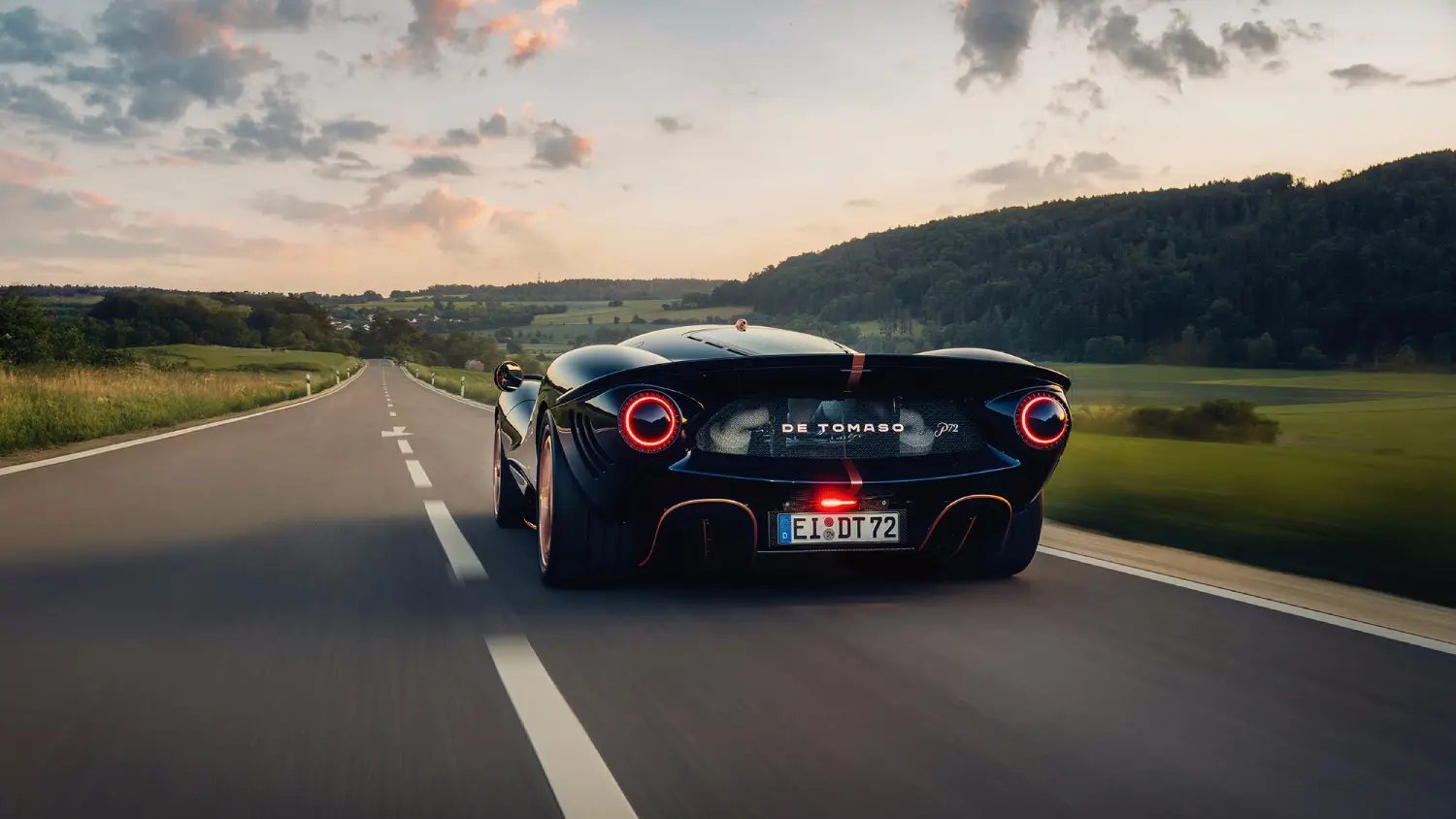
The effect is intentional.
Every detail reinforces the notion that luxury is not defined by complexity. It is defined by care, execution, and permanence.
For decades, automotive exclusivity was measured largely by production numbers. Today, collectors are redefining the concept.
The most coveted automobiles are no longer necessarily the fastest or most technologically advanced. Increasingly, they are the ones who tell a story, embody a vision, and capture a moment in time.
That is precisely what makes Aurelian Night so noteworthy.
It represents a growing appreciation for artistry in an industry increasingly driven by data. It celebrates craftsmanship at a moment when automation dominates manufacturing. And it reminds collectors that the most desirable luxury objects remain those shaped by human hands.
As the automotive world accelerates toward an electrified future, vehicles like the De Tomaso P72 stand apart as rare expressions of mechanical romance.
For a select group of collectors, that may be the ultimate luxury of all.