
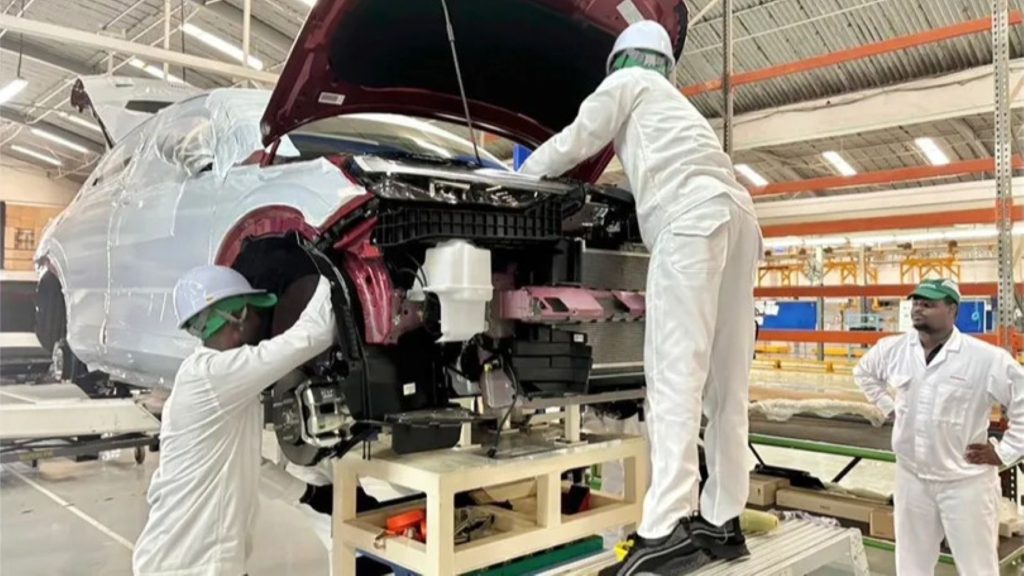
Persistent foreign exchange volatility and the Nigerian government’s failure to implement the automotive policy more than a decade after its introduction have been identified as major obstacles hindering growth in the country’s automotive sector.
The Managing Director of Honda Automobile Western Africa, Daisuke Mita, in an interview with The Guardian in Lagos, over the weekend, said that the current situation had made investment unstable.
Mita, however, said that while the foreign exchange had shown signs of improvement recently, the exchange rate remained excessively high and had continued to impact negatively on business operations.
According to him, policy inconsistency was one of the most significant concerns for investors in the sector.
He stated that the automotive policy introduced in 2014 was designed to run until 2024, but noted that another policy covering 2023 to 2033 was announced without a proper evaluation of the first one, stressing that despite this, neither of the two policies had been signed into law.
He maintained that the lack of a legally backed framework had created uncertainty for investors, particularly as the government’s attention shifted towards emerging technologies such as Compressed Natural Gas (CNG) conversion and electric vehicles, while local assemblers still struggle with challenges surrounding conventional internal combustion engine vehicle production.
Mita maintained that investor confidence could only be restored through the enactment of a comprehensive automotive policy that provides long-term protection for investments and encourages local manufacturing.
He also canvassed for stronger government support through patronage of locally assembled vehicles and the introduction of affordable vehicle financing schemes.
Mita further advocated a gradual and structured approach to regulating used vehicle imports, particularly accidented vehicles, to support the growth of domestic assembly plants.
However, despite the mounting challenges, Mita was optimistic about Nigeria’s long-term potential.
He explained that the country’s population continued to grow with strong market opportunities, but noted that there was still a huge transportation gap that needed to be addressed.
Besides, Mita said the company intended to expand its operations and introduce new products, but noted that progress would depend largely on improvements in the policy and economic environment.