
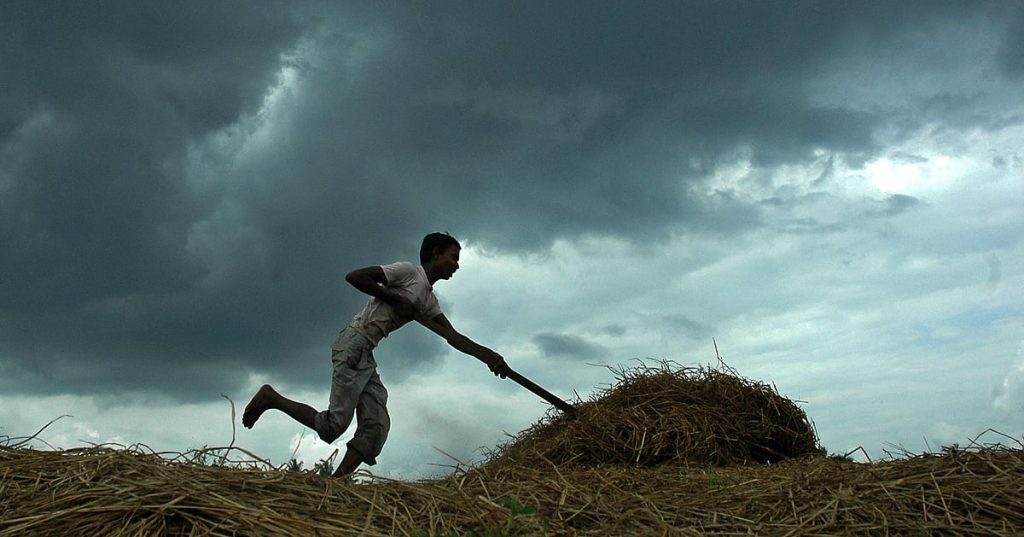
From Delhi screens to Vidarbha fields
To be fair, India has not been sitting idle. In May 2026, IMD unveiled an AI-driven monsoon forecasting system that can predict onset at the block level a full month in advance—a leap from the district-level, week-ahead alerts of a decade ago. A pilot in Uttar Pradesh now generates rainfall predictions at one-kilometre resolution. Mission Mausam, a ₹2,000-crore push, fuses conventional weather models with machine-learning networks that can read monsoon patterns up to 18 days out. The AgriStack initiative has enrolled over 8.4 crore farmers into a digital identity system linked to land records, crops and entitlements, and a geospatial decision-support platform now overlays soil health, water availability and weather data onto a single screen.
Impressive on paper. But the test of any tool is whether it changes things for the person standing in a field with no smartphone signal and no English. Five things need to happen—fast. One, AI forecasts must reach smallholders in their own language, through village networks they already trust; digital IDs make targeting possible, but the advisory chain beyond the app is still broken. Two, borrowing from Indonesia’s AWD playbook, water management in rain-deficit districts needs to move from pilot to standard practice—micro-irrigation, watershed restoration, smarter use of groundwater. Three, crop insurance should follow the Latin American direction: parametric products that pay out automatically when a satellite detects low rainfall, no paperwork, no waiting. Four, ICAR’s drought-tolerant seed varieties must be in farmers’ hands before—not after—the sowing window. And five, taking a cue from Peru’s ENFEN, climate risk needs a permanent seat at the macroeconomic table—the Reserve Bank, the finance ministry and the agriculture ministry sharing a live feed connecting Pacific ocean temperatures to procurement policy and trade decisions.
The building blocks exist. The monsoon will almost certainly disappoint; the only uncertainty is by how much. What remains open is whether the woman tending a two-acre plot in Bundelkhand and the landless labourer waiting for harvest work in Kalahandi will experience this El Niño any differently than their parents experienced 2009. The distance between a climate dashboard glowing in a Delhi office and a cracked field in Vidarbha is not measured in kilometres. It is measured in political will, institutional speed and the stubborn last mile that technology alone cannot bridge. Closing that distance, before the Pacific peaks, is the test of Indian governance in 2026.
Sanjay K Srivastava | S Radhakrishnan Chair Professor, National Institute of Advanced Studies, Bengaluru; former Chief of Disaster Risk Reduction at UNESCAP
(Views are personal)